
Plants
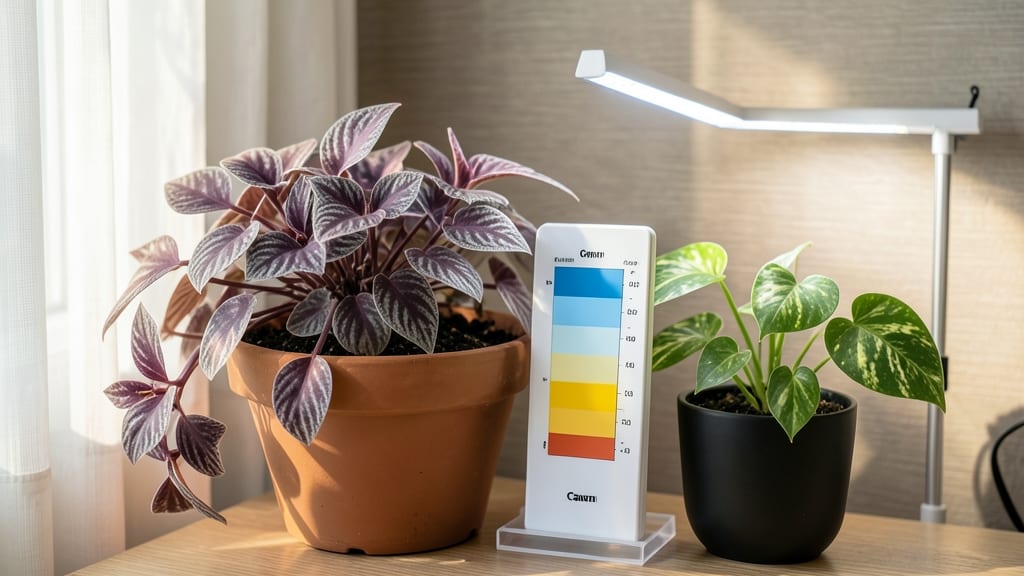
If you’re wondering how much light does an inch plant need to thrive, the answer is simpler than you might think—this fast-growing beauty thrives on bright indirect light, but too much direct sun or too little can send it into a growth slump.
Getting the balance right is easier than you think. With just 4 to 6 hours of filtered sunlight daily, your inch plant will reward you with vibrant stripes and bushy foliage.
The key? Avoid harsh midday rays and watch for signs like brown tips or leggy stems—these are your plant’s way of saying, “Adjust my light!”
Whether you’re dealing with a sun-starved corner or a scorched windowsill, I’ll break down exactly how to tweak your setup. You’ll learn which windows work best, how to supplement with grow lights, and even how to spot subtle clues your plant is begging for more (or less) brightness.
Ready to transform your inch plant into a lush, thriving showstopper? Let’s dive into the perfect lighting strategy so you can enjoy those striking purple undersides all year long.


Optimal light hours for inch plants: bright indirect sunlight breakdown
Your inch plant (Tradescantia zebrina) thrives with 4–6 hours of bright indirect sunlight daily. This variegated beauty craves light but burns easily in direct rays—think morning sun or dappled shade from sheer curtains.
Without enough light, its striking purple undersides fade, and stems stretch weakly toward any available glow.
Indoor growers often misjudge light intensity. A south-facing window delivers harsh midday rays, while a north window provides gentle but insufficient light. Even artificial grow lights must mimic natural spectra to prevent etiolation (those sad, elongated stems).
Seasonal shifts matter too—winter’s shorter days demand adjustments to keep your plant vibrant.
Here’s the light breakdown your inch plant needs to stay lush and colorful:
For houseplant enthusiasts, measuring light isn’t guesswork. Use a lux meter app (like Light Meter by Acelink) to check your plant’s spot—aim for 5,000–10,000 lux during daylight hours. A north-facing window typically offers 2,000–5,000 lux, while a south window can exceed 30,000 lux at noon.
Position your inch plant 3 feet back from a south window to diffuse intensity.
Outdoor gardeners can leverage seasonal light shifts. In summer, move potted inch plants to partial shade by midday to prevent leaf scorch. In winter, supplement with a 12-inch LED grow light for 6–8 hours daily to maintain growth.
Even reflective surfaces like white walls or mirrors can bounce extra light to your plant’s leaves.
Watch for these tell-tale signs of light stress. Pale, washed-out leaves signal insufficient light, while crispy brown edges mean too much direct sun. If your plant’s stripes fade to solid green, it’s begging for more brightness. Adjust gradually—sudden light changes shock delicate foliage.
Pro tip: Rotate your inch plant quarter-turns weekly to ensure even growth. Stems naturally lean toward light sources, creating lopsided plants if left unchecked. This simple habit keeps your Tradescantia zebrina compact and symmetrically stunning.
🌿
How to fix inch plant light issues: step-by-step adjustments
If your inch plant is suffering from light-related stress, don’t panic—simple adjustments can revive it. Start by diagnosing the issue: leggy stems mean too little light, while brown leaf tips signal overexposure.
The key is gradual changes—sudden shifts shock delicate foliage. Begin by moving your plant closer to a bright window (but avoid direct sun) or further away if scorching occurs.
For underlighted plants, rotate the pot quarter-turns weekly to prevent lopsided growth. Place it near an east- or west-facing window, where morning or late-afternoon sun is gentler. If natural light is insufficient, supplement with a LED grow light 12–18 inches away for 6–8 hours daily.
Avoid fluorescent bulbs—they emit too little blue spectrum light, which inch plants crave for vibrant stripes.
⚠️ Common Mistakes with Inch Plant Lighting
- Placing plants in direct southern sunlight (causes leaf burn within weeks).
- Assuming artificial light = natural light (LED bulbs need 12+ inches away for safety).
- Ignoring seasonal light changes (winter = 20% less natural light).
When dealing with overlighted plants, diffuse harsh rays using sheer curtains or a light-colored sheer fabric draped over the window. For outdoor inch plants, provide afternoon shade during peak sun hours (11 AM–3 PM).
If your plant is near a south-facing window, position it 3 feet back to reduce intensity. Use a reflective surface, like a white wall or mirror, to bounce extra light to shaded areas.
For low-light conditions, invest in a full-spectrum LED grow light (like the Mars Hydro TS 1000W). Place it 6–12 inches above the plant and run it for 12–14 hours daily to mimic daylight. Avoid cheap white LED bulbs—they lack the red and blue wavelengths inch plants need.
Test your light setup with a lux meter app (free options like "Light Meter" work) to ensure 5,000–10,000 lux during active hours.
Prune etiolated stems (those long, weak growths) to encourage bushier regrowth. Cut just above a leaf node with clean sterilized scissors, then propagate the cuttings in water or soil. This not only revives your plant but also gives you free new inch plants!
Adjust your watering slightly—underlighted plants need less frequent watering, while those recovering from overlight stress may require deeper soaks to rehydrate.
🌱