
How To
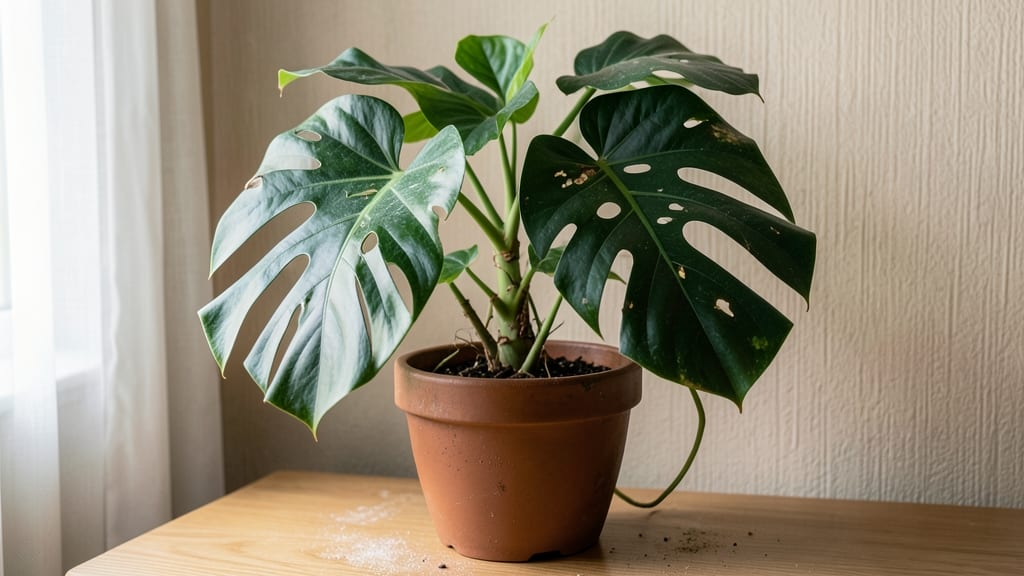
Monstera light requirements: the ideal brightness spectrum for healthy growth
Your Monstera deliciosa thrives in bright indirect light, but understanding the exact spectrum makes all the difference. Too little light leads to etiolation (stretched, weak stems), while too much causes leaf scorch. Think of it like Goldilocks—you need the perfect balance for those lush, fenestrated leaves.
Monstera light needs fall into three key categories: low light (survival mode), medium light (ideal growth), and high light (risk of damage). Most homes naturally provide medium to bright indirect light, but artificial setups often fall short. Let’s break down the science so you can replicate the perfect conditions.
🌱 Key Insight: Monsteras originate from tropical rainforest understories, where they receive dappled sunlight through canopy leaves. Mimic this by placing your plant near a sheer curtain or using a light diffuser.
| Light Level | Intensity (Foot-Candles) | Growth Impact | Best For |
|---|---|---|---|
| Low Light | 100–500 ft-c | Survival only; slow growth, small leaves | North-facing windows, deep indoors |
| Medium Light | 500–1,500 ft-c | Ideal growth; vibrant leaves, fenestrations | East/west windows, 2–3 ft away |
| High Light | 1,500–3,000 ft-c | Risk of leaf scorch; crispy edges | South-facing windows, direct sun |
The 1,500 ft-c threshold is critical—any higher, and you’ll see brown patches or bleached spots on leaves. For reference, a typical office has ~500 ft-c, while a sunny windowsill can hit 2,500 ft-c. Use a light meter (or your phone’s lux app) to monitor levels.
Artificial light can supplement natural sources, but LED grow lights are your best bet. Look for full-spectrum LEDs (red + blue wavelengths) to mimic sunlight. Place the light 6–12 inches above your Monstera for 12–14 hours daily.
Pro tip: Rotate the plant quarter-turn weekly to prevent lopsided growth toward the light.
Seasonal adjustments matter too. In winter, when daylight shrinks, supplement with grow lights or move your Monstera to a sunnier window. Conversely, in summer, filter harsh afternoon sun with a curtain to avoid heat stress. A south-facing window is risky—even with indirect light, temps can spike.
Color temperature plays a subtle but vital role. Cool white (5,000–6,500K) mimics morning light, while warm white (2,700–3,000K) replicates evening tones. For indoor Monsteras, a 6,500K LED during the day and 3,000K in the evening mimics natural cycles. This trick alone can double your plant’s growth rate!
Outdoor Monsteras need partial shade—think morning sun + afternoon shade. If growing in a container on a patio, use a 50% shade cloth to block direct rays.
Over time, your Monstera will adapt to its light conditions, but sudden changes (like moving from low to high light) can shock the plant. Always acclimate gradually over 1–2 weeks.
Remember: No light is better than harsh light. A Monstera in low light will survive but won’t thrive—its leaves will stay small and lack fenestrations. Push for medium light to unlock the iconic split leaves you love.
With the right setup, your Monstera will reward you with bold, healthy growth in no time. 🌿
Signs your Monstera isn’t getting enough (or too much) light
Your Monstera’s leaves tell a story—yellowing edges or stretched, pale stems scream for help. These are classic signs your plant isn’t getting the right light spectrum. Too little light causes etiolation (those leggy, weak stems), while too much leads to brown crispy spots from sunburn.
Even fenestrations (the iconic holes) can fade or disappear under stress.
Start by checking your Monstera’s leaf color. Healthy leaves should be deep green with glossy surfaces. If they’re yellowing between veins, it’s a classic low-light warning.
Meanwhile, white or bleached patches mean direct sun is scalding your plant’s delicate tissue. Pay attention to new growth too—small, sparse leaves are another red flag.
Don’t ignore growth patterns either. If your Monstera is growing toward one side or stretching upward, it’s reaching for more light.
This is called phototropism, and it’s your plant’s way of saying, “Move me closer to that window!” Conversely, if leaves are curling inward or developing blackened tips, you’ve crossed into overlighting territory.
Here’s a quick fix: Rotate your plant quarter-turns every week to ensure even light exposure. If you notice new leaves emerging smaller than older ones, your Monstera is starving for light.
Move it to a brighter spot immediately—but avoid south-facing windows in peak afternoon sun. Instead, aim for east or north-facing light for gentle, consistent brightness.
Pro tip: Use your hand as a light meter. Hold it near your Monstera’s leaves. If you can’t see your handprint clearly through the leaves, it’s too dark.
If your hand looks burned or shadowed, the light is too intense. Adjust accordingly—your Monstera will reward you with bold, healthy growth in no time.
Remember, Monsteras are adaptable but not forgiving. Small adjustments—like adding a sheer curtain or moving 2 feet closer to a window—can make all the difference. Watch your plant’s response within 2-3 weeks; that’s how quickly it can bounce back when you get the light right.