Plants
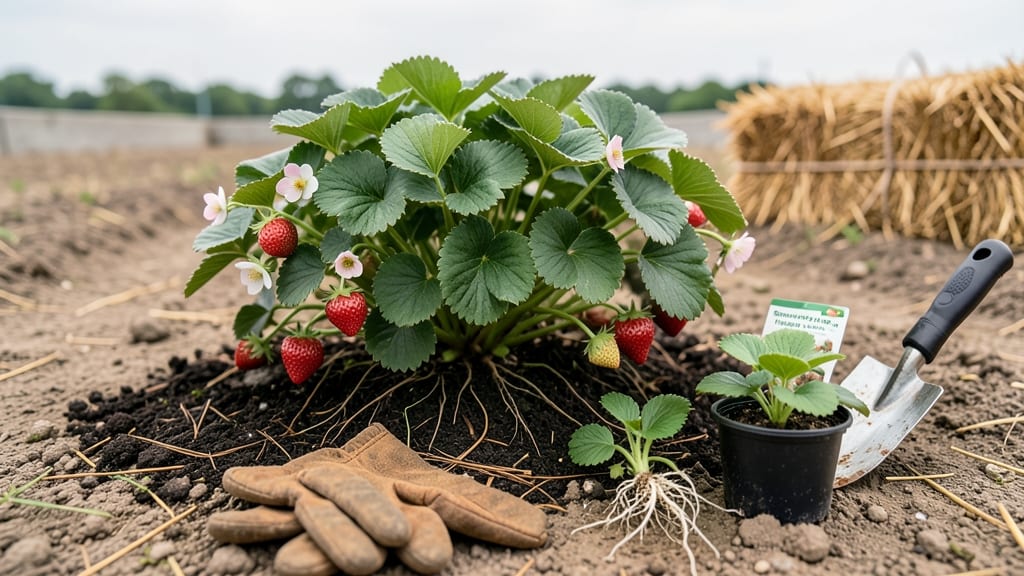
Timing your strawberry planting in North Carolina can mean the difference between a bumper crop of sweet 🍓 berries and a season of disappointment. If you plant too early, your strawberries might bolt before producing fruit, while planting too late risks stunted growth from cold snaps.
The key is matching your variety to North Carolina's chill-hour zones—where 7a-8b regions demand precise scheduling to avoid wasted effort.
Most gardeners in North Carolina plant strawberries in early spring (March-April) or late summer (August-September), but the exact timing depends on your microclimate. Coastal areas may need to adjust their schedule by weeks compared to the Piedmont or Mountain regions.
Understanding these regional differences is the first step to a thriving strawberry patch that yields fruit from May through November.
In this guide, I’ll walk you through the exact planting windows for your area, including how to prepare your soil and choose the right varieties for your chill-hour zone.
Whether you're working with bare-root plants or potted varieties, you’ll learn how to time your planting for maximum success—so you can enjoy homegrown strawberries at their peak.
Ready to turn your garden into a berry paradise? Let’s dive into the science behind strawberry planting and discover how to grow the juiciest, most abundant crop possible in North Carolina’s climate.
North Carolina strawberry planting zones by chill-hours: avoid bolting with exact timing
North Carolina's diverse climate—from the Coastal Plain to the Mountains—creates unique chill-hour zones that dictate the perfect strawberry planting window. Most NC regions fall between 500-1000 chill hours, but timing matters to prevent premature bolting (when plants flower too early).
For June-bearing varieties, plant in early spring (March-April) when soil temps hit 40°F. For everbearing/day-neutral types, late summer (August-September) works best. The key? Match your chill-hour zone to the variety's needs.
Here’s how NC’s regions break down by chill hours and ideal planting windows:
| Region | Chill-Hour Range | Spring Planting Window | Fall Planting Window | Key Varieties |
|---|---|---|---|---|
| Coastal Plain (e.g., Wilmington, Fayetteville) | 500-700 hrs | Late March–early April | Late August–early September | Chandler, Camarosa |
| Piedmont (e.g., Raleigh, Greensboro) | 700-900 hrs | Mid-March–mid-April | Mid-August–mid-September | Jewel, Allstar |
| Mountains (e.g., Asheville, Boone) | 900-1000+ hrs | Early March–early April | Early August–early September | Seascape, Albion |
🌱 Note: Adjust dates 1-2 weeks earlier for high-altitude areas (e.g., Western NC).
In Zone 7a (e.g., Charlotte), aim for March 15–April 1 for spring planting. If you’re in Zone 8a (e.g., Wilmington), wait until April 1–15 to avoid late frosts that can damage tender plants.
For fall planting, prioritize August 15–September 15 across most of NC. This gives plants time to establish roots before winter dormancy. In the Mountains, where winters are colder, plant by August 1 to prevent frost damage.
Pro tip: Use mulch (straw or pine needles) after planting to insulate roots and retain moisture. This is especially critical in drought-prone Coastal Plain areas where soil dries out quickly.
Bolting risk spikes if strawberries experience warm spells before accumulating enough chill hours. For example, Chandler (a favorite in NC) needs 500+ chill hours—plant too early in the Piedmont, and it may bolt prematurely.
Check your local last frost date (typically March 15 for most of NC) and plant 4–6 weeks beforehand. This timing ensures roots establish before active growth begins.
🌿 For bare-root plants, soak roots for 1–2 hours before planting. For potted plants, transplant carefully to avoid disturbing roots—especially in sandy Coastal Plain soils where moisture drains fast.
North Carolina strawberry planting zones by chill-hours: avoid bolting with exact timing
North Carolina's diverse climate—from the Coastal Plain to the Mountains—means strawberry planting times vary dramatically. The key factor? Chill-hours, the number of hours below 45°F (7°C) your plants need to thrive.
Too few, and your berries will bolt prematurely (send up flowers before warming). Too many, and they'll struggle to fruit.
Most of NC falls in USDA Zones 7a-8b, but chill-hour needs range from 500-1000 hours. For example, the Piedmont region (like Raleigh) typically gets 600-800 chill-hours, while the Mountains (Asheville) can exceed 1000 hours. Coastal areas like Wilmington often see 500-600 chill-hours, requiring earlier planting.
| NC Region | Chill-Hours | Spring Planting Window | Fall Planting Window | Key Varieties |
|---|---|---|---|---|
| Coastal Plain (Wilmington, Fayetteville) | 500-600 | Feb 15 - Mar 15 | Aug 15 - Sep 15 | Chandler, Sweet Charlie |
| Piedmont (Raleigh, Greensboro) | 600-800 | Mar 1 - Apr 15 | Aug 1 - Sep 1 | Seascape, Jewel |
| Mountains (Asheville, Boone) | 800-1000+ | Apr 1 - May 1 | Aug 20 - Sep 10 | Albionel, Honeoye |
*Adjust dates 1-2 weeks earlier for high-elevation areas or later for low-lying zones.
For bare-root plants, soak roots in water for 2-4 hours before planting. In NC's Coastal Plain, where soils warm faster, plant 4-6 weeks before last frost (typically mid-March).
In the Mountains, wait until soil temps hit 45°F (7°C)—usually late March to early April—to avoid frost damage.
Fall planting is trickier in NC. Aim for 6-8 weeks before first frost (usually mid-August to early September in the Piedmont). This gives roots time to establish before winter dormancy. Everbearing varieties like Seascape handle fall planting better than June-bearing types, which may bolt prematurely in warm winters.
Pro tip: Use a soil thermometer to confirm 50°F (10°C) minimum soil temps before planting. In Zone 8b (Coastal NC), this often means late February for spring planting. In Zone 7a (Mountains), wait until mid-April to avoid early-season frost.
Remember: Bare-root plants need immediate watering, while potted varieties can wait 1-2 days to acclimate. Mulch with straw or pine needles to retain moisture and regulate soil temps—critical in NC's humid summers and chilly winters. 🌱