Planting
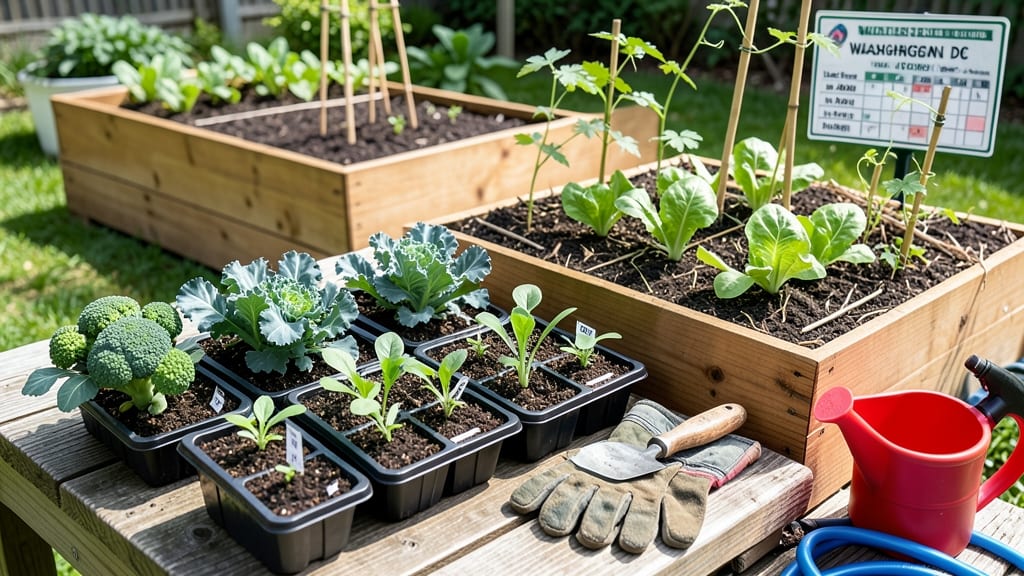
Washington DC planting calendar by season: exact dates for USDA zone 8A success
Washington DC’s USDA Zone 8A climate—with its mild winters and long growing season—lets you grow almost year-round. But timing matters! Plant too early, and frost will kill tender seedlings. Plant too late, and your harvests will suffer.
The key is aligning your planting dates with DC’s average last frost (March 15) and first frost (November 15), while accounting for soil warmth.
Cool-season crops like kale and spinach thrive when soil temps are 40-50°F, while warm-season veggies like tomatoes and peppers need soil at 60°F+. Below, I’ve broken down the exact planting windows for each season, so you can maximize your garden’s potential without guessing.
Pro Tip: Use a soil thermometer to check temps before planting. DC’s urban heat islands can make soil 5-10°F warmer than rural areas, so adjust accordingly.
For perennials like asparagus or rhubarb, plant in early spring (March) so roots establish before summer heat. And don’t forget herbs—basil loves DC’s summer, but parsley and cilantro prefer cooler months.
DC’s humidity and heatwaves can stress plants, so always mulch to retain moisture and water deeply in the morning. Adjust for microclimates: gardens near the Potomac River stay cooler, while rooftop gardens heat up faster.
Use this calendar as your guide, but stay flexible—DC’s weather can be unpredictable! Monitor forecasts and soil conditions to fine-tune your planting schedule for the best results.
Now that you’ve got the timing down, let’s tackle how to adjust for DC’s tricky microclimates in the next section—because not all of the District experiences the same growing conditions!
How to adjust planting times for washington DC’s microclimates and unpredictable weather
Washington DC’s diverse microclimates can throw off even the best-laid planting plans. Urban heat islands near downtown can be 10°F warmer than rural areas, while river valleys like those near the Potomac stay cooler.
These variations mean your neighbor’s perfect spring planting window might be too early—or too late—for your garden. Understanding how to adjust for these conditions ensures your seeds and seedlings thrive, not wilt.
The key is observing local patterns and using tools like frost blankets or row covers to extend seasons. For example, gardens near the Anacostia River often experience later last frosts, while high-altitude areas like Takoma Park may face earlier freezes.
Start by checking your specific neighborhood’s historical frost dates—the National Weather Service provides local data that’s far more accurate than generic zone guidelines.
⚠️ Warning: Urban Heat Islands Can Burn Seedlings
Problem: Concrete and pavement in DC trap heat, raising soil temps by 5-15°F compared to rural areas. This can cause warm-season crops like tomatoes to bolt prematurely or cool-season greens to bolt entirely.
Solution: Plant heat-sensitive crops in shaded beds or use lightweight row covers during peak afternoon heat (12 PM–4 PM). For urban gardens, consider succession planting in partial shade to avoid heat stress.
If you’re unsure about your microclimate, conduct a simple soil temperature test before planting. Use a soil thermometer to check depths of 2–4 inches—ideal temps for warm-season crops like peppers and cucumbers are 70–90°F.
In DC, this often means waiting until mid-May for southern exposures or even early June in shaded urban lots. For cool-season crops like kale or spinach, start seeds indoors 4–6 weeks before your average last frost date (typically mid-March for most of DC).
Another trick is to use season-extending tools like cold frames or low tunnels. These can push your growing season by 4–6 weeks in both spring and fall. For instance, planting broccoli or cabbage in a cold frame in early March lets you harvest before summer heat sets in.
Just be sure to ventilate on warm days to prevent overheating—DC’s humidity can turn a protective cover into a sauna.
For perennial plants like asparagus or rhubarb, timing is equally critical. In DC’s climate, these slow starters need to be planted in early spring (March–April) when soil is workable but not yet too warm.
Overheated soil can stress young roots, leading to poor establishment. Mulch heavily with straw or wood chips to regulate soil temps and retain moisture during DC’s unpredictable spring showers.
Finally, keep an eye on unpredictable weather patterns. DC’s flash droughts or sudden cold snaps can derail even the most careful planning. Always have a backup plan, such as container gardening for heat-sensitive plants or a greenhouse setup for seedlings.
By staying flexible and adapting to your local conditions, you’ll turn DC’s quirks into opportunities for a bountiful, year-round harvest.
🌱