Plants
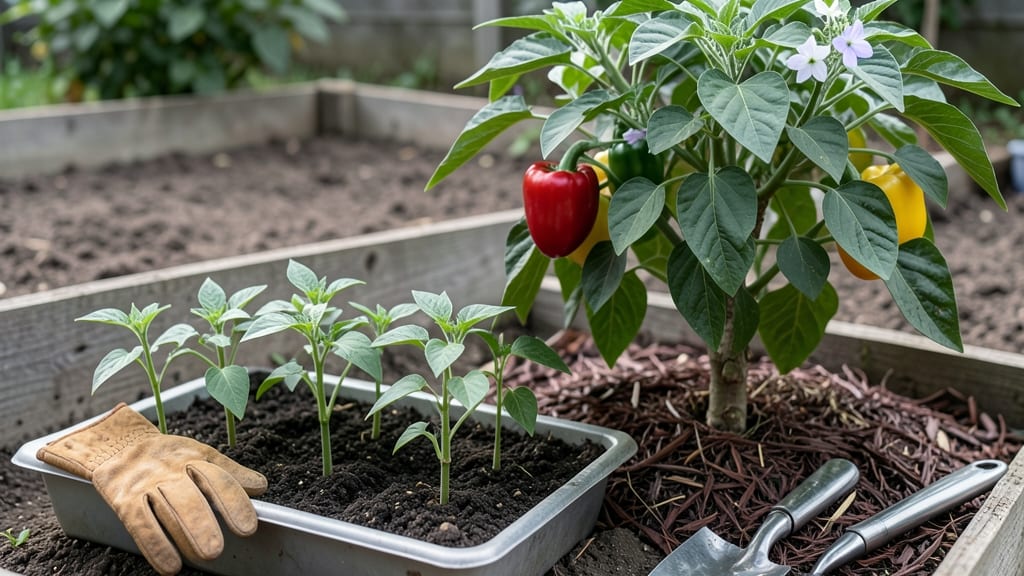
Timing your bell pepper 🌶️ planting in Virginia isn’t just about avoiding frost—it’s about capturing that sweet spot between 60°F soil and the 165-day growing window before fall’s chill sets in. Plant too early, and your peppers will languish; too late, and you’ll miss the harvest entirely.
The key? Knowing your zone’s last-frost dates and how to work with Virginia’s microclimates—whether you’re in the cooler Shenandoah Valley or the milder Hampton Roads.
For gardeners in USDA zones 6a-8a, the ideal window runs from mid-April to mid-June, but the devil’s in the details. Coastal areas can push peppers earlier, while inland spots should wait until soil warms.
I’ll break down exactly when to start seeds indoors versus transplanting seedlings, plus how black plastic mulch can shave weeks off your growing season by trapping heat.
You’ll also discover which heat-resistant varieties thrive in Virginia’s humidity—like ‘Carolina Wonder’—and how to stretch your harvest into October with simple tricks. Whether you’re a first-time gardener or a veteran looking to maximize yields, this guide cuts through the guesswork so you can enjoy homegrown peppers from your garden.
Let’s get your planting calendar locked in—because in Virginia, timing isn’t optional; it’s the difference between a bountiful harvest and a sad, withered plant. Ready to plant with confidence?
Virginia’s last-frost dates by Zone: exact planting windows for bell peppers
Virginia’s last-frost dates vary dramatically from the mountainous west to the coastal east, creating a 3-4 week difference in when you can safely plant bell peppers.
In USDA Zone 6a (like Roanoke), the average last frost is April 15, while Zone 8a (Norfolk) sees frost-free conditions by March 15. This means your planting window shifts from late April in the mountains to early March near the coast.
For bell peppers, which need soil temperatures above 60°F, timing isn’t just about frost—it’s about heat accumulation. Even if frost risk is gone, cold soil will stunt growth.
Use a soil thermometer to confirm temperatures before planting. In Zone 7b (Richmond), where last frost is April 1, wait until mid-April to ensure soil warmth.
Here’s how to adjust for Virginia’s microclimates: - Shenandoah Valley (Zone 6a-7a): Plant after May 1 to avoid late frosts. - Piedmont (Zone 7b): Safe to plant by April 15. - Coastal (Zone 8a): Start as early as March 1 for a longer harvest.
If you’re transplanting seedlings, aim for 2-3 weeks before your zone’s last frost date. For example, in Zone 7a (Charlottesville), transplant by April 15 and expect peppers to mature by July 15.
Seedlings need 60-70°F soil, so use black plastic mulch to warm the ground faster in cooler zones.
The harvest window in Virginia typically runs from July to October, but early plantings in Zone 8a can yield peppers as early as June. To maximize your season, consider succession planting: Start a second batch in early June for a fall harvest before frost hits.
| USDA Zone | Last Frost Date | Planting Window | Soil Temp Goal | Notes |
|---|---|---|---|---|
| 6a (Roanoke) | April 15 | May 1 - June 1 | 60°F+ | Use row covers for early starts. |
| 7a (Charlottesville) | April 1 | April 15 - May 15 | 60°F+ | Black plastic mulch speeds soil warming. |
| 7b (Richmond) | April 1 | April 15 - June 1 | 60°F+ | Early plantings may need protection. |
| 8a (Norfolk) | March 15 | March 1 - June 1 | 60°F+ | Longer growing season; plant early! |
For gardeners in Zone 6a, where frosts can linger until May 1, consider starting seeds indoors by March 1 and transplanting after the last frost. Use grow lights to keep seedlings robust until outdoor conditions improve.
In Zone 8a, you can even plant directly into the ground by March 1 if you use row covers for early protection.
One common mistake is planting too early in Zone 7b or 6a without checking soil temperature. Cold soil delays germination and weakens seedlings. Always test soil temperature for at least 3 days before planting. If temperatures dip below 55°F, wait another week or use soil warming mats.
Pro tip: Track your local frost dates for 3 years to identify patterns. Some years, like 2021, saw late frosts in April 25 in Zone 7a, while others (like 2017) had early frosts by March 20.
Adjust your planting schedule based on your 5-year average rather than relying solely on USDA data.
If you’re in a transition zone (e.g., Zone 7a/7b), err on the side of planting later. A 2-week delay in Zone 7a
Best heat-resistant bell pepper varieties for Virginia’s humid summers
Virginia’s humid summers and sudden heat waves can stress bell peppers, but the right varieties thrive in these conditions. Look for heat-tolerant and disease-resistant types like ‘Carolina Wonder’ or ‘Jupiter’, which handle Virginia’s 90°F+ temperatures better than standard peppers.
These varieties also resist common Virginia pests like aphids and pepper maggots, saving you time on treatments.
For longer harvests, choose late-maturing varieties like ‘Aristotle’ or ‘NuMex Heritage’. They produce peppers well into October, even when nights cool down.
If you love sweet peppers, ‘Sweet Banana’ is a top pick—its thick walls hold up in humidity, and it yields bright yellow peppers perfect for stuffing or grilling.
Top 5 Heat-Resistant Bell Pepper Varieties for Virginia
⭐ = Tolerance Level (⭐⭐⭐⭐⭐ = Excellent)
If you’re in southern Virginia (Zone 8a), prioritize early-maturing varieties like ‘Early California Wonder’ to beat the heat. These peppers mature in 60-65 days, giving you a head start before summer’s peak.
For northern Virginia (Zone 6b-7a), focus on longer-season types like ‘King of the North’, which handles cooler nights better while still thriving in daytime heat.
Pro tip: Succession plant heat-tolerant varieties every 2-3 weeks from mid-April to early June. This ensures a continuous harvest through October, even if early plantings struggle in July’s heat. Pair your peppers with basil or marigolds to deter pests naturally—both plants repel insects while adding flavor to your garden.
For fall harvests, try ‘Black Beauty’ or ‘Golden Summer’—they handle Virginia’s humidity and late-season rains better than most. Just be sure to mulch heavily with straw to keep soil moist and roots cool during 90°F+ days.
With the right varieties, you’ll enjoy homegrown peppers long after your neighbors’ plants bolt in the heat.