
Plants
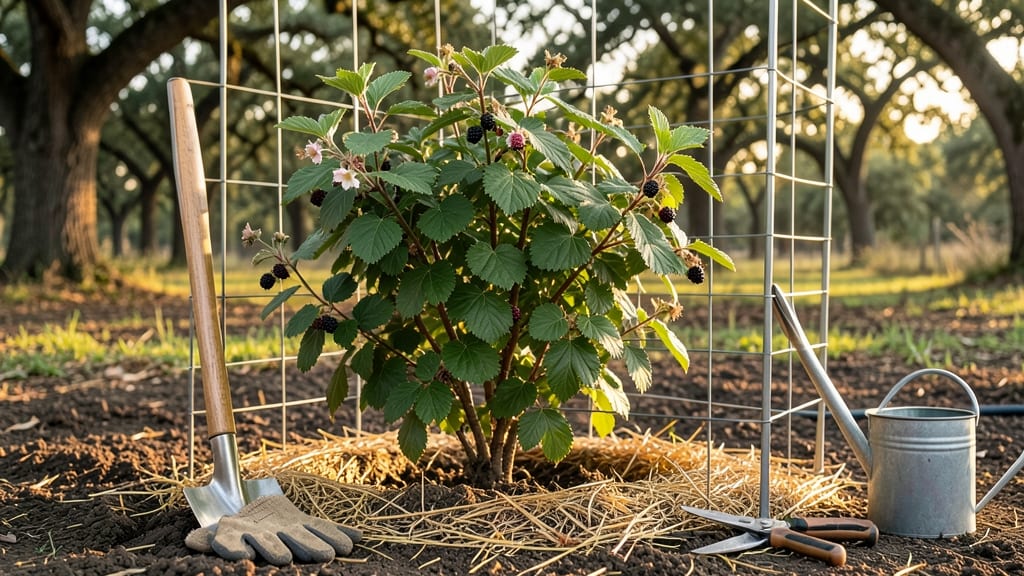
If you're dreaming of juicy, homegrown 🫐 blackberries but live in Central Texas, timing your planting is the key to success—or failure. The region's mild winters and brutal summers demand a precise window where blackberries can establish strong roots before facing extreme heat.
Most gardeners in USDA Zones 8a-9a make the mistake of planting too early or too late, leading to weak vines or even plant death. The ideal late winter to early spring window (February-March) gives blackberries the chill hours they need while avoiding summer's scorching temperatures.
In this guide, I’ll break down exactly when to plant—whether you’re growing everbearing or fall-bearing varieties—and how to prepare your soil for maximum yield. No more guesswork, just thriving blackberry bushes ready to produce fruit all season long.
Ready to turn your backyard into a berry paradise? Let’s get started with the perfect planting schedule for your Central Texas climate.
Central Texas blackberry planting timeline: chill-hours vs. heat tolerance
Central Texas gardeners know timing is everything when planting blackberries. With USDA Zone 8a-9a winters rarely dropping below 20°F, traditional cold climates' planting rules don't apply. Instead, we focus on chill-hours—the accumulated hours below 45°F—which blackberries need to break dormancy and fruit properly.
Most Central Texas areas average 500-1,000 chill-hours annually, creating a narrow window for planting fall-bearing and everbearing varieties. Plant too early, and your berries may not get enough winter chill to fruit. Plant too late, and summer's 100°F+ heat can stress young roots before they establish.
Here's the critical insight: November through February is your sweet spot. This period balances cooler temperatures with adequate soil moisture, giving blackberries the best chance to root before summer's intensity arrives.
Let's break down the chill-hour requirements for common varieties and match them to Central Texas' climate patterns. Understanding this will help you choose the right variety for your specific microclimate—whether you're in Austin's 8a zone or San Antonio's 9a zone.
| Blackberry Type | Chill-Hour Needs | Central Texas Planting Window | Key Climate Risks | Soil Prep Tips |
|---|---|---|---|---|
| Fall-Bearing (e.g., 'Arapaho') | 500–700 hours | Late November–January | Late winter heat waves | Amend with compost; test pH 5.5–6.5 |
| Everbearing (e.g., 'Navaho') | 400–600 hours | December–February | Early spring drought | Add organic mulch; improve drainage |
| Primocane-Fruiting (e.g., 'Ouachita') | 300–500 hours | January–early March | Summer heat stress | Use raised beds; add perlite |
🌱 Pro Tip: Plant bare-root canes in late afternoon to reduce transplant shock from Central Texas' afternoon heat.
Notice how primocane-fruiting varieties like 'Ouachita' have the lowest chill-hour needs, making them ideal for San Antonio's warmer microclimates. Meanwhile, fall-bearing types like 'Arapaho' need more chill, so they're better suited for Austin's cooler pockets.
Central Texas' unpredictable spring weather adds another layer of complexity. A warm February can trick blackberries into blooming early, only to be followed by a late frost that damages flowers. To mitigate this risk, plant 2-3 weeks before your average last frost date (typically around February 15 in most areas).
Soil preparation is equally critical. Central Texas' calcareous soils often lack organic matter, which blackberries crave. Before planting, work in 3-4 inches of compost and consider a soil test to check pH levels.
Aim for a slightly acidic soil (5.5–6.5), as blackberries struggle in alkaline conditions common to our region.
One final consideration: mulching. Apply 3-4 inches of organic mulch (like straw or wood chips) immediately after planting. This helps retain moisture during Central Texas' dry spells while protecting roots from temperature swings between day and night—a common issue in our climate.
By aligning your planting schedule with chill-hour requirements and preparing your soil properly, you'll give your blackberries the best chance to thrive in Central Texas' challenging climate. The payoff? Juicy, homegrown berries that rival anything you've ever tasted from the grocery store. 🫐
Step-by-step planting schedule for Central Texas blackberries
Timing is everything when planting blackberries in Central Texas. The 6-week window between late winter and early spring is critical for root establishment before summer heat arrives. My strategy focuses on soil prep, mulching, and irrigation to ensure your bushes thrive in Texas’ Zone 8a-9a climate.
Central Texas’ unpredictable frost dates (typically mid-February to mid-November) mean you must balance chill-hour requirements with heat tolerance. Planting too early risks frost damage, while planting too late leaves roots vulnerable to summer drought. I’ve broken this down into a 5-step schedule to simplify the process.
⚠️ CRITICAL: All steps must be completed 2-3 months before planting to avoid stress on young plants. Central Texas’ calcareous soils (pH 7.5-8.5) often need amendments like sulfur or peat moss to reach the ideal pH 5.5-6.5 for blackberries.
Test soil 2-3 months before planting using a home pH test kit or send a sample to the Texas A&M AgriLife Extension. Central Texas soils often need organic matter (compost or aged manure) to improve drainage and fertility.
Plant everbearing varieties (like Arapaho) in November-February for spring harvests. Fall-bearing varieties (like Navaho) can go in January-February to avoid winter dieback.
Water deeply 2-3 times per week for the first 6 weeks to encourage root growth. Apply 3-4 inches of mulch (straw or wood chips) to retain moisture and regulate soil temperature.
Prune dead or crossing canes in January-March to improve airflow. Wrap young plants in burlap during unexpected cold snaps (below 20°F).
Apply a balanced 10-10-10 fertilizer at 1/2 cup per plant in March-April to fuel spring growth. Avoid high-nitrogen fertilizers, which promote leafy growth over fruit production.
Central Texas’ summer heat (often exceeding 100°F) can stress young blackberry plants, so shade cloth during the first year is a game-changer. I recommend 30-50% shade cloth for the hottest months (June-August) to protect tender canes while still allowing sunlight for photosynthesis.
Pro tip: Plant blackberries near a trellis or fence to contain their 6-12 ft height and improve air circulation, reducing fungal diseases like anthracnose that thrive in Central Texas’ humid summers. With this schedule, your bushes will establish strong roots before the scorching summer hits.
🌱