
Plants
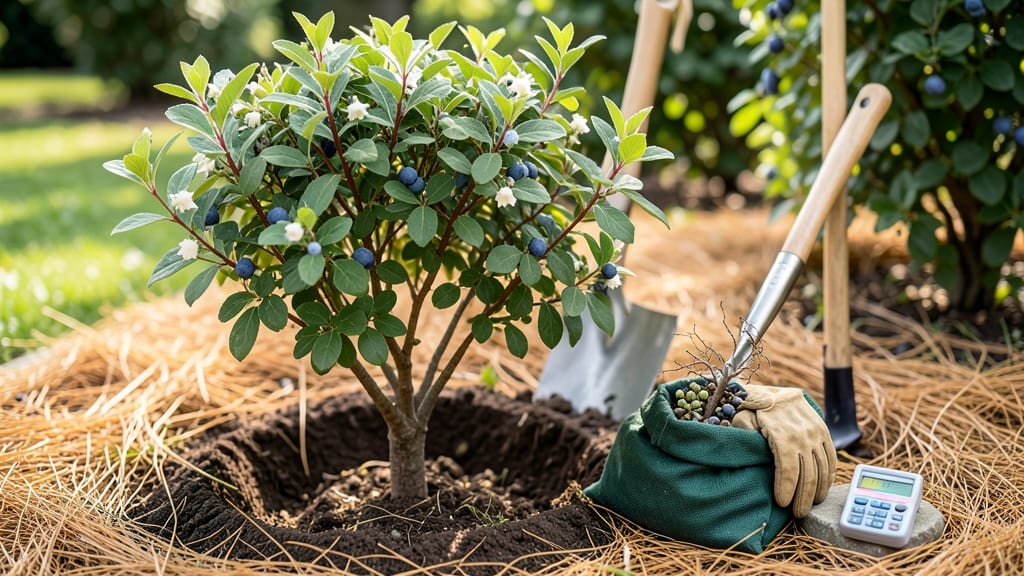
Timing your blueberry bush 🫐 planting in Georgia isn’t just about the calendar—it’s about matching the right chill hours to your zone for that perfect harvest. Plant too early or late, and you might miss out on sweet, juicy berries because your bushes won’t get enough winter dormancy.
The key is understanding whether your region leans toward Southern low-chill varieties or North Georgia’s higher-chill needs.
If you’re in USDA zones 7a-9a, you’ve got two prime windows: late winter to early spring (February-March) or fall (October-November). Each has its perks—spring planting gives roots time to establish before summer heat, while fall planting lets bushes settle in before winter’s chill.
But here’s the catch: Georgia’s warm climate means you’ve got to pick the right variety for your microclimate.
I’ll walk you through how to choose between Southern low-chill types like ‘Tifblue’ and Northern varieties like ‘Climax,’ plus soil prep tricks to keep your bushes thriving. Whether you’re a first-time gardener or a seasoned grower, getting this right means more berries—and fewer headaches—come harvest season.
Ready to turn your backyard into a blueberry paradise? Let’s dive into the best planting times, soil secrets, and care tips tailored just for Georgia’s unique growing conditions. Your future 🫐 harvest starts with the right timing!
Best planting months for Georgia blueberries based on chill hours
Georgia’s three distinct climate zones—Southern, Piedmont, and North—each demand a different approach to planting blueberry bushes. The key? Chill hours, which measure how many hours below 45°F your bushes need to set fruit.
Southern Georgia needs as few as 200–300 chill hours, while North Georgia can handle up to 1,000+ chill hours. Planting at the wrong time means poor fruit set or no harvest at all.
For fall planting, aim for October or early November when soil is still warm but nights cool. This gives roots time to establish before winter. Spring planting works too—just get them in the ground by mid-March before the last frost (usually around March 15).
Late spring plantings risk heat stress and slower root growth.
Here’s how Georgia’s regions break down for optimal planting:
| Region | Chill Hours | Best Planting Window | Top Varieties |
|---|---|---|---|
| Southern GA (Zones 8a–9a) | 200–300 | October–November (fall) or February (spring) | 'Climax,' 'Misty' |
| Piedmont GA (Zones 7a–7b) | 400–600 | October–November (fall) or March (spring) | 'Premier,' 'Tifblue' |
| North GA (Zones 6a–7a) | 600–1,000+ | October–November (fall) or late February–March (spring) | 'Duke,' 'Bluecrop' |
Fall planting is my top recommendation for Georgia gardeners. Cooler temperatures reduce transplant shock, and established roots handle summer heat better. 'Tifblue', a Southern favorite, thrives with just 300 chill hours, while 'Duke' in North Georgia needs 800+ chill hours to produce well.
Always check your local USDA zone and microclimate—urban areas can be 5–10°F warmer than rural spots.
If you’re in Zone 8a or warmer, avoid planting in late spring. Heat stress can kill young bushes before they establish. Instead, opt for bare-root plants in fall or container-grown bushes in early spring.
For Zone 7a and colder, spring planting works if you get them in the ground before March 15. Use mulch to protect roots from late frosts.
Pro tip: Test your soil’s pH before planting—blueberries need 4.5–5.5. If your soil is too alkaline, amend it with sulfur or peat moss 2–3 months before planting. This gives microbes time to adjust the pH naturally.
Once planted, water deeply 1–2 times per week for the first year to encourage root growth. Avoid overhead watering, which can spread fungal diseases. Mulch with pine straw to retain moisture and acidify the soil over time.
Timing isn’t just about the calendar—it’s about matching your blueberry variety to your local chill hours. Skip the wrong variety, and you’ll end up with leafy bushes and no berries. Next up: how to pick the perfect cultivar for your Georgia patch!
Best planting months for Georgia blueberries based on chill hours
Georgia’s climate varies dramatically from the low-chill Southern region to the high-chill North Georgia mountains, making timing everything for blueberry success. Unlike cooler states, Georgia’s 200–1,000+ chill hours demand precise planting windows to ensure your bushes get the dormancy they need before fruiting.
Plant too early or late, and you’ll risk poor yields—or worse, no berries at all.
For most of Georgia, fall planting (October–November) is ideal because it gives roots time to establish before winter. However, Southern Georgia’s mild winters (like in Savannah) may allow for early spring planting (February–March) if you choose low-chill varieties.
Let’s break down the best times for each region to maximize your harvest.
| Region | Chill Hours | Best Planting Window | Top Varieties |
|---|---|---|---|
| Southern Georgia (Zones 8a-9a) | 200–400 | February–March (spring) or October (fall) | 'Climax,' 'Premier' |
| Piedmont (Zones 7b-8a) | 400–600 | October–November (fall) | 'Tifblue,' 'Powderblue' |
| North Georgia (Zones 6b-7a) | 600–1,000+ | October (fall) only | 'Duke,' 'Bluecrop' |
🌱 Pro Tip: Test soil pH (4.5–5.5) before planting—Georgia’s native soil is often too alkaline!
If you’re in Southern Georgia, spring planting works because mild winters mean less risk of frost damage to young roots. But for Piedmont and North Georgia, fall is non-negotiable—planting in October or early November ensures roots establish before winter’s chill sets in.
Avoid late spring planting in these regions; the heat can stress bushes before they’ve had time to adapt.
Another key factor? Last frost dates. In North Georgia (Zone 6b–7a), frost can linger until mid-April, so fall-planted bushes have months to root before spring growth.
Meanwhile, Southern Georgia (Zone 8a–9a) sees frost as late as January, giving spring-planted bushes a head start. Always check your local USDA frost map before digging!
One mistake I see often? Gardeners in Atlanta’s Piedmont region planting high-chill varieties like 'Bluecrop' in spring. These bushes need 600+ chill hours, but Atlanta’s 400–500 chill hours leave them struggling. Stick to region-matched varieties—your bushes (and your patience) will thank you.
For container growers, timing shifts slightly. Potted blueberries can handle spring planting in March–April because you control soil temperature and moisture. Just ensure your containers are at least 18 inches deep and use acidic potting mix.
Containers also let you move bushes to shadier spots in summer if your yard gets too hot.
Ready to plant? Grab your garden gloves, test that soil pH, and mark your calendar for October 15–November 15 in most of Georgia. With the right timing, you’ll be picking juicy, homegrown blueberries in just 2–3 years—no grocery store needed! 🫐