
Plants
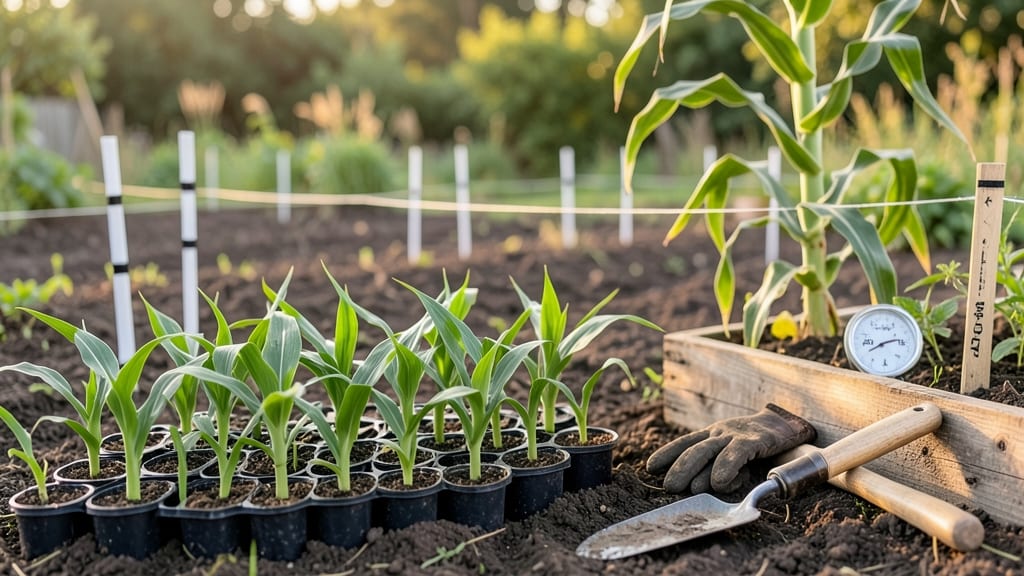
Timing your when to plant corn in Vermont can mean the difference between a bumper crop of sweet, juicy ears and a sad, stunted harvest.
Vermont’s unpredictable springs and short growing season demand precision—plant too early, and frost will nip your seedlings in the bud; too late, and your corn may never mature before the first chill sets in.
I’ve grown corn in Vermont for years, and the key isn’t just picking a date—it’s understanding your local chill-hour requirements and heat-tolerant varieties that actually thrive in New England’s cool summers.
Whether you’re in the Green Mountains or the Champlain Valley, the right approach ensures your 🌽 stalks reach their full potential before frost strikes.
In this guide, I’ll break down the exact planting windows for your region, from soil temperature checks to the best varieties for Vermont’s climate. You’ll also learn how to avoid common mistakes that waste time and effort—because nobody wants to watch their hard work wither away.
Ready to grow corn that’s worth bragging about? Let’s get started with the strategies that work in Vermont’s unique growing conditions.
Best planting dates for Vermont corn based on chill-hours & frost risk
Vermont’s cool summers and short growing season demand precise timing for corn planting—delay too long, and your stalks won’t mature before frost. The key is aligning your planting window with chill-hour accumulation (1,000–1,200 hours) and last-frost dates, which vary by region.
Northern Vermont (e.g., Burlington) has a 120-day frost-free season, while Southern Vermont (e.g., Bennington) stretches to 140 days. Here’s how to calculate your ideal dates.
Start by checking your last average frost date—typically May 15 in Southern Vermont and June 1 in Northern Vermont. Corn needs 90–110 days to harvest, so count backward: plant Early Sunglow (90 days) by April 20 in the south or May 1 in the north.
For Silver Queen (100 days), aim for May 1 in the south or May 15 in the north.
Soil temperature is critical—corn won’t germinate below 50°F, but roots struggle above 85°F. Use a soil thermometer to confirm 60°F+ at 4-inch depth before planting.
In Vermont, this usually aligns with late May to early June, but black plastic mulch can warm soil by 5–10°F, extending the window by 1–2 weeks.
Vermont’s unpredictable spring means flexibility is key. If frost threatens, cover seedlings with frost cloth or plant heat-tolerant varieties like Bodacious, which handles cooler nights better than standard hybrids. For Northern Vermont, prioritize early-maturing varieties (under 90 days) to avoid stunted growth.
Here’s a quick region-by-region breakdown to simplify your planning:
| Region | Last Frost Date | Ideal Planting Window | Best Varieties | Days to Maturity |
|---|---|---|---|---|
| Southern VT (Bennington) | May 15 | April 20–May 10 | Early Sunglow, Silver Queen | 90–100 days |
| Central VT (Montpelier) | May 25 | May 1–May 15 | Bodacious, Country Gentleman | 95–105 days |
| Northern VT (Burlington) | June 1 | May 15–June 1 | Early Sunglow, Golden Bantam | 85–95 days |
Adjust your planting date if your spring is late—use black plastic mulch to warm soil faster or opt for container growing in pots (which heat up quicker).
For Northern Vermont, consider starter fertilizer (5-10-10) to jumpstart growth in cooler soils. Always plant after Memorial Day as a safety net against late frosts.
Pro tip: Vermont’s cool nights can slow corn growth. If temperatures dip below 55°F after planting, use row covers until seedlings are 6 inches tall. This buys 10–14 extra growing days, critical for Northern gardens. Pair this with well-draining soil (corn hates soggy roots) to maximize your short season.
Monitor your local USDA Plant Hardiness Zone (Vermont ranges from Zone 3 to Zone 5) and cross-reference with almanac frost predictions. For example, Zone 4 (e.g., Stowe) should wait until May 20, while Zone 5 (e.g., Rutland) can start as early as April 25 with protection.
Overplanting by 1–2 weeks is better than underplanting—you can always thin seedlings later.
Finally, account for heat units, not just days. Corn needs 2,500–3,000 heat units (calculated by averaging daily highs/lows above 50°F). Use a heat unit calculator (available from UVM Extension) to confirm your region’s suitability for your chosen variety.
For instance, Golden Bantam (85 days) thrives with 2,500 heat units, while Silver Queen needs 3,000+.
By aligning your planting with chill-hours, soil warmth, and frost risk, you’ll dodge Vermont’s biggest corn-growing pitfalls—stunted stalks and early frost. Start with early-maturing varieties, use mulch or containers for flexibility, and always have a backup plan for late springs. With the
Best planting dates for Vermont corn based on chill-hours & frost risk
Vermont’s cool summers and short growing season demand precise timing for corn—plant too early, and frost will nip tender seedlings; too late, and ears won’t mature before fall. The key? Chill-hours (1,000–1,200) and soil warmth (50°F+).
In Northern Vermont (e.g., Burlington, St. Johnsbury), aim for late May to early June after the last frost, while Southern Vermont (e.g., Bennington, Brattleboro) can start early May in sheltered microclimates.
Use a soil thermometer—corn roots need 60°F+ soil to germinate. If spring drags, opt for black plastic mulch to warm soil faster. Heat-unit calculations (growing degree days) help too: Vermont’s 900–1,100 GDD season favors early-maturing varieties (60–75 days to harvest).
For example, ‘Early Sunglow’ (65 days) thrives in Northern Vermont, while ‘Silver Queen’ (80 days) suits Southern Vermont’s slightly longer season.
🌽 VISUAL GUIDE: Vermont Corn Planting Timeline
| Region | Ideal Planting Window | Soil Temp Requirement | Last Frost Risk |
|---|---|---|---|
| Northern VT (Burlington, St. Johnsbury) | Late May–Early June | 60°F+ | Mid-May |
| Central VT (Montpelier, Barre) | Early–Mid May | 55°F+ | Late April |
| Southern VT (Bennington, Brattleboro) | Early May | 50°F+ | Early May |
Adjust for unpredictable Vermont springs by planting successive batches every 2 weeks. For example, start 10% of seeds indoors in mid-April (under grow lights) and transplant after frost. Black plastic mulch raises soil temps by 5–10°F, letting you plant 2 weeks earlier in cooler zones.
Pair corn with beans or squash—their vines shade soil, keeping roots cool and moist.
Watch for false springs: A warm April day doesn’t mean frost is gone. Use frost cloth for seedlings until May 15 in Northern VT. Corn silking (when tassels appear) is the most frost-sensitive stage—aim to have ears 2 weeks before first frost (typically late September).
In 2023, a late frost in June wiped out 30% of Burlington gardens—proving timing trumps variety choice.
Pro tip: Test soil pH (ideal: 6.0–6.8) and amend with compost or lime if needed. Corn is heavy feeders, so side-dress with 5-10-10 fertilizer when stalks reach 12 inches.
In drought-prone years (like 2020drip irrigation saved Southern Vermont gardens by delivering 1 inch of water weekly.
Remember: Vermont’s microclimates vary wildly. A South-facing slope in Addison County may support late-season varieties, while a frost pocket in Grand Isle demands early-maturing types. Always scout your garden’s sun exposure and wind patterns—corn needs 6+ hours of sun daily, and windbreaks prevent stalk lodging.