
Plants
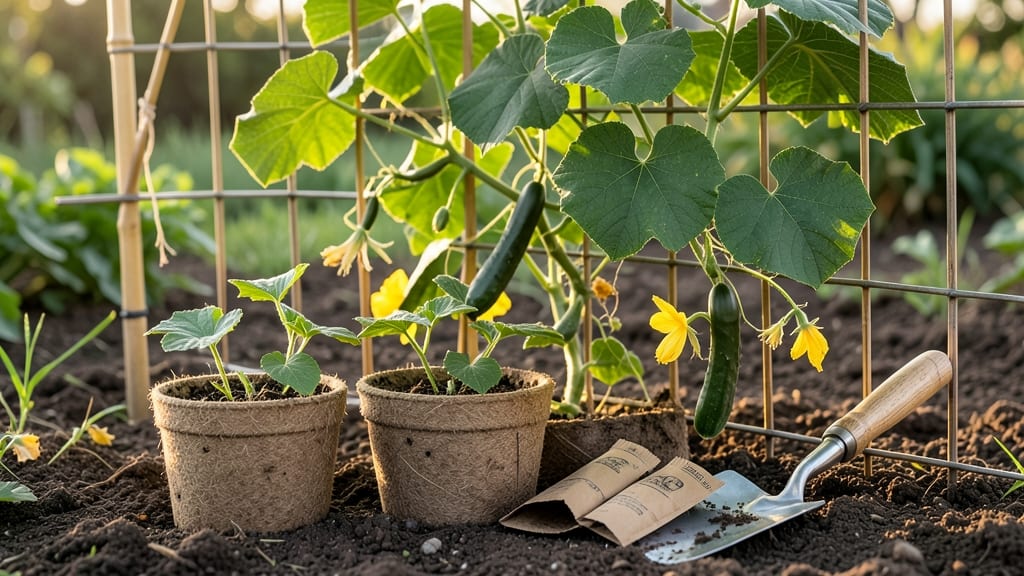
Timing your cucumber planting in Zone 8b isn’t just about throwing seeds in the dirt—it’s the difference between a garden full of 🥒 and one that bolts before you even get a taste.
If you’ve ever watched your hard work turn bitter too soon, you’re not alone, and the solution is simpler than you think.
Zone 8b’s mild winters and long summers mean you’ve got a 6-week window to plant cucumbers without triggering that dreaded bolting. But here’s the catch: planting too early risks cold snaps, while waiting too long means scorching heat.
I’ll break down the exact weeks to plant for a harvest that keeps coming all summer long.
You’ll discover how to read your soil’s temperature (yes, it matters more than you’d think) and why your last frost date might not be the real deadline. Plus, I’ll share my top tricks for extending your harvest—because nobody wants their cucumber season to end in August.
Ready to grow cucumbers that actually last? Let’s get into the perfect planting schedule for Zone 8b, so you can enjoy fresh, crisp 🥒 from May through September without the stress.
Optimal cucumber planting weeks in Zone 8b to prevent bolting
In Zone 8b, cucumbers thrive when planted at the right time—too early and frost zaps their growth, too late and summer heat triggers bolting (premature flowering).
The sweet spot? 4-6 weeks before your last frost date, typically mid-March to early April for most of Zone 8b. For example, in San Diego, I start seeds indoors in late February to transplant by mid-April, while inland areas like Phoenix can direct-sow as early as late February.
Your exact timing depends on two critical factors: soil temperature and local microclimates. Cucumbers need soil to warm to at least 60°F (15°C)—cold soil stunts roots. Use a soil thermometer to check; if it’s below 60°F, wait.
Coastal areas (like Santa Barbara) may plant 2-3 weeks earlier than inland desert zones due to cooler nights.
Here’s the golden rule: Plant cucumbers when your average nighttime temperature stays above 55°F (13°C) consistently. In Zone 8b, this usually aligns with mid-April to early May for direct sowing. For transplants, start seeds indoors 3-4 weeks before your target outdoor date to avoid shock.
| Planting Method | Zone 8b Window | Soil Temp Requirement | Key Variety Tip |
|---|---|---|---|
| Direct Sowing | Mid-April to early May | ≥ 60°F (15°C) | Choose heat-tolerant varieties like 'Straight Eight' or 'Marketmore 76' |
| Transplanting | Late March to mid-April | ≥ 55°F (13°C) | Bush types (e.g., 'Bush Champion') handle transplant stress better |
| Successive Planting | Every 2-3 weeks (May-July) | ≥ 65°F (18°C) | Use shade cloth for late batches to prevent bolting |
| Fall Planting | Late July to early August | ≥ 60°F (15°C) | Fast-maturing 'Diva' or 'Sweet Success' work best |
If you’re unsure about your last frost date, check your local USDA frost map or use a frost calendar app. For example, Los Angeles typically has its last frost by January 15, but inland areas like Palm Springs rarely see frost.
Adjust your planting by adding 4-6 weeks to your last frost date for a safe window.
For coastal Zone 8b (e.g., San Francisco Bay Area), aim for early April planting, while desert areas (e.g., Yuma, AZ) can start as early as late February. Pro tip: Black plastic mulch warms soil faster—lay it down 2-3 weeks before planting to jumpstart growth.
Choose early-season varieties like 'Sweet Success' (58 days to harvest) if planting in March-April, or heat-tolerant types like 'Armenian' (70 days) for May-June sowings. Always check seed packets for days to maturity—this helps you avoid bolting by aligning harvests with cooler fall weather.
One common mistake? Planting too late and ending up with bitter cucumbers due to heat stress. In Zone 8b, late summer heat (above 90°F/32°C) triggers bolting.
To combat this, use shade cloth (30-50%) during peak afternoon sun or opt for parthenocarpic varieties (like 'Corinto') that don’t need pollination to fruit.
Test your soil’s readiness by pressing your finger 1 inch deep—if it’s cold or damp, wait. Warm soil (above 65°F/18°C) speeds up germination and reduces disease risk. In Zone 8b’s alkaline soils, amend with compost or peat moss to lower pH slightly (ideal range: 6.0-6.8).
Remember: Cucumbers are fast growers—they bolt in as little as 2 weeks if stressed. By planting in the 4-6 week window before your last frost and monitoring soil temps, you’ll set your crop up for success.
Next, we’ll cover how to extend your harvest season with smart spacing and succession planting.
How to extend your cucumber harvest season in Zone 8b
Zone 8b’s long growing season doesn’t mean your cucumbers have to stop producing by August—with the right strategies, you can enjoy fresh 🥒 well into fall. The key is successive planting in 2-3 week intervals, paired with heat management techniques.
I’ve grown cucumbers straight through September using these methods, and I’ll show you how to do it too.
Start your first batch in mid-April (as covered earlier), then plant 2 more batches every 2-3 weeks through early July. This staggered approach ensures you’re always harvesting while avoiding the bolting trigger of late-summer heat.
For example, my July planting of 'Straight Eight' produced cucumbers until early October—just in time for homemade pickles!
- 1 Staggered Planting: Sow seeds every 2-3 weeks from April through July. Use fast-maturing varieties (50-60 days) for later batches like 'Diva' or 'Sweet Success'.
- 2 Shade Cloth: Install 30-50% shade cloth over late plantings (June-July) to block 90°F+ heat. This prevents bolting while maintaining fruit production.
- 3 Soil Temperature Control: Use black plastic mulch to keep soil above 65°F in early batches and row covers for late plantings to retain coolness.
- 4 Companion Planting: Interplant with radishes or lettuce to mark rows and attract pollinators. Avoid planting near potatoes or sage, which stunt growth.
- 5 Parthenocarpic Varieties: Choose self-pollinating types like 'Corinto' or 'Excelsior' for late plantings—they produce fruit without pollinators, reducing heat stress.
For late-season plantings (July-August), focus on quick-maturing varieties that can complete their lifecycle before fall temperatures drop. 'Sweet Success' (58 days) and 'Diva' (55 days) are my go-tos—they handle heat better than standard types and produce smaller, sweeter cucumbers perfect for snacking.
Watering becomes critical during extended harvests. In Zone 8b’s summer, cucumbers need 1-2 inches of water weekly, but deep soaking every 2-3 days prevents bolting.
I set up a drip irrigation system on a timer to deliver water at the base of plants in the morning, which keeps leaves dry and reduces disease risk.
Don’t forget to harvest frequently—picking cucumbers every 2-3 days encourages more production. Leave a few to mature on the vine for seeds if you want to save them, but remove any that turn yellow or develop woody texture, as these signal the plant is winding down.
By combining successive planting, heat management, and variety selection, you can extend your cucumber harvest from May through September in Zone 8b. Next, we’ll tackle the common mistakes that cause cucumbers to bolt prematurely—and how to fix them before it’s too late.