Plants
Planting daffodil bulbs at the wrong time in Arkansas can mean the difference between a stunning spring display and wasted money. The perfect window—late September to mid-November—aligns with your 7a-8b zone's chill-hour needs and frost-free deadlines, ensuring those 🌼 blooms get the head start they need.
Why does timing matter so much? Daffodils need 6-8 weeks in the ground before the first hard frost (usually around November 15 in Arkansas) to establish strong roots. Plant too early, and they’ll rot; too late, and they’ll miss their growth window entirely.
The key is balancing soil temperatures and moisture—something I’ve learned the hard way after a few failed attempts.
In this guide, I’ll break down exactly when to plant based on your local frost dates, plus soil prep tips for Arkansas’ often-heavy clay. You’ll also discover the best cold-hardy varieties that thrive in your climate, so you can skip the guesswork and get straight to vibrant spring blooms.
Whether you’re a first-time gardener or a seasoned pro, these insights will help you time your planting like a local—because in Arkansas, getting the 🌼 right means fewer headaches and more flowers next spring.
Arkansas daffodil planting timeline: chill-hours & frost-free deadlines
Arkansas gardeners face a unique challenge with daffodils—the state’s USDA zones 7a-8b demand precise timing to balance chill-hour requirements and frost-free windows. Most daffodils need 300-600 chill hours (below 45°F) to bloom reliably, while Arkansas typically sees 500-700 chill hours annually.
This means timing your planting to avoid rot from early rains or missed blooms from late planting is critical.
Your planting window in Arkansas should start 4-6 weeks before your first hard frost, which usually falls between mid-October and early November.
For example, in Little Rock (Zone 7b), aim for planting between October 15 and November 1, while Fort Smith (Zone 7a) gardeners should plant slightly earlier, around October 1-15. Always check the NOAA frost prediction for your specific area to fine-tune your schedule.
Daffodil bulbs need time to establish roots before winter sets in. Planting too early (before September) risks rot in Arkansas’s humid climate, while planting too late (after November) may result in bulbs not getting enough chill hours to bloom.
The 6-8 week window before frost ensures bulbs have time to root while avoiding winter dormancy too soon.
Arkansas’s heavy clay soils and high humidity can complicate daffodil planting. If your soil doesn’t drain well, consider amending it with compost or sand to prevent waterlogged conditions. Well-draining soil is non-negotiable—daffodil bulbs rot quickly in soggy soil, even in fall.
Here’s how to calculate your exact planting window: 1. Find your average first frost date (use NOAA’s Local Climate Data tool). 2. Subtract 6 weeks to determine your planting deadline. 3. Start planting 4 weeks before that deadline for optimal results.
| Arkansas Region | USDA Zone | First Frost Date | Ideal Planting Window | Chill Hours Needed |
|---|---|---|---|---|
| North Arkansas (Mountain View) | 7a | November 10 | October 1-15 | 500-600 |
| Central Arkansas (Little Rock) | 7b | November 15 | October 15-November 1 | 450-550 |
| South Arkansas (El Dorado) | 8a | November 20 | October 20-November 5 | 350-450 |
| Southeast Arkansas (Jonesboro) | 7b-8a | November 12 | October 10-November 2 | 400-500 |
*Adjust based on your local microclimate and NOAA data.
If you’re unsure about your local frost dates, use the NOAA Climate Data tool or check with your local Cooperative Extension Service. For example, Fayetteville (Zone 7a) often sees frost by November 5, while Texarkana (Zone 8a) may delay until November 20.
Planting too late in Zone 8a risks bulbs not getting enough chill hours to bloom in spring.
Pro tip: If you’re in a warmer microclimate (e.g., near a river or urban heat island), plant earlier in the window to ensure bulbs get sufficient chill. Conversely, higher elevations in northern Arkansas may need a slightly later planting date to avoid early frost exposure.
Once you’ve nailed down your planting window, focus on soil preparation. Arkansas’s clay-heavy soils can suffocate bulbs, so amend with organic matter like compost or peat moss to improve drainage.
Aim for a pH of 6.0-7.0, which is ideal for daffodils. Test your soil’s pH before planting to avoid surprises.
Remember, daffodils planted in Arkansas’s optimal window will reward you with vibrant spring blooms and naturalized clumps that multiply over time. With the right timing and soil prep, your daffodils will thrive despite Arkansas’s humid, clay-rich conditions
Step-by-step daffodil bulb planting guide for Arkansas climates
Now that you know the ideal window for planting daffodil bulbs in Arkansas, let’s dive into the step-by-step process to ensure your bulbs thrive. Arkansas’s clay-heavy soil and humid climate require special attention to drainage and spacing.
Start by choosing a sunny spot—daffodils need 6+ hours of sunlight daily—and prepare the soil to create the perfect environment for your bulbs.
Before planting, test your soil’s pH level (aim for 6.0-7.0). Arkansas gardeners often deal with alkaline soil, so amend it with compost or peat moss if needed.
Loosen the top 12 inches of soil to help roots establish easily. If your yard has heavy clay, consider planting in raised beds or containers to improve drainage.
🌱 Step-by-Step Planting Guide
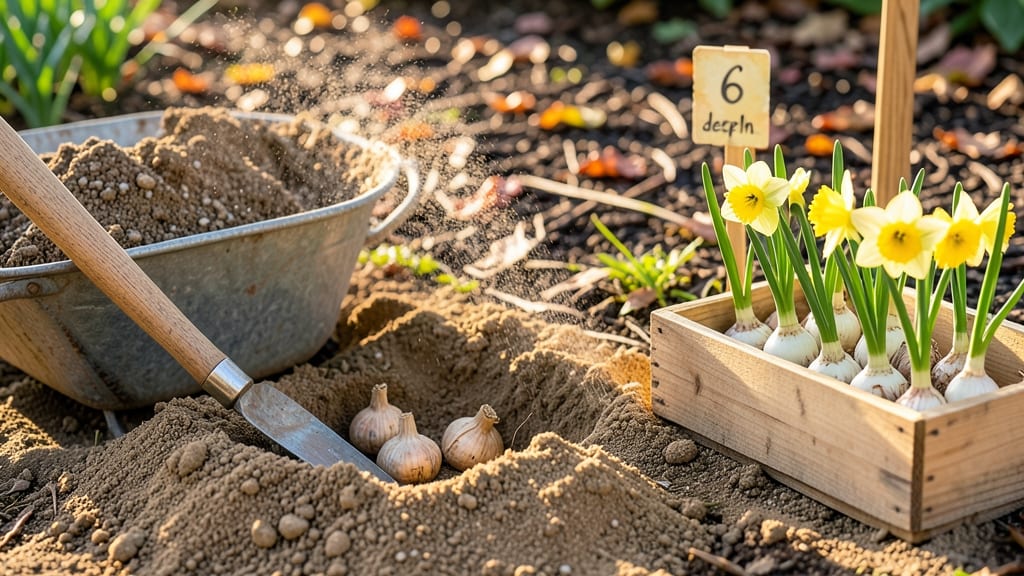
- 1. Plant Depth: Dig holes 6-8 inches deep—about 3 times the bulb’s height. This ensures roots have space to grow while keeping the bulb stable.
- 2. Spacing: Place bulbs 3-6 inches apart in rows 6-9 inches apart. Closer spacing works for dwarf varieties, while standard types need more room.
- 3. Positioning: Plant bulbs with the pointy end up and the flat base down. This ensures they grow straight and strong.
- 4. Backfill: Cover bulbs with soil, gently firming it down to remove air pockets. Avoid compacting too hard—bulbs need room to breathe.
- 5. Water Lightly: Give bulbs a deep watering after planting to settle the soil. Avoid overwatering, as soggy soil can cause rot.
- 6. Mulch: Apply 2-3 inches of mulch (straw or shredded leaves) to insulate bulbs and retain moisture. Remove mulch in early spring to prevent rot.
Arkansas’s humid summers can lead to fungal issues, so avoid planting in areas with poor airflow. If you’re planting in containers, use a well-draining potting mix with perlite or sand. Daffodils are deer-resistant, making them a great choice for rural Arkansas gardens where pests are a concern.
After planting, water bulbs once a week until the ground freezes. Once frost arrives, reduce watering to monthly to prevent bulb rot. In early spring, resume watering when shoots appear—daffodils need consistent moisture as they grow. Avoid fertilizing in the first year; let bulbs establish roots before adding nutrients.
Pro tip: Mark your daffodil beds with stakes or flags so you don’t accidentally dig up bulbs when planting other spring flowers. Arkansas’s mild winters mean bulbs may sprout early, so keep an eye out for green shoots in late winter.
If a hard freeze is forecasted, cover beds with straw mulch to protect emerging foliage.
With these steps, your daffodils will bloom beautifully in spring, adding cheerful color to Arkansas gardens from March through April. Happy planting! 🌼