Plants
Timing your dahlia planting in Indiana can mean the difference between a showstopping summer garden and a sad, frost-nipped disappointment. Those vibrant 🌸 blooms won’t tolerate even a light freeze, so getting them in the ground at the right moment is absolutely critical.
Most Indiana gardeners in Zone 6a should wait until after the average last frost date—typically mid-April to early May—but there’s more to it than just checking the calendar. Soil temperature matters just as much, and a late frost can still sneak up, especially in northern Indiana.
I’ll walk you through exactly when to plant, how to tell if your soil is ready, and what to do if Mother Nature throws you a curveball. With these tips, you’ll have dahlias thriving in your garden by July—just in time for peak blooming season.
Whether you’re starting with tubers or seeds, this guide gives you the confidence to plant with precision. Let’s make sure your dahlias get the perfect start in Indiana’s unpredictable spring.
Indiana’s frost-free timeline for planting dahlias in zones 6a-6b
Indiana’s USDA Zones 6a-6b bring beautiful summers but unpredictable springs—late frosts can still hit after April 15, even in southern Indiana. Dahlias are frost-sensitive, so timing your tuber planting after the last frost is critical.
Most Indiana gardeners should wait until mid-May to be safe, but urban areas like Indianapolis often see frost-free dates by April 25.
Northern Indiana (Zone 6a) faces longer frost risks, while southern areas (Zone 6b) can plant 2-3 weeks earlier. Always check the National Weather Service or local Purdue Extension for real-time updates. I’ve planted dahlias in both zones, and the difference in timing is noticeable—northern gardens need that extra patience!
Here’s the key rule: Wait until soil temperatures reach 60°F+ and nighttime lows stay above 50°F. A soil thermometer is your best friend—dahlias won’t thrive in cold soil.
In my Zone 6b garden, I’ve found that planting after May 1 gives tubers enough time to establish roots before summer heat arrives.
| Zone & Location | Average Last Frost | Safe Planting Window | Soil Temp Threshold |
|---|---|---|---|
| Zone 6a (Northern IN) | April 20 - May 5 | May 10 - 20 | 60°F+ (consistent) |
| Zone 6b (Southern IN) | April 10 - 25 | April 25 - May 10 | 60°F+ (consistent) |
| Urban Areas (e.g., Indy) | April 15 - 30 | May 1 - 15 | 60°F+ (consistent) |
| All Zones (Backup Plan) | Late May | Container Start Indoors | 65°F+ (for containers) |
If you’re in northern Indiana and frost lingers past May 10, don’t panic—you can still grow dahlias! Start tubers indoors in 6-inch pots using seed-starting mix 6-8 weeks before your target outdoor date.
I’ve had great success with this method in Zone 6a, transplanting hardened-off plants after June 1.
For container gardening, which is ideal for urban Hoosiers with limited space, use 5-gallon pots filled with well-draining potting mix. Containers warm up faster than garden beds, so you can plant 1-2 weeks earlier than in-ground. Just ensure pots have drainage holes—dahlias hate soggy roots!
One common mistake I see is planting too early and watching dahlias wilt from cold soil. Even if daytime temps are warm, nighttime frosts can still occur. Use row covers or a cloche for the first week after transplanting to protect young shoots.
In my garden, I’ve used frost blankets to extend the season by 10-14 days.
Pro tip: Mark your calendar for October 15, the average first frost date in Indiana. This is when you’ll need to dig up tubers and store them in cool, dry conditions (like a basement) for next year. I label mine with variety names and planting dates to avoid confusion!
For extra insurance, consider planting dahlia seeds indoors in February. Seed-grown dahlias take longer to bloom but can give you earlier flowers than tubers. I’ve tried this with ‘Mignon’ series dahlias, and they’ve performed beautifully in partial shade, which is great for Indiana’s humid afternoons.
Remember, Indiana’s microclimates vary—urban areas stay warmer than rural spots, and south-facing gardens get frost-free earlier. Always observe your own garden’s patterns for the most accurate timing. Happy planting!
How to prepare dahlias for Indiana’s unpredictable spring weather
Indiana’s spring weather can be a dahlias’ worst nightmare—one day 60°F, the next a 32°F surprise. To protect your tender tubers, start by hardening them indoors 4-6 weeks before your target planting date.
Place tubers in a bright, cool spot (around 55-60°F) and gradually expose them to outdoor temperatures for 2-3 hours daily. This mimics natural conditions and reduces shock when you finally plant.
Indiana’s heavy clay soil (common in northern regions) drains poorly, which can drown dahlia roots. Amend your beds with compost or sand to improve drainage. Aim for a loamy texture—think crumbly, not compact.
If your soil is waterlogged, consider raised beds or container gardening, especially in low-lying areas where frost lingers.
Never plant dahlias before May 15 in most of Indiana. Use frost cloth or row covers if nighttime temps dip below 50°F after planting. Urban areas (like Indianapolis) often warm up faster than rural zones—check local frost maps for precise timing.
For urban gardeners with limited space or late frosts, containers are a lifesaver. Use pots at least 12 inches deep with drainage holes and plant one tuber per container.
Move pots to a protected location (like a garage or porch) if frost is forecasted. Containers also warm up faster in spring, giving you a head start on the season.
Test your soil temperature before planting—dahlias won’t thrive until the ground reaches 60°F. Stick a soil thermometer 2 inches deep; if it’s below 55°F, wait 1-2 weeks.
Cold soil delays sprouting and increases the risk of rot. Pro tip: Black plastic mulch can raise soil temps by 5-10°F, speeding up the process.
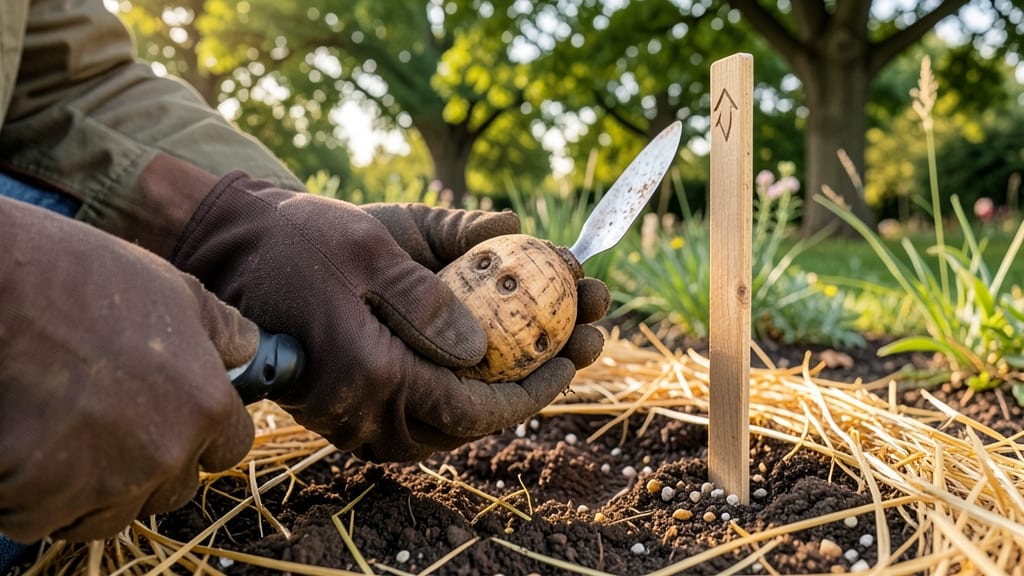
Once your tubers are hardened and soil is warm, plant them 4-6 inches deep, with the eyes (growth nodes) facing up. Space dwarf varieties 12 inches apart and tall types 18-24 inches apart to prevent crowding**.
Water deeply after planting to settle the soil and encourage root establishment. Mulch with straw or shredded leaves to retain moisture and insulate roots from late frosts.
Keep an eye on the weather forecast for the first 2 weeks after planting. If a hard freeze (28°F or below) is predicted, cover plants with burlap or frost cloth.
Dahlias are tender perennials, so protection is key until they’ve established a strong root system. With these precautions, your Indiana dahlias will bloom earlier and more vigorously than ever! 🌿