Plants
If you’ve ever wondered why your ginger plants in California struggle to thrive, the answer might surprise you: timing is everything. Unlike frost-prone regions, California’s warm climate lets you plant ginger year-round—but getting it wrong can mean stunted growth or wasted effort.
The key lies in understanding your microclimate, whether you’re in coastal USDA Zone 10 or inland Zone 9, where heat waves can stress young plants.
I’ve grown ginger in California for years, and the difference between a bumper harvest and a flop comes down to one thing: planting when the soil is warm enough and the weather aligns with your region’s unique conditions.
Coastal gardeners can start as early as January, while inland growers should wait until March to avoid summer heat stress. Let’s break down the exact window for your area and how to set your ginger up for success.
You might assume ginger is a low-maintenance plant, but California’s diverse climates demand a tailored approach. From pre-sprouting rhizomes to adjusting for desert heat, small tweaks can mean the difference between a 9-month harvest and a failed crop.
I’ll share the secrets I’ve learned—including when to plant for fall harvests and how to protect your ginger from unexpected temperature swings.
Ready to grow plump, flavorful ginger rhizomes? By the end of this guide, you’ll know exactly when to plant in your corner of California, plus pro tips to avoid common mistakes that kill harvests. Let’s get your ginger off to the right start—no guesswork required.
California ginger planting calendar: best months by region
California’s microclimates create unique challenges for ginger growers. Unlike frost-prone states, most of California offers year-round planting, but timing still matters for optimal yields.
Coastal areas (like San Diego or Santa Barbara) thrive with soil temperatures above 60°F, while inland valleys (e.g., Central Valley) need cooler starts to avoid summer stress.
For coastal regions, plant ginger anytime between January and March for fall harvests. The mild winters and consistent moisture create ideal conditions. Inland areas should aim for February to April to avoid summer’s 100°F+ heat, which can scorch young plants.
Desert zones (Palm Springs, Joshua Tree) are trickier—plant in late fall (November) or early spring (March) to escape extreme summer drought.
Soil temperature is your best guide. Use a soil thermometer to confirm 60°F+ before planting. Coastal soils often hit this mark by January, while inland areas may wait until March or April. Desert regions require even later starts due to slow soil warming in spring.
Ginger grows as a perennial in California’s frost-free zones, but most gardeners treat it as an annual for harvest efficiency. If you plant in fall (October-November), expect harvests by October-December of the following year.
Spring plantings (March-April) yield harvests the next fall, aligning with California’s natural rainy season.
If you’re in USDA Zone 10 (coastal), you can plant ginger twice yearly: once in winter (January) for a summer harvest and again in summer (July) for a winter crop.
This double-cropping strategy works best in humid coastal areas like Monterey or San Francisco, where summer fog prevents soil drying.
For inland gardeners, focus on spring plantings (March-April) to avoid summer’s 110°F+ soil temps. Mulch heavily with straw or wood chips to retain moisture and cool roots. In desert regions, plant in late fall (November) to capitalize on winter rains before summer dormancy kicks in.
Pro tip: Monitor local weather patterns for La Niña/El Niño years. El Niño brings cooler, wetter winters—ideal for ginger—while La Niña creates drier conditions, requiring extra irrigation. Check NOAA’s climate outlooks before planting to adjust your schedule.
Ginger’s rhizome development slows below 60°F, so coastal gardeners can plant as early as December, while inland areas should wait until March. Use row covers in early spring to protect young plants from unexpected chilly snaps in regions like Sacramento or Fresno.
Remember: California’s diverse climates mean no one-size-fits-all answer. Always adjust for your microclimate—whether you’re in foggy San Francisco or sunbaked Palm Springs. The key is soil temperature, not calendar months.
How to prepare ginger rhizomes for California’s climate
Preparing ginger rhizomes for California’s diverse climate is key to ensuring strong root establishment and a bountiful harvest. Unlike many plants, ginger thrives in warm soil—aim for temperatures above 60°F before planting.
Since California’s microclimates vary wildly, coastal areas can plant year-round, while inland valleys should wait until spring or fall to avoid summer heat stress.
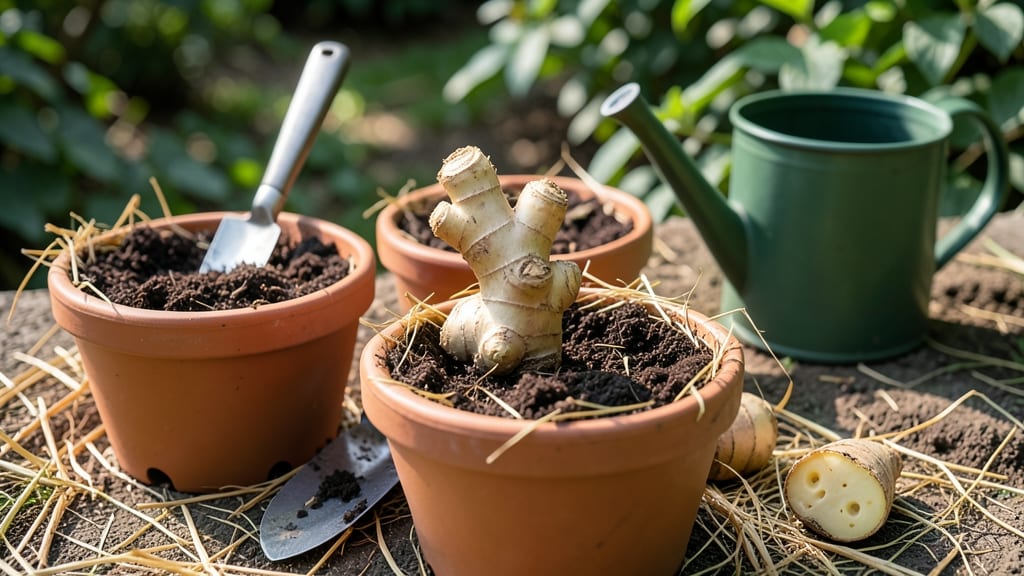
Start by selecting plump, firm rhizomes from a reputable nursery. Look for pieces with visible buds—these are your future plants! Avoid rhizomes with soft spots or mold, as these can rot in California’s humid coastal regions.
If your rhizomes are dormant, soak them in warm water for 6–8 hours to kickstart growth before planting.
Soil prep is just as critical. Ginger prefers well-draining, rich soil with a pH of 6.0–7.0. In coastal areas, amend sandy soil with compost or aged manure to retain moisture. Inland gardeners should mix in perlite or coarse sand to prevent waterlogging during California’s occasional heavy rains.
Step-by-Step Rhizome Prep for California
- ✅ Select rhizomes with 2+ buds and no soft spots.
- 💧 Soak in warm water for 6–8 hours to activate growth.
- 🌱 Trim excess roots or damaged areas with sterilized scissors.
- 🔄 Pre-sprout indoors (optional) in moist peat moss for 2–3 weeks.
- 🌿 Plant 2 inches deep, buds facing up, in pre-warmed soil.
For inland areas like the Central Valley or Desert regions, pre-sprouting rhizomes indoors gives them a head start. Place them in a moistened peat moss tray, keep in warmth (70–75°F), and watch for sprouts in 2–3 weeks.
This method helps ginger establish faster before California’s summer heat peaks.
Mulching is a game-changer in California’s climate. Apply 2–3 inches of straw or wood chips after planting to retain soil moisture and regulate temperature. Coastal gardeners can mulch year-round, while inland growers should add mulch in late spring to protect rhizomes from drying out during heatwaves.
Finally, avoid planting ginger in full sun during summer months in inland zones. Instead, opt for morning sun with afternoon shade to prevent leaf scorch. Coastal areas can handle more sunlight, but even there, partial shade in peak afternoon heat (12–4 PM) improves yield and rhizome quality.