
Plants
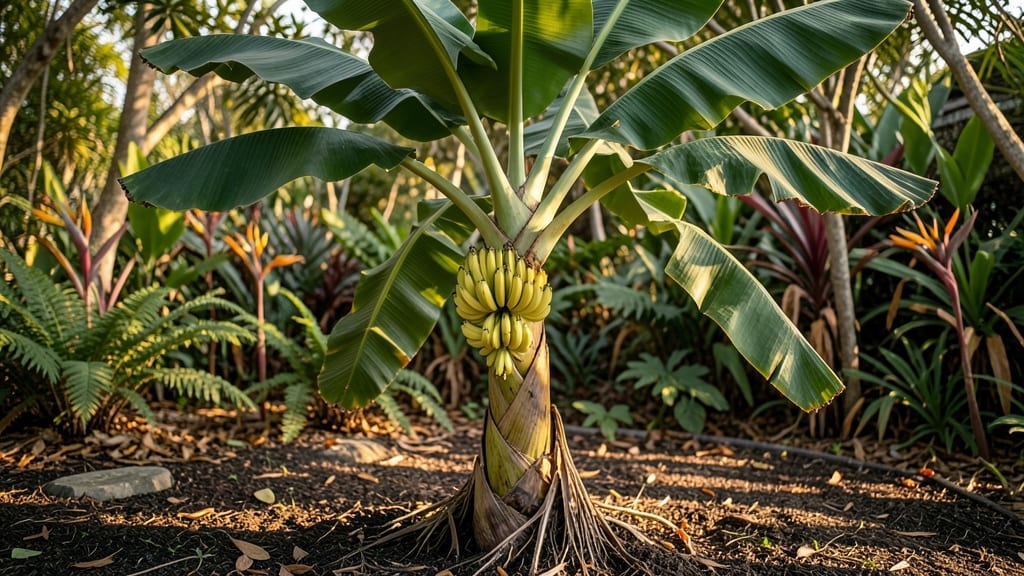
If you’ve ever wondered just how tall that 🍌 banana plant in your garden could grow—or whether it’s about to become a backyard skyscraper—you’re not alone.
Banana plants are famous for their rapid growth, but their mature height can vary dramatically, from waist-high dwarfs to towering giants that stretch taller than your house.
The key to understanding their height lies in the variety you choose. Some, like the Lady Finger banana, max out around 10–13 feet, making them perfect for containers or small yards.
Others, such as the classic Gros Michel, can soar to 20–25 feet or more, requiring serious space and support. Climate, care, and even pruning habits play a huge role in how tall your banana will grow.
What’s even more fascinating is how their height changes over time. In just one year, a banana plant can shoot up from a tiny seedling to a 6-foot pseudostem, and by year three, it might be reaching its full mature height.
But here’s the catch: some varieties stop growing once they fruit, while others keep climbing. Knowing these growth stages is the secret to managing their size—and avoiding a ceiling breach!
Whether you’re dreaming of fresh bananas straight from your backyard or just curious about these tropical giants, I’ll break down everything you need to know.
From dwarf varieties that fit cozy spaces to towering giants that need room to stretch, let’s explore how tall your banana plant could really grow—and how to keep it happy while it does.

Banana plant height by variety: from dwarf to giant species
Banana plants aren’t just one size fits all—their height can vary from a compact 5 feet to a monumental 30 feet, depending on the variety. If you’re dreaming of a backyard tropical oasis or just want a smaller, manageable plant, knowing these differences is key.
Some varieties, like the Lady Finger, stay petite, while others, like the Gros Michel, reach sky-high proportions.
The height of a banana plant is largely determined by its genetic makeup. Dwarf varieties, for example, are bred to stay short, making them ideal for containers or small gardens.
Meanwhile, traditional dessert bananas can grow tall enough to block sunlight for nearby plants. Understanding these differences helps you choose the right plant for your space and climate.
Below, I’ve compared the most popular banana varieties by their mature height, so you can pick the perfect fit for your garden. Whether you’re in a coastal climate or a subtropical zone, these heights give you a clear idea of what to expect.
Banana Variety Height Comparison
| Variety | Mature Height | Best For | Notes |
|---|---|---|---|
| Lady Finger (Dwarf Cavendish) | 5–8 ft | Containers, small gardens | Fast-growing, sweet fruit |
| Red Dacca | 10–12 ft | Tropical landscapes | Red fruit, cold-hardy |
| Ice Cream Banana | 12–15 ft | Edible flowers, tropical gardens | Sweet, creamy texture |
| Gros Michel | 18–25 ft | Large gardens, tropical climates | Classic dessert banana |
| Blue Java | 15–20 ft | Cooking, large gardens | Hardier, disease-resistant |
| Musa acuminata (Wild Banana) | 25–30 ft | Exotic gardens, large spaces | Not edible, ornamental |
| Horn Plant (Heliconia) | 6–10 ft | Tropical borders, containers | Not a true banana, but similar height |
If you’re limited on space, dwarf varieties like Lady Finger are perfect for containers or balconies. They’ll reach your waist in just a few months, making them ideal for urban gardeners.
On the other hand, if you have a large backyard or tropical climate, varieties like Gros Michel or Blue Java will thrive and produce abundant fruit.
One thing to note: banana plants are not true trees. Their "trunk" is actually a pseudostem made of tightly packed leaves. This means they grow fast but die after fruiting, allowing new shoots to emerge from the base.
If you’re growing a tall variety, plan for regular pruning or space it far from structures.
For cooking bananas, like the Blue Java, expect taller growth (15–20 ft) but with thicker, sturdier pseudostems that can handle heavier fruit loads. These are better suited for ground planting rather than containers, as their roots and fruit can get quite heavy.
If you’re in a cooler climate, consider cold-hardy varieties like Red Dacca. While they won’t grow as tall as tropical types, they can survive brief frosts and still reach a respectable 10–12 feet. This makes them a great choice for USDA Zones 9–11.
Pro tip: If you’re growing bananas in containers, choose a dwarf or semi-dwarf variety. Even then, you’ll need a large pot (at least 18 inches wide) and a drainage system to prevent root rot. Without proper care, even dwarf varieties can grow unexpectedly tall if given enough space.
🌱
How banana plant height changes through growth stages (with photos)
Banana plants don’t grow in a straight line—their height is a dramatic journey from a tiny sprout to a towering tropical giant. Understanding these stages helps you predict how much space your plant will need and when it’s time to take action (like staking or pruning).
Here’s what to expect at each phase.
In the first 3–6 months, your banana plant will focus on building roots and leaves rather than height. You’ll see a seedling grow just 6–12 inches tall, with long, slender leaves unfurling like a fan. This phase is all about establishing a strong base for future growth.
The real height surge happens during pseudostem formation (months 6–12). Here, the plant’s leaves grow rapidly, and the pseudostem (false trunk) begins to form. By the end of this stage, your banana could reach 6–12 feet tall. This is when you’ll notice the classic banana silhouette taking shape!
🌱 Banana Plant Growth Timeline
- 0–6 months: Seedling (0–12 inches)
- 6–12 months: Pseudostem forms (6–12 feet)
- 12–18 months: Rapid vertical growth (15–25 feet)
- 18–24 months: Flowering & fruiting (height stabilizes)
Between 12–18 months, your banana plant enters its fastest growth phase. The pseudostem elongates dramatically, and the plant can shoot up 1–2 feet per month in ideal conditions. By this point, it’s common to see varieties like Cavendish or Gros Michel reaching 15–25 feet tall.
This is also when you’ll spot the first signs of a flower bud emerging from the center.
The final stage (18–24 months) is where things get interesting. Once the plant flowers and produces fruit, some varieties stop growing taller and redirect energy into ripening bananas. Others, like Musa acuminata hybrids, may continue climbing—sometimes exceeding 30 feet in tropical climates.
This is why dwarf varieties (like Lady Finger) max out at 10–13 feet, while giants keep reaching.
Pro tip: If you’re growing bananas in containers, prune the pseudostem at 6–8 feet to encourage bushier growth and prevent toppling. In the ground, mulch heavily to support the plant’s weight as it grows.
Watch for leaf yellowing or stunted growth—these are signs your plant isn’t getting enough nutrients or water during critical stages. With the right care, you’ll go from a tiny sprout to a banana bonanza in just a few seasons! 🌿