
Watering
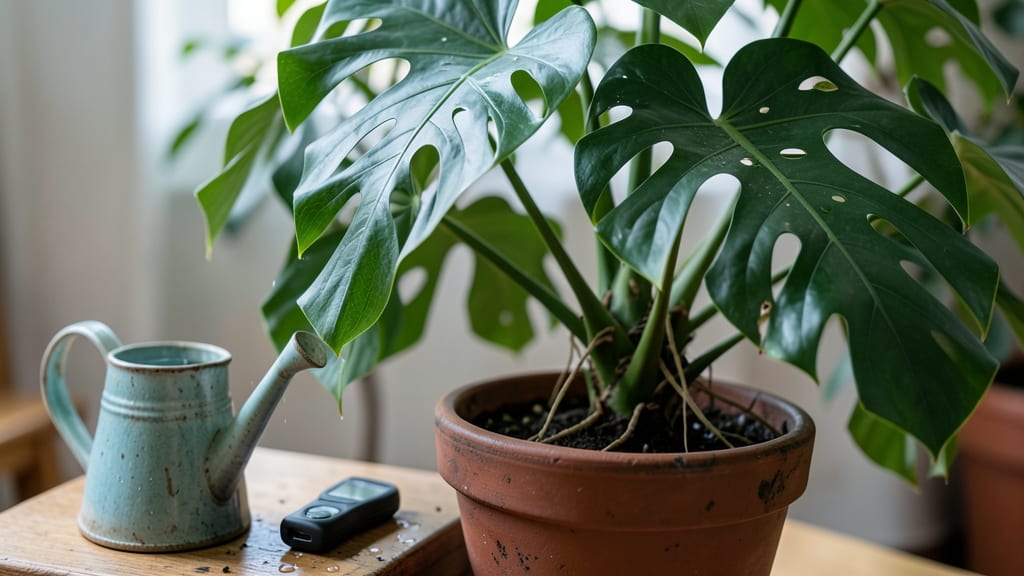
Figuring out how much water your Monstera plant needs can feel like guessing—drench it too much, and you’ll watch those gorgeous leaves turn sad and yellow. But get it just right, and your 🌿 Monstera will reward you with glossy, split-leaf drama that’s pure eye candy.
Here’s the truth: most plant owners overthink watering, but the key is simpler than you’d expect. Whether you’re a seasoned green thumb or a beginner with a thumb that’s seen better days, this guide cuts through the confusion.
We’ll cover exactly when to water, how to spot trouble before it starts, and why your Monstera might be sending you SOS signals with droopy leaves.
Let’s start with the basics—because watering a Monstera isn’t about a rigid schedule. It’s about reading your plant’s cues, adjusting for your home’s humidity, and avoiding the two biggest mistakes that kill these tropical beauties.
Stick with me, and you’ll have a thriving Monstera that’s the envy of every plant lover in your circle.
Ready to turn your watering game into a game-changer? By the end, you’ll know exactly when to reach for that watering can—and when to hold back. Your plant’s future depends on it.
Monstera watering schedule: how often based on soil & season
Mastering your Monstera’s watering schedule is all about balance—too much water and you’ll drown its roots, too little and those stunning leaves will crisp up. As someone who’s nursed more than a few Monstera deliciosa back to health, I’ve learned that seasonal adjustments and soil moisture checks are non-negotiable.
Let’s break down the science-backed routine that keeps your plant thriving year-round.
First, understand that Monstera plants are tropical vines that love humidity but despise soggy soil. Their roots need oxygen, which is why well-draining potting mix and drainage holes are essential.
If you’re using a standard indoor mix, aim to water when the top 1-2 inches of soil feel dry to the touch. For chunky mixes with perlite or orchid bark, you might wait until the top 3 inches are dry.
Now, let’s talk seasonal watering. Your Monstera’s needs shift dramatically between summer’s heat and winter’s dormancy. In spring and summer, when growth is most active, you’ll water more frequently—every 5-7 days for small pots and every 7-10 days for larger containers.
During fall and winter, slow down to every 10-14 days as growth naturally pauses. Pro tip: Check soil moisture with your finger before watering—this simple habit prevents 90% of watering mistakes.
Here’s where most plant parents go wrong: ignoring the pot size. A 6-inch pot dries out faster than a 12-inch pot, so adjust your schedule accordingly. Smaller pots need more frequent watering, while larger containers can hold moisture longer.
Always water until you see excess water draining from the bottom—this ensures the roots get a thorough drink without sitting in water.
One of the biggest misconceptions is that Monstera plants need constant moisture. In reality, they’re more forgiving when slightly underwatered than when overwatered. If you notice the leaves starting to yellow or drop, it’s often a sign of root rot from too much water.
To prevent this, always use a pot with drainage holes and consider upgrading to a terracotta pot, which helps wick away excess moisture faster than plastic.
Another pro tip: Bottom-watering your Monstera can give you better control over moisture levels. Simply place the pot in a tray of water for 10-15 minutes, allowing the roots to absorb what they need.
This method reduces the risk of fungal diseases that can occur from overhead watering. Pair this with a humidity tray or pebble tray filled with water to mimic the tropical environment your Monstera craves.
Don’t forget that humidity levels play a huge role in watering frequency. If your home is dry (common in winter due to heating), you’ll need to water slightly more often because the air pulls moisture from the soil faster.
Aim for 60-70% humidity around your plant—this can be achieved with a humidifier, grouping plants together, or misting the leaves occasionally (though avoid misting if your Monstera has pests like spider mites).
Finally, let’s talk about new Monstera plants versus mature ones. Young plants with smaller root systems need more frequent watering—every 5-7 days—while established plants can handle longer stretches between waterings. Always observe your plant’s growth rate and leaf condition as your best indicators.
If the leaves are perky and glossy, you’re on the right track. If they’re drooping or crispy, it’s time to adjust your routine.
Remember, every home’s environment is unique. Factors like indoor temperature, air circulation, and even the type of potting mix you use will influence how often you need to water.
Keep a simple garden journal to track your Monstera’s response to different conditions—this personal data will help you fine-tune the perfect watering schedule over time. With these guidelines, your Monstera will reward you with lush, split-leaf glory for years to come. 🌿
Monstera watering schedule: how often based on soil & season
Your Monstera thrives on a consistent moisture balance—not too wet, not too dry. As someone who’s nursed more than a few Monsteras back to health, I’ve learned the hard way that seasonal adjustments and soil checks are non-negotiable.
During spring and summer, your plant drinks more water as it grows rapidly, while fall and winter slow its metabolism, reducing its thirst. The key? Bottom-watering and well-draining soil prevent root rot while keeping those stunning leaves hydrated.
Let’s start with the basics: water every 7–10 days in cooler months, but increase to every 5–7 days when temperatures rise. However, this is just a starting point—your Monstera’s actual needs depend on humidity levels, pot size, and even the type of potting mix you’re using.
For example, a 6-inch pot dries out faster than a 12-inch pot, so smaller containers may need more frequent watering. Always check the top 1–2 inches of soil before watering—if it’s dry, it’s time to hydrate.
🌱 Monstera Watering Guide by Season
| Season | Watering Frequency | Soil Check | Additional Tips |
|---|---|---|---|
| Spring | Every 7–10 days | Top 1–2 inches dry | Increase humidity with a pebble tray |
| Summer | Every 5–7 days | Top 1 inch dry | Water in morning to prevent fungal growth |
| Fall | Every 10–14 days | Top 2–3 inches dry | Reduce fertilizer to match slower growth |
| Winter | Every 14–21 days | Top 3–4 inches dry | Move away from cold drafts and heat sources |
Another game-changer? Potting mix matters. Monsteras love a chunky, airy mix that drains well—think 50% peat or coco coir, 30% perlite or orchid bark, and 20% worm castings for nutrients. Avoid heavy garden soil, which compacts and suffocates roots.
If you’re unsure about your mix, stick your finger in: if it feels damp but not soggy 1–2 inches down, wait another day. If it’s bone-dry, it’s time to water deeply until water runs out the drainage holes.
Pro tip: Bottom-watering is your secret weapon. Place your pot in a tray of water for 10–15 minutes, letting the roots absorb moisture at their own pace. This method prevents overwatering and mimics the plant’s natural tropical environment where rainfall is steady but not overwhelming.
After watering, always empty the saucer to avoid root rot, a silent killer of Monsteras. I’ve seen too many beautiful plants lost to soggy bottoms—don’t let that be yours!
Watch for environmental clues too. If your home’s air is dry (common in winter with heating), your Monstera will need water more frequently because the soil dries out faster. Conversely, high humidity in summer might extend the time between waterings.
A hygrometer (around $15) helps track humidity levels, but even a simple finger test works in a pinch. Remember, underwatering causes brown, crispy edges, while overwatering leads to yellow leaves and mushy stems. Both are fixable, but prevention is easier!
Finally, let’s talk pot size. A too-small pot dries out quickly, while a too-large pot stays wet too long. As a rule, upgrade your pot by 1–2 inches in diameter every 2–3 years, or when you see roots circling the soil surface.
If you’re repotting, do it in spring when your Monstera is entering its growth phase. Pair this with a fresh layer of well-draining soil, and your plant will reward you with larger, fenestrated leaves—the ultimate goal for any Monstera lover!