
Plants
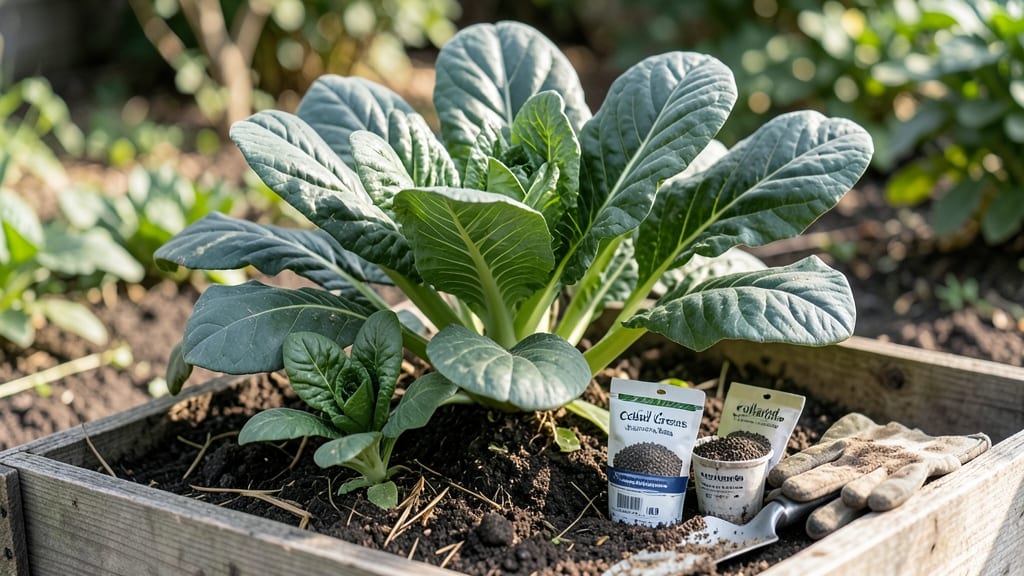
Timing your collard planting in South Carolina can make or break your harvest—get it wrong, and you’ll either face bitter cold snaps or sweltering heat that turns your 🥬 into sad, stunted leaves.
With USDA zones 7b-8a and microclimates ranging from Charleston’s coastal humidity to Greenville’s Piedmont chill, there’s no one-size-fits-all answer. But here’s the key: Planting in March-April or August-September gives you the best shot at frost-free growth, whether you’re sowing seeds or transplanting starts.
Why does this matter? Because collards thrive in cooler weather but bolt (go to seed) fast when temperatures climb.
I’ll break down the exact planting windows for your region, plus how to adjust for South Carolina’s unpredictable weather—so you can enjoy crisp, flavorful greens from May-June and again in October-November.
Ready to stop guessing and start growing? Let’s dive into the frost-free timeline that’ll turn your garden into a collard powerhouse.
South Carolina collard planting calendar by region: Coastal vs. Piedmont vs. Upstate
South Carolina’s three distinct growing zones—Coastal, Piedmont, and Upstate—each demand different timing for planting collards. The Coastal Plain (USDA Zone 8a) enjoys milder winters, while the Upstate (Zone 7b) faces earlier frosts.
Piedmont gardens (Zone 7b-8a) sit right in between, requiring careful balance. Let’s break down the optimal planting windows for each region to avoid frost damage or summer bolting.
For Coastal SC (e.g., Charleston, Beaufort), your last frost date hovers around February 15, giving you a 6-week head start over inland areas. This means you can plant collard seeds as early as late January for spring harvests, or August 1–15 for fall/winter production.
The humidity here also means better disease resistance if you choose slow-bolting varieties like ‘Vates’. 🌱
The Piedmont region (e.g., Columbia, Greenville) has a later last frost around March 1, but cooler nights demand staggered plantings. Start transplants in mid-March and direct-sow seeds by April 15 for spring.
For fall, aim for August 15–September 15, using row covers if frost threatens early. The elevation difference here (500–1,000 ft) can delay frost by 1–2 weeks compared to the coast. 🌿
Upstate SC (e.g., Greer, Spartanburg) is the most frost-sensitive, with first frosts arriving by November 1. Plant collard seeds no earlier than late March for spring, or transplants by April 15. Fall plantings must start by August 1 to mature before cold snaps. The shorter growing season here means prioritizing fast-maturing varieties like ‘Georgia Southern’, which tolerates cooler temperatures better than standard types. ✂️
| Region | Last Frost Date | Spring Planting Window | Fall Planting Window | Key Consideration |
|---|---|---|---|---|
| Coastal (Zone 8a) | Feb 15 | Late Jan–Feb 15 | Aug 1–15 | Humidity-resistant varieties |
| Piedmont (Zone 7b-8a) | Mar 1 | Mid-Mar–Apr 15 | Aug 15–Sep 15 | Elevation delays frost |
| Upstate (Zone 7b) | Mar 15 | Late Mar–Apr 15 | Aug 1–Sep 1 | Shortest growing season |
Regardless of region, direct-sowing collard seeds is faster than transplants in SC’s climate. Seeds germinate in 5–10 days at soil temps of 60–85°F, so use a soil thermometer to time your planting.
For transplants, harden off seedlings for 7–10 days before setting them out, especially in Upstate gardens where nighttime temps can drop quickly. 💧
One critical mistake SC gardeners make is planting too late in spring. By May 15, summer’s heat causes bolting (premature flowering), ruining leaf production. Similarly, fall plantings after September 15 risk frost damage before harvest.
Use succession planting—sow new seeds every 2–3 weeks from August through September—to ensure a continuous harvest through November. 🌻
If you’re in a microclimate (e.g., a low-lying area near a river or a hilltop garden), adjust dates by 1–2 weeks. Low spots stay warmer longer in fall, while hilltops freeze earlier.
Monitor local agricultural extension alerts (like Clemson’s SC Weather Network) for unexpected frost warnings in October. A lightweight row cover can extend your harvest by 2–3 weeks in marginal zones. 🌡️
For container gardening in SC’s urban areas (e.g., Charleston’s historic district), use 5-gallon pots with well-draining soil. Plant collards in late April for summer harvests or early September for fall. Containers warm up faster in spring, so start seeds indoors 4–6 weeks before your region’s last frost date.
Move pots to partial shade in peak summer (June–July) to prevent leaf scorch. 🪴
Pro tip: Mulch heavily with straw or pine needles after planting to retain moisture and suppress weeds. In Coastal SC, this also reduces soil-borne diseases
How to adjust planting dates for South Carolina’s unpredictable weather patterns
South Carolina’s weather can be as unpredictable as a summer storm—one day it’s 75°F and sunny, the next it’s 45°F with frost warnings. If you’ve ever planted collards only to watch them wilt from a sudden cold snap or bolt into flowers from a heatwave, you’re not alone.
The key to success? Flexible planting dates based on real-time conditions, not just a calendar. Here’s how to stay ahead of SC’s unpredictable weather and protect your harvest. 🌡️
Start by checking the 10-day forecast 2 weeks before your target planting date. Websites like the National Weather Service or Clemson’s SC Weather Network provide hyper-local data. Look for red-flag signs: If nighttime temps dip below 50°F for 3+ nights, delay planting by 1–2 weeks.
In Upstate SC, this happens as early as October 15, while Coastal areas may stay frost-free until November 10. Use a soil thermometer ($15 at garden centers) to confirm soil temps are 60–85°F—collard seeds won’t germinate below 50°F. 🌱
For fall plantings (August–September), watch for sudden cold fronts moving in from the north. These can drop temps 20°F in 24 hours, catching gardeners off guard.
If your 10-day forecast shows a 40°F low within 2 weeks of planting, either use row covers or shift your schedule to early August. Pro tip: Plant ‘Georgia Southern’ collards—they tolerate cooler temps better than standard varieties and mature 10–14 days faster. ✂️
Upstate SC: Frost can hit as early as October 10—plant by September 15 or use row covers.
Coastal SC: Frost risk rises after November 1—extend harvests with mulch or cold frames.
If you’re a late starter (e.g., missed the August window), don’t panic—collards can still thrive with succession planting. Sow seeds every 2–3 weeks through September 15 for a staggered harvest.
Use black plastic mulch to warm soil faster in Upstate gardens, or shade cloth (30% coverage) to protect Coastal plants from midday sun in June. For transplants, harden off seedlings for 10–14 days before setting them out, especially if nighttime temps are below 60°F. 💧
Another game-changer is the “5-4-3 Rule” for adjusting planting dates:
- 5 days earlier for every 1°F below average nighttime temp.
- 4 days later for every 1°F above average daytime temp.
- 3 days buffer for rainy weeks (soil stays too wet for seeds).
For container gardeners in urban SC (e.g., Charleston’s historic district), move pots to shaded patios by June 1 to prevent leaf scorch. If a heatwave hits (90°F+ for 3+ days), increase watering to every other day and mist leaves early morning to reduce stress.
In Upstate microclimates, like Caesars Head, plant 2 weeks later than the general Upstate schedule—these high-elevation spots freeze earlier than valleys. 🪴
Finally, keep a gardening journal to track your local patterns. Note when unexpected frosts hit or heatwaves arrive, and adjust next year’s dates accordingly. Over time, you’ll build a custom planting calendar tailored to your SC microclimate—no more guesswork, just crisp, flavorful collards all season long. 🥬