
Plants
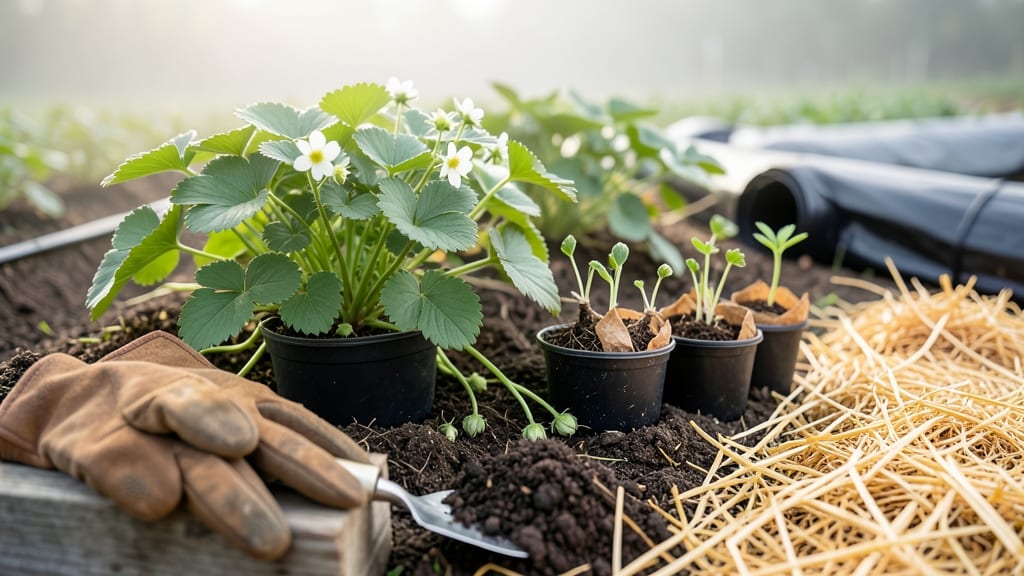
If you’ve ever wondered when to plant strawberries in Kansas, the answer isn’t just about frost dates—it’s about matching your variety to the region’s chill hours. With Kansas’ Zone 5b-7a climate, planting too early risks frost damage, while waiting too long can leave your 🍓 struggling in summer heat.
Most Kansas gardeners know early spring (March-April) is ideal, but late summer (July-August) works too for certain varieties. The key? Understanding your strawberry’s chill-hour needs—whether it’s 500 hours for day-neutral types or 1,000 hours for June-bearing favorites like ‘Chandler.’
In this guide, I’ll break down the exact planting windows, soil prep tips for Kansas’ clay-heavy soils, and how microclimates (like urban heat islands) can shift your schedule by weeks. Ready to grow sweeter strawberries with less guesswork?
Let’s dive into the chill-hour chart and planting steps tailored for Kansas’ 165 frost-free days, so you can harvest May through July without stress.
Kansas strawberry planting calendar: chill-hours vs. last frost dates by variety
Strawberries thrive in Kansas when planted at the right time, but the chill-hour requirements of each variety make all the difference. June-bearing types need 500-1,000 chill hours, while everbearing and day-neutral varieties adapt better to 300-600 chill hours.
Since Kansas falls in Zone 6B-7A, we’ll align planting with your local last frost dates (March 15–April 15) and chill-hour accumulation.
For June-bearing strawberries like 'Chandler' or 'Jewel,' aim for early spring planting (mid-March to early April) when soil temps hit 40°F+.
These varieties need full chill hours before flowering, so planting too late risks poor fruiting. Everbearing types like 'Seascape' or 'Ozark Beauty' are more flexible, tolerating late spring (April) or even late summer (July-August) plantings for fall harvests.
Day-neutral varieties such as 'Albion' or 'Tristar' are the most adaptable, producing fruit all season long if planted in spring or fall. Their lower chill-hour needs (300-500) make them ideal for Kansas gardeners who want extended harvests.
However, fall plantings must occur at least 6-8 weeks before first frost (October 15) to establish roots.
Use a chill-hour calculator (like the one from Purdue Extension) to track your local accumulation. For example, Topeka (Zone 6B) typically hits 500 chill hours by late February, while Garden City (Zone 7A) may need to wait until March 15.
Adjust planting dates 1-2 weeks later if winters are mild.
Pro tip: Bare-root strawberries should be planted as soon as soil is workable (40°F+), while potted plants can wait until soil warms to 50°F+. In western Kansas, where soils dry out faster, opt for everbearing varieties and mulch heavily to retain moisture.
If you’re in eastern Kansas (e.g., Kansas City, Lawrence), where humidity is higher, prioritize disease-resistant varieties like 'Fort Laramie' or 'Honeoye' to avoid gray mold. In western Kansas (e.g., Dodge City, Hays), focus on drought-tolerant types like 'San Andreas' or 'Seascape' and use drip irrigation.
For a second harvest, try a late-summer planting (July-August) with everbearing or day-neutral varieties. These plants will produce smaller berries but extend your season until first frost in October. Just ensure they’re established 6-8 weeks before frost to avoid winter kill.
Always check your local Kansas State University Extension office for updated frost dates, as microclimates can shift planting windows by 1-2 weeks. For example, urban areas like Wichita may experience urban heat islands, delaying frost and extending the growing season.
Ready to plant? Grab your gloves and soil thermometer—we’ll dive into Kansas-specific soil prep and care in the next section to ensure your strawberries thrive from day one! 🍓
How to adjust planting for Kansas microclimates: urban vs. rural timing differences
Kansas’ diverse landscapes create microclimates that can shift strawberry planting windows by 1-2 weeks. Urban areas like Wichita or Kansas City experience urban heat islands, where concrete and pavement trap heat, delaying frost and extending the growing season.
Rural areas like Hutchinson or Salina, however, often have cooler nights and faster soil warming in spring.
In cities, last frost dates may occur 2 weeks later than rural counterparts. For example, Kansas City’s average last frost is April 22, while nearby rural areas like Lawrence may see frost until April 15.
Adjust your planting by delaying urban plantings by 7-10 days to avoid heat stress on young plants.
Planting bare-root strawberries in dry, compacted city soil without amending it first. Urban soils often lack organic matter and drain poorly, leading to root rot or stunted growth. Always test soil pH (5.5-6.5) and add compost or peat moss before planting.
Wind exposure also plays a role. Western Kansas (e.g., Dodge City, Hays) experiences stronger winds that dry out soil faster. Plant strawberries in windbreaks or use mulch rings to protect roots.
In contrast, eastern Kansas has more humidity, increasing disease risk—choose disease-resistant varieties like 'Fort Laramie' if you're in this region.
Soil drainage varies dramatically. Clay-heavy soils in eastern Kansas (e.g., Topeka, Emporia) can become waterlogged, while sandy soils in western Kansas (e.g., Garden City, Colby) dry out quickly. Amend clay soils with sand or perlite, and add orgainc matter to sandy soils to improve moisture retention.
For container gardening in urban areas, use large pots (12"+ deep) with well-draining mix and plant day-neutral varieties like 'Albion' for extended harvests. Containers warm up faster than ground soil, so you can plant 2 weeks earlier than in-ground plants.
Check local Kansas Mesonet stations for real-time soil temps. For instance, Hays (Zone 7A) may have 50°F soil temps by March 20, while Parsons (Zone 6B) might not reach this until March 30. Use a soil thermometer to confirm readiness before planting.
Pro tip: Stagger plantings in microclimates—plant half your June-bearing strawberries in early April and the rest 2 weeks later. This spreads out harvests and reduces risk if one batch struggles with late frost or heat stress. 🌱