
Plants
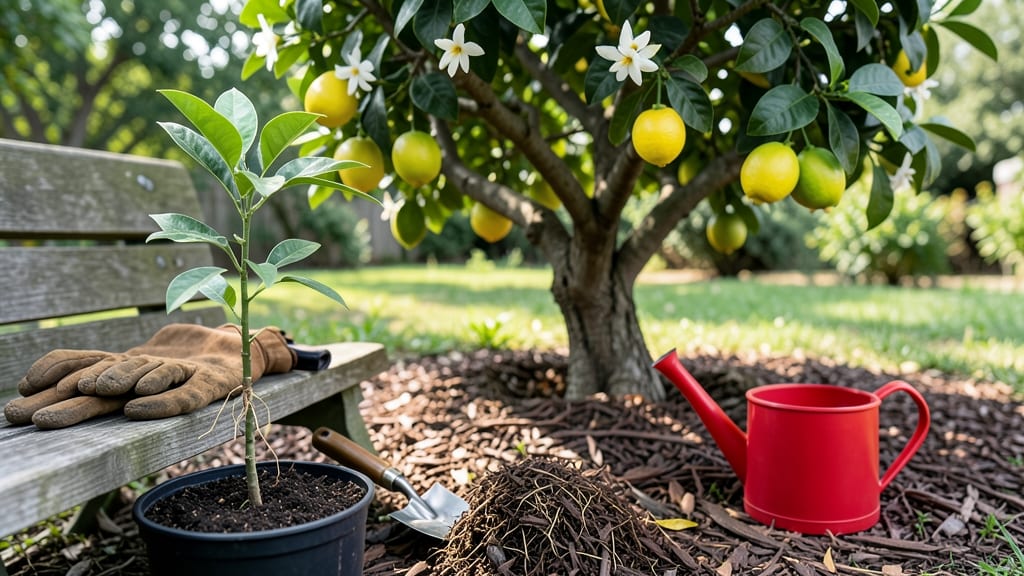
The best time to plant a lemon tree in California depends entirely on where you live—but get it wrong, and your 🍋 lemon tree could struggle with frost or scorching heat. Coastal areas like Los Angeles thrive with year-round planting, while inland valleys like Sacramento need precise timing to avoid winter chill. Let’s break down the ideal windows for your region so your tree grows strong from the start.
California’s diverse climate means no single answer fits all. Coastal zones (USDA 10a-11) can plant almost anytime, but inland areas (Zone 9a-9b) must wait until after last frost—typically February or March.
Desert regions like Palm Springs? Plant in fall to beat summer’s extreme heat. The key is matching your microclimate to your tree’s needs.
Why does timing matter so much? A lemon tree planted too early faces frost damage, while late planting stresses roots in summer’s dry heat. I’ll show you how to read your local conditions—soil warmth, frost dates, and even container flexibility—to pick the perfect moment.
No guesswork, just a thriving citrus tree ready for harvest.
Ready to avoid common mistakes? You’ll learn how to prep soil, protect young roots, and adjust for your exact zone—whether you’re in frost-free San Diego or chilly Sacramento. Let’s get your lemon tree off to the best start possible.
Optimal planting months for lemon trees in California’s coastal vs. inland regions
California’s diverse climate means the best time to plant a lemon tree depends on whether you live near the coast or inland. Coastal areas like San Diego and Santa Barbara enjoy milder winters, while inland zones like Sacramento and Fresno face frost risks.
Timing your planting right ensures your tree establishes strong roots before summer heat or winter chill hits.
For coastal California (USDA Zones 10–11), the ideal window stretches from November through March. This period offers mild temperatures (50–70°F) and minimal frost risk, giving young roots time to settle before summer’s intensity.
Inland areas (Zones 8–9) should aim for February to early April, avoiding late spring when heat spikes can stress newly planted trees.
Here’s why timing matters: Planting too early exposes roots to winter chills (below 30°F), while late planting risks summer drought stress as temperatures climb above 90°F. The key is to align your planting with soil temperatures above 60°F and stable daytime highs of 70–75°F.
| Region | Best Planting Window | Key Climate Factors | Soil Prep Timing |
|---|---|---|---|
| Coastal (Zone 10–11) | November–March | Mild winters (40–60°F), low frost risk | October–December (6–8 weeks before planting) |
| Inland (Zone 8–9) | February–Early April | Frost risk (20–30°F), hot summers (90–100°F) | January–February (6–8 weeks before planting) |
Soil preparation is just as critical as planting timing. For both regions, start 6–8 weeks before planting by amending your soil with compost and citrus-specific fertilizer (NPK 6-6-6). Coastal areas benefit from well-draining sandy loam, while inland zones may need extra organic matter to retain moisture during summer droughts.
Test your soil’s pH—lemons thrive in slightly acidic soil (6.0–7.0).
If you’re in a frost-prone inland area, consider planting in containers for mobility. This lets you move the tree indoors or to a sheltered spot during cold snaps. Dwarf varieties like ‘Meyer Lemon’ are perfect for containers and adapt well to microclimates like patios or greenhouses.
Another pro tip: Avoid planting during peak heat (June–August), even in coastal zones. High temperatures stress young roots, and evaporation rates skyrocket, requiring constant watering. Instead, opt for early fall (September–October) as a secondary window if you missed the ideal months.
Once planted, mulch around the base with 3–4 inches of organic mulch (straw or wood chips) to retain moisture and regulate soil temperature. This is especially important in inland areas, where summer heat can dry out soil quickly.
Water deeply 2–3 times per week for the first month to encourage root growth.
Remember, lemon trees are evergreen but sensitive to cold. If you’re in Zone 8–9, protect young trees with burlap wraps or frost cloth during unexpected late frosts. Coastal gardeners can relax more, but even there, Santa Ana winds can dry out soil—monitor moisture closely.
By aligning your planting with these region-specific windows, you’ll give your lemon tree the best start possible. Whether you’re in sunny San Diego or the Central Valley, the right timing means fewer struggles and more lemons in just a few years!
How to adjust planting time based on your California Zone (USDA 9–11)
California’s diverse climate means your USDA zone and microclimate play a huge role in when to plant your lemon tree. Coastal areas like San Diego (Zone 10–11) enjoy mild winters, while inland valleys like Sacramento (Zone 9a–9b) face frost risks.
Here’s how to fine-tune your planting schedule based on your specific zone and growing conditions.
For cooler inland zones (USDA 9a–9b), aim to plant between mid-February and early April. This window avoids late frosts (typically December 15–January 15) while giving roots time to establish before summer heat.
In warmer coastal zones (USDA 10a–11), you can plant year-round, but November–March is ideal to take advantage of winter rains and cooler temps.
Soil temperature is your best friend when deciding the exact timing. Lemon trees thrive when soil temps stay above 60°F (15°C). Use a soil thermometer to check—if it’s consistently warm, it’s time to plant! In Zone 9–9b, wait until soil temps stabilize above 60°F, usually by mid-March. In Zone 10–11, you can plant as early as late fall or even early spring.
If you’re growing your lemon tree in a container, you have more flexibility. Containers warm up faster in spring, so you can plant 2–4 weeks earlier than in-ground trees. Just ensure your pot has drainage holes and use a citrus-specific potting mix to prevent waterlogging.
For dwarf varieties like Meyer lemons, container planting is ideal—plant in early spring (March) for best results.
One final tip: Monitor weather forecasts in the weeks leading up to planting. If a heatwave is predicted, delay planting until temps drop below 90°F (32°C). Lemon trees are sensitive to transplant shock during extreme heat, so patience pays off.
With the right timing, your tree will establish strong roots and reward you with lemon harvests in as little as 1–2 years!