
Plants
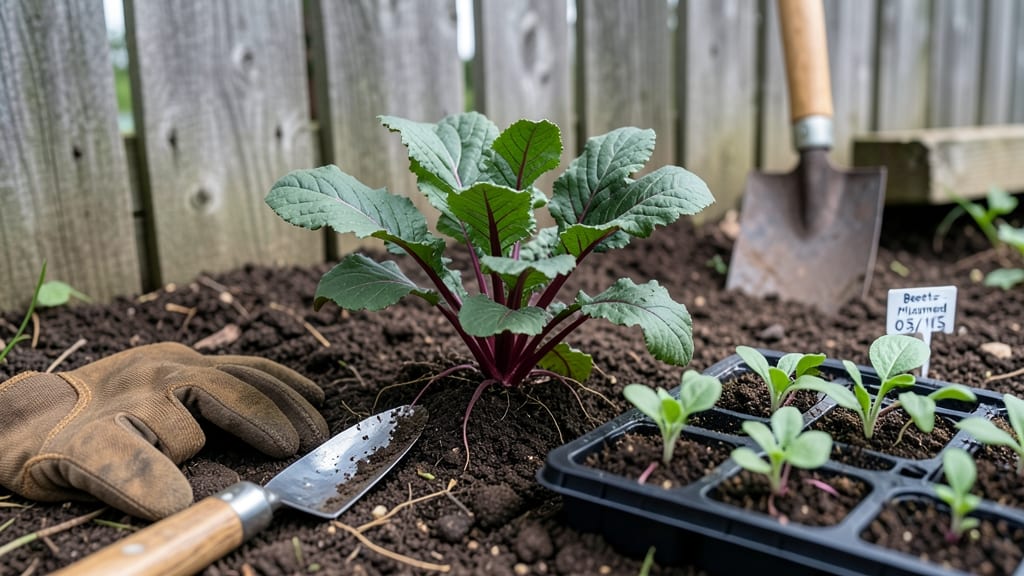
Timing your beet planting in Utah isn't just about following a calendar—it's about outsmarting the state's high desert swings and microclimates that can turn sweet roots bitter in days.
With last frosts creeping in as late as March 15 in some valleys and first frosts arriving by October 15, even experienced gardeners get tripped up.
I've grown 🍠 beets across Utah's 5a-7b zones and learned the hard way that planting too early risks frost damage, while waiting too long triggers bolting. The secret?
Two precision windows—early spring (March-April) and late summer (July-August)—that align with soil temperatures and daylight length to keep your harvest sweet and your plants thriving.
What you're about to discover isn't just theory—it's battle-tested advice for Utah gardeners. We'll break down the exact dates for your specific region, how to adjust for late frosts, and which beet varieties hold up best in our unpredictable climate.
No more guessing games when you plant your next batch of 🍠 beets.
Ready to transform your Utah garden into a beet-growing powerhouse? Let's dive into the science-backed timing that'll have you harvesting plump, tender roots from May through October—without a single bitter bolt in sight.
Utah’s 3 best planting windows for beets (by microclimate)
Utah’s diverse microclimates mean your neighbor’s successful beet harvest could fail in your garden if you don’t adjust timing. The key? Planting when soil temperatures hit 45°F (7°C) and frost-free dates are predictable.
I’ve broken down the optimal windows for Utah’s 4 distinct regions to avoid bolting (the bitter taste trigger) and maximize yields.
Beets thrive in cool weather but bolt when stressed by heat or drought. In Utah, this means two primary planting seasons: early spring and late summer.
The Wasatch Front (Salt Lake City area) has the longest growing season, while Southern Utah (St. George) faces earlier heat stress. Let’s dive into the data.
| Region | Spring Planting Window | Fall Planting Window | Soil Temp Threshold | Frost-Free Days |
|---|---|---|---|---|
| Wasatch Front (USDA 6a-7a) | Mid-March to early April | Late July to mid-August | 45-50°F (7-10°C) | 120-150 days |
| Southern Utah (USDA 7b-9a) | Late February to March | Early August to September | 50-55°F (10-13°C) | 180-210 days |
| Cache Valley (USDA 5b-6b) | Late March to April | Mid-July to August | 40-45°F (4-7°C) | 90-120 days |
| Eastern Utah (USDA 5a-6a) | April to early May | Late July to early August | 45-50°F (7-10°C) | 100-130 days |
For Wasatch Front gardeners, aim for March 15-April 1 in spring and July 20-August 10 for fall plantings. Use a soil thermometer to confirm 45°F (7°C)—beets won’t germinate in colder soil.
In Southern Utah, where heat arrives early, plant early February-March and August-September to avoid 100°F+ days that trigger bolting.
In Cache Valley, where late frosts linger, wait until April 15 for spring plantings. The 10-day rule applies here: if your area has a 10% chance of frost 10 days after planting, delay by a week.
For Eastern Utah, focus on late April-early May to align with consistent soil warming after winter’s grip.
Pro tip: Use black plastic mulch in spring to warm soil 5-10°F faster, or shade cloth in summer to protect seedlings from intense Utah sun. These tricks extend your planting windows by 2-3 weeks on either end.
Bolting risk spikes when beets experience 10+ days above 80°F (27°C). In Utah, this happens by late June in low elevations and early July in mountain regions. Plan your fall harvest to finish before September 15 in most areas to avoid bitter flavors.
For container gardening, adjust timing by 1-2 weeks earlier—pots heat up faster. Place containers in partial shade during June-August to slow bolting. My personal trick? Sow a second fall crop in early August using heat-tolerant varieties like ‘Cylindra’ for a September-October harvest before first frost.
Track your local frost dates using the Utah Climate Center’s frost calculator (ag.utah.edu/climate). Input your elevation and latitude for precise timing—this tool accounts for Utah’s microclimate variations that can shift frost dates by 2-3 weeks just 20 miles apart.
How to adjust planting dates for Utah’s unpredictable weather
Utah’s unpredictable weather can throw off even the best-laid planting plans. A late frost in May or an early heatwave in June can ruin your beet crop if you’re not prepared.
The key is using the 10-day rule—a simple but powerful method to avoid frost damage while maximizing your growing season. This rule states that if there’s a 10% chance of frost within 10 days of planting, you should delay by at least a week.
Start by checking the National Weather Service’s 10-day forecast for your specific USDA zone. For example, in USDA 6a (Wasatch Front), aim to plant beets by April 15 for spring. If frost warnings appear, shift to April 22 or later.
Use a soil thermometer to confirm temperatures are consistently above 45°F (7°C)—beets won’t germinate in colder soil, no matter how eager you are to plant.
For fall plantings, the goal is to sow seeds 8-10 weeks before your first frost date. In Southern Utah (USDA 7b-9a), this means early August, while Eastern Utah (USDA 5a-6a) gardeners should aim for late July.
Use the Utah Climate Center’s frost calculator to input your elevation and get precise dates—this tool accounts for Utah’s microclimate variations that can shift frost dates by 2-3 weeks just 20 miles apart.
Extend your growing season with seed-starting tricks. Begin indoor seedlings 4-6 weeks before your last frost date using grow lights or a sunny windowsill. Transplant outdoors when seedlings have 2-3 true leaves and soil is 50°F+ (10°C+).
For container gardening, use black pots to absorb heat faster—this can give you a 2-week head start compared to traditional containers.
Monitor soil moisture closely during Utah’s dry spells. Beets need consistent moisture to prevent bolting, but overwatering can cause rot. Water deeply once a week in spring/fall, and every 5-7 days in summer.
Use a moisture meter to check soil depth—aim for 1 inch of water per week, delivered in the early morning to reduce evaporation.
If a heatwave hits early (common in June-July), protect seedlings with shade cloth (30-50%). This can lower soil temperatures by 10-15°F and delay bolting by 2-3 weeks.
For high-altitude gardens (above 7,000 ft), plant heat-tolerant varieties like ‘Cylindra’ or ‘Detroit Dark Red’—these handle Utah’s summer swings better than standard types.
My pro tip: Keep a gardening journal to track your local frost dates, soil temps, and beet growth. Over 3 years, you’ll spot patterns—like when your area hits 80°F+ consistently—and adjust planting dates accordingly.
For example, I’ve found that Provo (USDA 6b) hits bolting temperatures by June 20, so I prioritize fall harvests over summer ones.