
Plants
Massachusetts blueberry planting calendar: soil temperature & frost-free deadlines
Massachusetts gardeners face a delicate balance when planting blueberries—soil temperature and frost-free windows dictate success. Blueberries thrive when soil reaches 50°F+, signaling root growth can begin without frost damage.
In USDA Zones 5b-6b, this typically aligns with late April to early June for spring planting or September to October for fall.
Your last frost date is critical: Coastal areas like Boston average April 15, while inland regions (e.g., Western MA) may wait until May 1. Planting too early risks frost damage to tender roots, while waiting too long delays establishment before winter.
Use the frost-free window—typically 165 days in MA—to time your planting for maximum growth before harvest.
🌱
| Stage | Action | Key Consideration |
|---|---|---|
| Soil Warm-Up | Test soil at 50°F+ | Use a soil thermometer; coastal areas warm faster. |
| Spring Planting | Plant after last frost (late April–early June) | Boston: April 15+ | Western MA: May 1+ |
| Fall Planting | Plant 6–8 weeks before first frost (Sept–Oct) | Roots establish before dormancy; mulch heavily. |
| Frost Protection | Use row covers or straw mulch | Critical for early spring or late fall planting. |
| Harvest Window | Mid-July to early September | Plant early varieties first for staggered harvests. |
For spring planting, aim to get blueberries in the ground 2–3 weeks after your last frost. This gives roots time to establish before summer heat.
In fall, plant 6–8 weeks before first frost—typically September to October—so roots can harden off before winter. Coastal MA has a longer growing season, while inland areas may need to adjust timelines by 1–2 weeks.
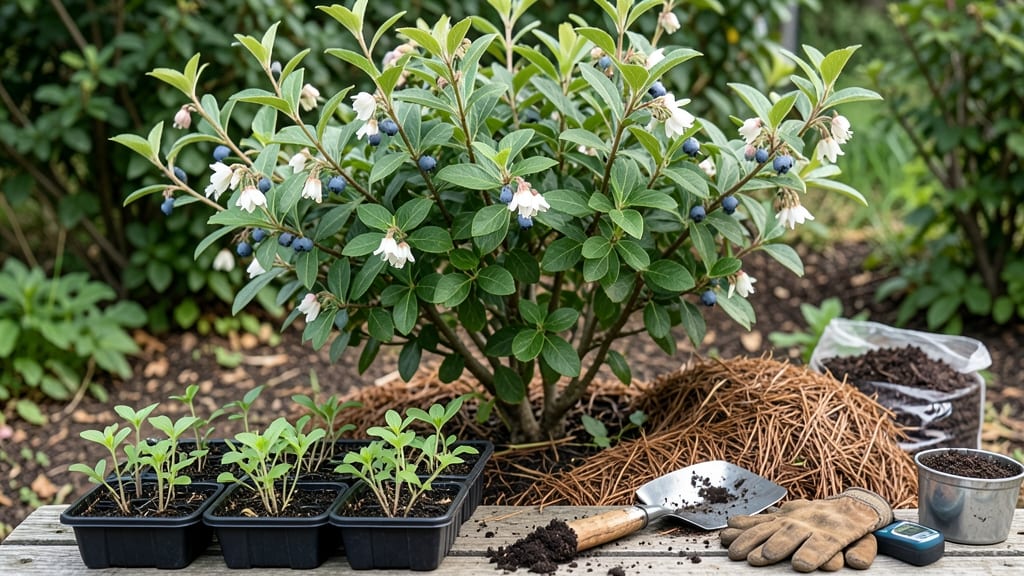
Pro tip: Use organic mulch (like pine needles) to insulate roots and maintain acidic soil (pH 4.5–5.5). This mimics their native bog habitats and prevents soil pH drift, a common issue in MA’s alkaline soils.
Test your soil’s pH before planting—lime-free compost can help adjust it naturally.
If you’re in Zone 5b (e.g., North Shore), err on the side of late spring planting to avoid early frosts. For Zone 6b (e.g., Pioneer Valley), fall planting often yields better survival rates. Always monitor weekly frost forecasts from the National Weather Service for real-time adjustments.
🌿
One common mistake is planting when soil is still cold (below 50°F). Roots won’t activate, leaving your bush vulnerable to winter kill. Another pitfall? Ignoring microclimates.
A south-facing slope warms faster than a north-facing yard, so adjust your timeline accordingly. Use a minimum-maximum thermometer buried 4 inches deep to track soil temps accurately.
For container gardening, the rules shift slightly: plant 1–2 weeks earlier in spring since pots warm faster. However, containers also dry out quicker, so water consistently and use self-watering pots if possible. In-ground plantings benefit from natural moisture retention, but both methods require well-draining, acidic soil.
🪴
Remember: Blueberries are perennial, meaning they’ll produce for 15–20 years if planted correctly. Rushing the process—like planting in early spring without frost protection—can set your bush back for years.
Take the time to prepare your site, test soil pH, and choose the right variety for your MA region. Your future harvests will thank you!
Best blueberry varieties for massachusetts climates & their planting timelines
Massachusetts’ diverse microclimates—from coastal Boston to inland valleys—mean not all blueberry varieties thrive equally. The right cultivar can mean the difference between a bountiful harvest and fewer berries. For USDA Zones 5b-6b, I recommend three top performers: 'Bluecrop' (early-season), 'Patriot' (mid-season), and 'Jersey' (late-season).
Each has unique planting windows and harvest times to extend your blueberry season.
For example, 'Bluecrop'—a classic Northern Highbush—ripening in late July is perfect for early fall harvests before frost. Meanwhile, 'Patriot,' bred for disease resistance, ripens in early August and handles humid summers better.
'Jersey,' a late-season variety, ripens in September and is ideal for cooler inland areas like the Berkshires.
Staggering varieties lets you enjoy berries from July through September. For instance, plant 'Bluecrop' in early spring (April-May) and 'Jersey' in late spring (May-June) to spread out your harvest. Fall planting (September-October) works too—just choose dwarf varieties like 'Top Hat' for smaller spaces or containers.
| Variety | Best For | Planting Window | Harvest Time | Height |
|---|---|---|---|---|
| Bluecrop | Early harvests, large berries | April-May or Sept-Oct | Late July | 6-8 ft |
| Patriot | Humid climates, disease resistance | April-May or Sept-Oct | Early August | 5-6 ft |
| Jersey | Late-season harvests, cooler areas | May-June or Sept-Oct | September | 6-7 ft |
| Top Hat | Containers, small spaces | April-May or Sept-Oct | Mid-July | 2-3 ft |
When selecting varieties, consider your local frost dates. Coastal areas like Cape Cod can plant 2 weeks earlier than inland regions like Western MA. For example, if your last frost is May 10, aim to plant by April 15 for spring planting.
Always check soil temperature—roots need 50°F+ to establish.
Pro tip: Pair lowbush varieties (like 'Jersey') with highbush types for cross-pollination. Even if you only want one bush, nearby neighbors’ blueberries will improve your yield. Just avoid planting all southern varieties (e.g., 'Southern Highbush'), which struggle in Zone 5 winters.
Finally, dwarf varieties like 'Top Hat' are perfect for urban gardens or balcony containers. They mature in 3-4 years and produce earlier than standard bushes. Whether you’re in Boston’s heat islands or the Pioneer Valley’s cooler nights, the right variety + timing ensures sweet, plentiful berries every season.