
Plants
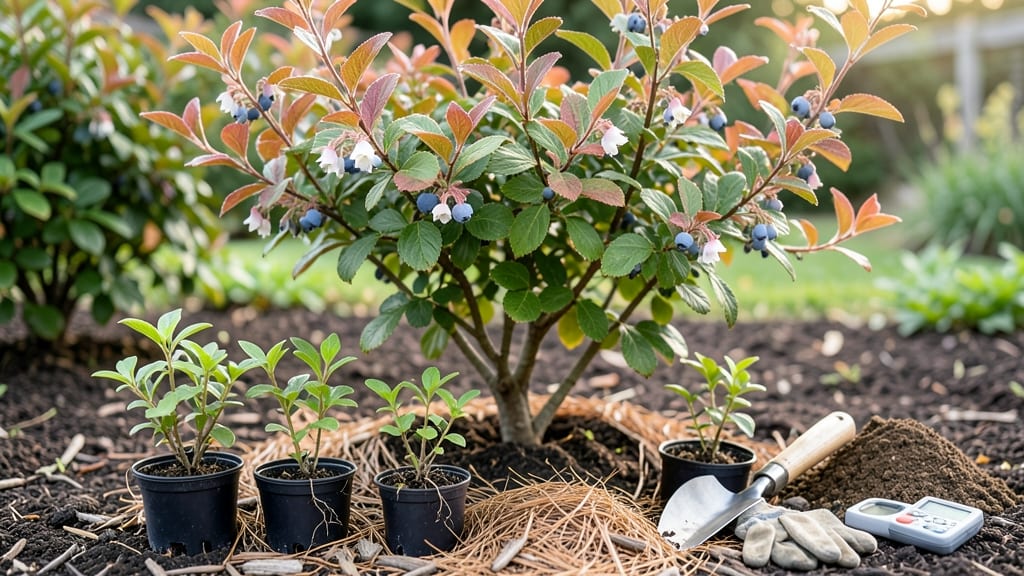
Timing your blueberry 🫐 planting in Washington State isn’t just about picking a month—it’s about matching your variety to the 5b-8b chill hours your region delivers. Plant too early, and frost will nip your young bushes; too late, and they won’t establish roots before winter.
The difference between a thriving harvest and a struggling bush often comes down to these 3 simple rules: chill-hour needs, soil prep, and knowing when to avoid the last frost.
Most gardeners in Washington State swear by fall planting (September–October) for maximum root growth before winter, but spring (February–April) works too—if you get it right. The key?
Choosing varieties like 'Duke' for high-chill zones or 'Legacy' for milder areas, and adjusting for microclimates where Spokane’s chill hours differ wildly from Seattle’s. Skip this step, and you might end up with stunted bushes or no fruit at all.
Here’s the game-changer: acidic soil (pH 4.5–5.5) and proper mulching can make or break your blueberries, no matter when you plant. Whether you’re digging in-ground beds or using containers, these 2 critical prep steps will give your bushes the head start they need to thrive in Washington’s unpredictable climate.
Let’s break it down so you can plant with confidence—and avoid the common mistakes that waste years of effort.
Ready to turn your blueberry patch into the jealousy-inducing centerpiece of your garden? I’ll walk you through the exact planting windows, soil tweaks, and frost-proofing tips tailored to your specific corner of Washington. No guesswork, just proven results from Zone 5b to 8b.
Optimal planting timeline for Washington blueberries by chill-hour needs
Washington State’s diverse climate zones—from the mild Pacific Northwest coast to the colder inland regions—mean blueberry planting times vary dramatically. The chill-hour requirements of your chosen variety are the #1 factor in determining success.
High-chill varieties (500+ hours) need cold winters to set buds, while low-chill types (<300 hours) thrive in warmer microclimates like Puget Sound.
Spring planting (February–April) is ideal for bare-root plants, giving roots time to establish before summer heat.
Fall planting (September–October) works for container-grown bushes, allowing roots to settle before winter dormancy. Western WA’s milder winters (USDA zones 7b–9a) favor low-chill varieties, while Eastern WA’s colder zones (5b–7a) demand high-chill cultivars.
🌱
| Variety Type | Chill Hours Needed | Best Planting Window (WA) | Regional Fit |
|---|---|---|---|
| High-Chill (500+) | Duke, Legacy, Bluecrop | Late February–March (spring) or September (fall) | Eastern WA (Spokane, Wenatchee) |
| Medium-Chill (300–500) | Jersey, Patriot | March–April (spring) or October (fall) | Central WA (Yakima, Wenatchee Valley) |
| Low-Chill (Under 300) | Top Hat, Sunshine Blue | April–May (spring) or October–November (fall) | Western WA (Seattle, Portland) |
For spring planting, aim to get bushes in the ground 4–6 weeks before your area’s last frost date. In Western WA, this is typically mid-March to April, while Eastern WA can start as early as late February.
Use mulch (straw or pine needles) to protect roots from temperature swings—a common issue in microclimates like the San Juan Islands or Palouse region.
Fall planting is trickier in colder zones (e.g., Spokane) due to early frosts. If planting in September–October, choose container-grown bushes and water deeply before ground freezes.
In milder coastal areas, fall planting can extend into November, but avoid planting when soil temps drop below 40°F.
🌡️
Pro tip: Use the USDA Plant Hardiness Zone Map (available at USDA website) to cross-reference chill hours with your local microclimate. For example, Seattle (Zone 8b) can grow low-chill varieties like Top Hat, while Moses Lake (Zone 6b) thrives with Duke or Legacy.
Container growing extends options for urban gardeners in warmer microclimates. Pots allow you to move bushes to protected spots during late frosts (common in April across WA). Just ensure containers are at least 18 inches deep and use acidic potting mix (pH 4.5–5.5).
🪴
Timing isn’t just about months—it’s about soil temperature. For spring planting, wait until soil temps reach 45°F (use a soil thermometer to check). In fall, plant when daytime temps average 60°F but nights dip below 50°F—this signals dormancy onset and reduces transplant shock.
Finally, prune new bushes at planting to remove damaged roots and shorten stems by 1/3. This encourages root establishment and reduces transplant stress. In Eastern WA’s windy zones (e.g., Walla Walla), stake young plants to prevent winter damage.
Best blueberry varieties for Washington State and their planting secrets
Washington State’s diverse microclimates mean not all blueberry varieties thrive equally.
The right cultivar for your zone can mean the difference between a bountiful harvest and years of disappointment. High-chill varieties like 'Duke' and 'Legacy' dominate Eastern WA’s colder zones (5b–7a), while low-chill types like 'Top Hat' shine in Western WA’s milder coastal areas (7b–9a).
Choosing the wrong variety isn’t just about fruit production—it affects bush health, disease resistance, and even harvest timing.
For example, 'Bluecrop' (a medium-chill variety) ripens in July–August, perfect for Central WA’s shorter growing season, while 'Jersey' (another medium-chill) extends harvests into early September—ideal for Yakima Valley gardeners.
🌱
Soil prep is where 90% of success happens. Blueberries demand acidic soil (pH 4.5–5.5)—most WA native soils are too alkaline.
Amend your soil with peat moss, pine bark fines, or sulfur (apply 2–3 months before planting). Eastern WA’s clay-heavy soils benefit from composted leaf mold, while Western WA’s sandy soils need organic matter like well-rotted manure.
Mulching is another game-changer. Use pine needles or straw (never wood chips—they raise pH) to retain moisture and acidity. In Eastern WA’s harsh winters, add a 4-inch layer of mulch to insulate roots from freeze-thaw cycles.
For container growers, use acidic potting mix and top-dress with sulfur annually.
🪴
Transplanting bare-root bushes requires careful handling. Soak roots in water for 2–4 hours before planting to revive dormant roots. Dig a hole twice as wide as the root ball but no deeper—blueberries hate soggy soil.
In Eastern WA’s colder zones, plant 1–2 inches deeper than the root flare to protect from frost heave. Stake young plants in windy areas (e.g., Columbia Basin) to prevent root damage.
Finally, pruning at planting sets the stage for future growth. Trim damaged roots and shorten stems by 1/3 to reduce transplant shock. Avoid heavy pruning in the first year—focus on establishing roots.
In Western WA’s milder climate, you can prune lightly in late winter to shape the bush, but Eastern WA’s colder zones require waiting until spring to avoid frost damage.
✂️