Trees
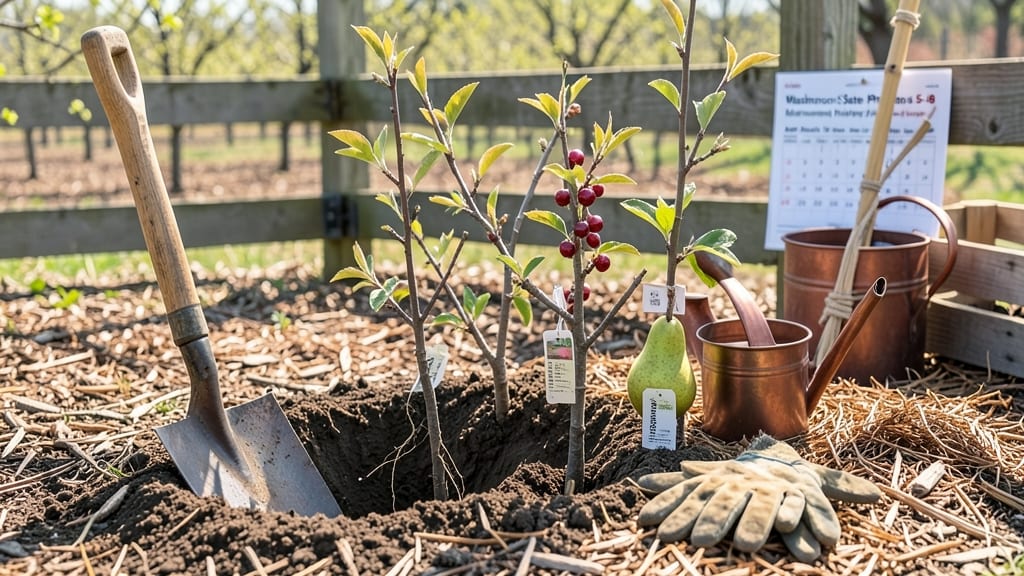
Timing the planting of fruit trees in Washington State wrong can turn your dream orchard into a costly mistake—but get it right, and you’ll enjoy decades of harvests. The chill hours and microclimates here mean your choice of variety and planting window matters more than you might think.
From the frost-prone valleys of Eastern WA to the milder Puget Sound region, each area has its own rhythm for when to plant. Whether you’re dreaming of crisp apples 🍎 or juicy cherries, knowing the ideal months—like late winter to early spring or early fall—sets the stage for success.
In this guide, I’ll break down exactly when to plant based on your location, which varieties thrive where, and how to avoid common pitfalls. You’ll learn how to match your fruit trees to Washington’s unique climate zones for the best possible start.
Ready to turn your backyard into a productive orchard? Let’s get started with the planting schedule that works for your corner of the Evergreen State.
Washington State fruit tree planting calendar by chill-hour zones
Washington State’s diverse climate—from the cool, wet Puget Sound to the dry, cold Eastern WA—means fruit tree planting timing varies dramatically by region. The key factor? Chill hours, which determine when trees break dormancy.
Most Washington varieties need 300-1,000+ chill hours annually, but timing your planting window ensures your tree thrives.
For Western WA (USDA Zones 7b-9a), like the Puget Sound area, plant in late winter to early spring (February-April) when soil thaws but frost risk remains low.
In Eastern WA (Zones 5b-7a), where winters are harsher, aim for early fall (September-October) or late winter (March-April) to avoid early spring frosts.
Here’s how to match your fruit tree variety to your chill-hour zone and optimal planting window:
| Region | Chill Hours | Best Planting Window | Ideal Varieties | Notes |
|---|---|---|---|---|
| Western WA (Puget Sound) | 600-1,000+ | Feb-Apr (bare-root) or Sep-Oct (container) | ‘Enterprise’ apple, ‘Starking Delicious’, ‘Lapins’ cherry | Milder winters; avoid late frosts. |
| Eastern WA (Columbia Basin) | 300-600 | Sep-Oct (fall) or Mar-Apr (spring) | ‘Zestar!’ apple, ‘Montmorency’ cherry, ‘Redhaven’ peach | Drier climate; water deeply after planting. |
| Cascade Mountains | 800-1,200 | Mar-Apr (spring only) | ‘Gala’ apple, ‘Sweetheart’ cherry, ‘Elberta’ peach | Higher elevation; plant on south-facing slopes. |
| Urban WA (Seattle, Spokane) | 500-900 | Feb-Mar (bare-root) or Oct-Nov (container) | Dwarf ‘Columnar’ apple, ‘Rainier’ cherry | Container planting extends options; use cold frames. |
Apples and pears typically need 500-1,000 chill hours, while peaches and plums thrive with 300-600 hours. Cherries are the most finicky, requiring 700-1,000+ hours—so choose varieties like ‘Lapins’ or ‘Stella’ for Western WA’s milder winters.
If you’re in Zone 8b (Western WA), like the San Juan Islands, you can push planting into early April without frost risk. But in Zone 5b (Eastern WA), like Pullman, wait until after May 1 to avoid late frosts that can kill young shoots.
For container-grown trees, extend your planting window into late fall (November) or early spring (March). Just ensure the pot has drainage holes and you’re using a well-draining potting mix to prevent root rot during Washington’s wet winters.
Pro tip: Check your local Cooperative Extension Service (e.g., WSU Extension) for last frost dates in your area. Planting 2-4 weeks after the average last frost ensures your tree’s roots establish before summer heat arrives.
Remember, bare-root trees must be planted while dormant (late winter/early spring), while container-grown trees offer more flexibility. For urban gardeners, dwarf varieties planted in large containers can be moved to protect from frost if needed.
Timing isn’t just about the calendar—it’s about matching your tree’s dormancy needs to your local climate. Get it right, and you’ll be harvesting juicy apples in July or sweet cherries in August in no time!
Best fruit tree varieties for Washington’s microclimates and their planting windows
Washington State’s diverse climate—from the cool, wet Puget Sound to the dry, hot Columbia Basin—means not all fruit trees thrive everywhere. Choosing the right cold-hardy varieties and planting them at the perfect time ensures success.
For example, ‘Enterprise’ apples excel in Western WA’s milder winters, while ‘Starking Delicious’ handles Eastern WA’s harsher freezes. Let’s match your microclimate to the best trees and timing.
Your region’s chill hours (the number of hours below 45°F a tree needs to fruit) dictate the best varieties. Western WA typically gets 500-800 chill hours, while Eastern WA sees 800-1,000+ hours.
For instance, ‘Lapins’ cherry thrives in the Puget Sound’s moderate chill, while ‘Montmorency’ tart cherries need Eastern WA’s longer winter cold to set fruit. Planting at the wrong time—like too early in Eastern WA’s frost-prone spring—can stunt growth or kill young trees.
🌱
For urban gardeners with limited space, consider dwarf varieties like ‘Columnar Honeycrisp’ apples, which grow just 8-12 feet tall and fit in small yards. These can be planted in containers or along fences, but ensure they get full sun and well-draining soil.
In Eastern WA’s drier climate, mulch heavily to retain moisture, while Western WA’s wetter soil may require raised beds to prevent root rot.
If you’re planting in fall (September-October), focus on container-grown trees since bare-root trees need dormant soil. Fall planting gives roots time to establish before winter, but avoid planting if frost is forecast within 2 weeks.
For spring planting (March-April), choose bare-root trees for better root development, and water deeply to combat spring drought in Eastern WA.
Pro tip: Pair trees with complementary pollinators—like planting a ‘Gala’ apple near a ‘Granny Smith’—to ensure fruit set. And always check your local extension office for pest-resistant varieties tailored to your area.
With the right variety and timing, your fruit trees will thrive for decades, yielding homegrown harvests year after year. 🍎