
Flowers
Michigan flower seed planting calendar: exact dates by USDA Zone 5b-6b
Michigan’s USDA Zones 5b-6b create a unique challenge for gardeners—last frost dates can vary by 2 weeks from southern Lower Peninsula to northern regions.
To maximize your blooms, I’ve broken down the optimal planting windows for both cool-season and warm-season flowers, accounting for Michigan’s April 15–May 15 last frost range.
For Zone 5b (northern MI, e.g., Traverse City), aim for April 20–May 10 for most annuals, while Zone 6b (southern MI, e.g., Detroit) can start as early as April 1–April 15. Perennials and bulbs have even tighter windows—September 1–15 for fall planting to establish roots before winter.
🌱 Pro Tip: Use your frost-free days (150–180 in MI) as a guide. Count backward from your first frost date (Sept 15–Oct 15) to determine indoor starting times for warm-season flowers like tomatoes or sunflowers.
| Plant Type | Zone 5b Planting Window | Zone 6b Planting Window | Indoor Start (Warm-Season) | Notes |
|---|---|---|---|---|
| Cool-Season Annuals | March 15–April 15 | March 1–April 10 | Not applicable | Pansies, Snapdragons, Lettuce |
| Warm-Season Annuals | May 1–May 15 (after frost) | April 15–April 30 | March 1–March 15 | Marigolds, Zinnias, Sunflowers |
| Perennials (Spring) | April 1–April 15 | March 25–April 10 | Not applicable | Coneflowers, Black-Eyed Susans |
| Bulbs (Fall) | September 1–September 15 | September 1–September 20 | Not applicable | Tulips, Daffodils, Hyacinths |
| Fall-Blooming Annuals | August 1–August 15 | July 25–August 10 | Not applicable | Cosmos, Snapdragons, Pansies |
For warm-season flowers, like marigolds or sunflowers, start seeds indoors 4–6 weeks before your last frost date. In Zone 5b, that means mid-February; in Zone 6b, late January. Harden off seedlings for 7–10 days before transplanting after May 15.
🌿 Regional Adjustments: Southern Michigan (e.g., Ann Arbor) can push warm-season planting to April 15, while northern areas (e.g., Marquette) should wait until May 10. Check your local frost dates via the Michigan State University Extension for precision.
Perennials like coneflowers and black-eyed Susans thrive when planted in early spring (April) or fall (September). Their deep root systems benefit from 6–8 weeks of root establishment before winter.
For bulbs, plant tulips and daffodils in September—this gives them time to develop strong roots before Michigan’s first frost.
💧 Soil Prep Tip: Amend your soil with compost 4–6 weeks before planting to ensure
Best flowers to plant as seeds in Michigan (and when to start indoors)
Michigan’s USDA Zones 5b-6b offer a diverse window for planting flower seeds, but timing varies dramatically between cool-season and warm-season varieties. For annuals like zinnias and cosmos, I recommend starting seeds indoors 4-6 weeks before your last frost date (typically mid-April to early May in most regions).
These fast-growing beauties thrive in warm soil and can’t tolerate chilly temperatures.
For perennials like coneflowers and black-eyed Susans, I start seeds indoors 6-8 weeks before the last frost.
These hardy plants establish deeper roots and overwinter better when given an early head start. Bulbs like tulips and daffodils are a different story—they’re best planted in fall (September-October) for spring blooms, but seed-starting isn’t typical for these.
🌱 Top Michigan Flower Seeds & Indoor Starting Times
- 🌻 Zinnias & Cosmos (Warm-Season Annuals): Start indoors 4-6 weeks before last frost (March 15-April 1). Transplant after soil warms to 60°F+.
- 🌼 Coneflowers & Black-Eyed Susans (Perennials): Start indoors 6-8 weeks before last frost (March 1-March 15). Harden off before transplanting.
- 🌷 Snapdragons & Petunias (Cool-Season Annuals): Start indoors 8-10 weeks before last frost (February 15-March 1) for early blooms.
- < Marigolds (Warm-Season Annuals): Direct-sow after last frost (May 15-June 1) or start indoors 3-4 weeks before transplanting.
- <🌼 Sunflowers (Warm-Season Annuals): Start indoors 4-5 weeks before last frost (March 20-April 1) or direct-sow after soil is warm.
If you’re direct-sowing outdoors, I always wait until the soil temperature hits 60°F+ for warm-season flowers. Use a soil thermometer to avoid guesswork—cool soil slows germination and can stunt growth.
For cool-season flowers like pansies, I sow seeds directly in early spring (March) or late summer (August) for fall blooms.
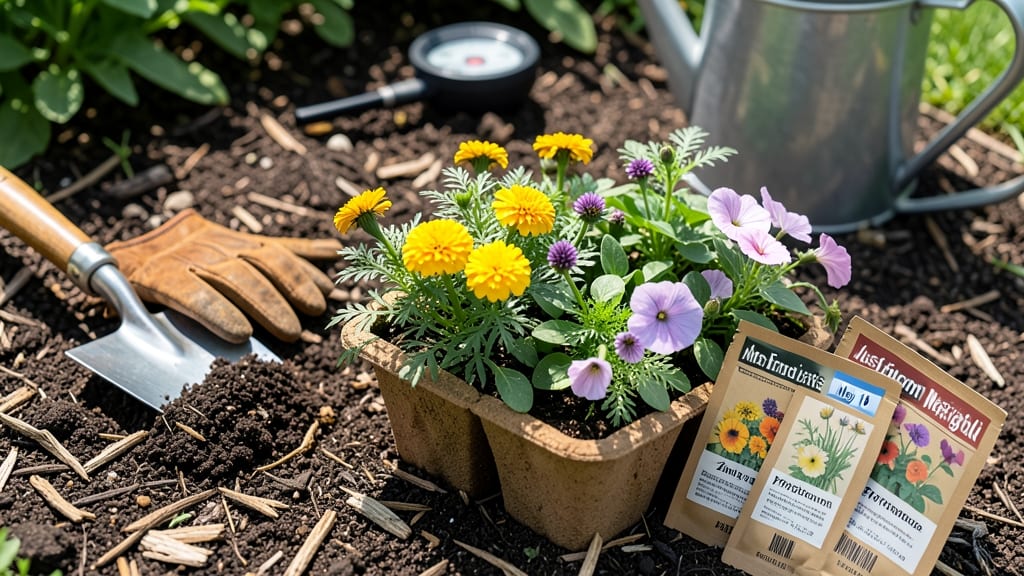
Pro tip: Use biodegradable seed-starting pots to minimize root disturbance when transplanting. I also recommend lightweight potting mix with perlite to prevent damping off—a common fungal issue in Michigan’s damp springs. Keep seedlings under grow lights for 14-16 hours/day until they’re sturdy enough for outdoor conditions.
For fall-blooming varieties like asters and mums, I start seeds indoors in late June for transplanting in early August. This gives them enough time to establish roots before fall’s cooler temps slow growth. Succession planting is key—sow new batches every 2-3 weeks to enjoy continuous blooms all season.
Remember, Michigan’s microclimates vary wildly. Southern regions (like Zone 6b) can plant 2 weeks earlier than northern areas (like Zone 5b). Always check your local cooperative extension service for frost date updates—they’re your best resource for hyper-local advice. 🌿