Plants
Timing your garlic planting in South Dakota can make or break your harvest—especially when you're dealing with USDA Zones 4a-5b and those unpredictable prairie winters. Plant too early, and your cloves might rot; too late, and they won’t establish roots before frost. For gardeners in the Mount Rushmore State, getting it right means hardneck varieties like 'German White' or 'Music' will thrive, giving you plump bulbs by next summer.
Most South Dakota gardeners swear by fall planting—specifically between mid-October and early November—when soil temps drop but haven’t frozen solid. This gives your 🧄 cloves time to root before winter dormancy, so they’re ready to shoot when spring arrives.
But here’s the catch: if you’re in western SD, where winters hit harder, aim for the earlier end of that window. Eastern regions can stretch it slightly later, thanks to milder microclimates.
Why does this matter? Because garlic planted at the wrong time either freezes solid or struggles to break dormancy in spring. I’ve seen firsthand how a 4-week difference in planting can mean the difference between a bumper crop and a sad, stunted harvest.
The key is balancing soil conditions, frost dates, and variety hardiness—something I’ll break down step by step so you can avoid common pitfalls.
Ready to grow garlic that rivals the best at the farmers' market? Let’s dive into the exact timeline, soil prep, and variety choices that’ll set you up for success—no guesswork required. Your late-June harvest starts with the right moves this fall.
Optimal planting timeline for South Dakota hardneck garlic
Timing is everything when planting hardneck garlic in South Dakota, where USDA Zones 4a-5b demand precise scheduling. The ideal window is mid-to-late fall—typically October to early November—to allow roots to establish before winter dormancy.
This timing ensures your cloves survive freezing temps and produce large bulbs by next summer.
In western South Dakota, where winters arrive earlier, aim for early October planting. Meanwhile, eastern regions like Sioux Falls can plant until late October or even early November.
The key is planting 4-6 weeks before the ground freezes, giving roots time to anchor before winter sets in.
Check your local frost dates: Most of South Dakota sees its first hard frost between mid-October and late October. Planting too late risks cloves rotting in cold, wet soil, while planting too early may cause premature sprouting before winter.
📅 South Dakota Garlic Planting Timeline
| Stage | Action | Notes |
|---|---|---|
| Mid-September | Prepare soil | Add compost, test pH (6.0-7.0) |
| Early October | Plant in western SD | Soil temp: 40-50°F |
| Late October | Plant in eastern SD | Before first frost |
| November | Mulch heavily | 4-6 inches straw |
| Spring (April) | Remove mulch | When soil thaws |
🌱 Pro Tip: Use a moon planting guide for optimal root growth—plant during the waxing moon in fall.
For best results, plant hardneck garlic cloves with the pointy end up, 2 inches deep, and 4-6 inches apart in rows. Space rows 12-18 inches apart to allow airflow and reduce disease risk.
In rocky South Dakota soil, amend beds with compost or aged manure to improve drainage.
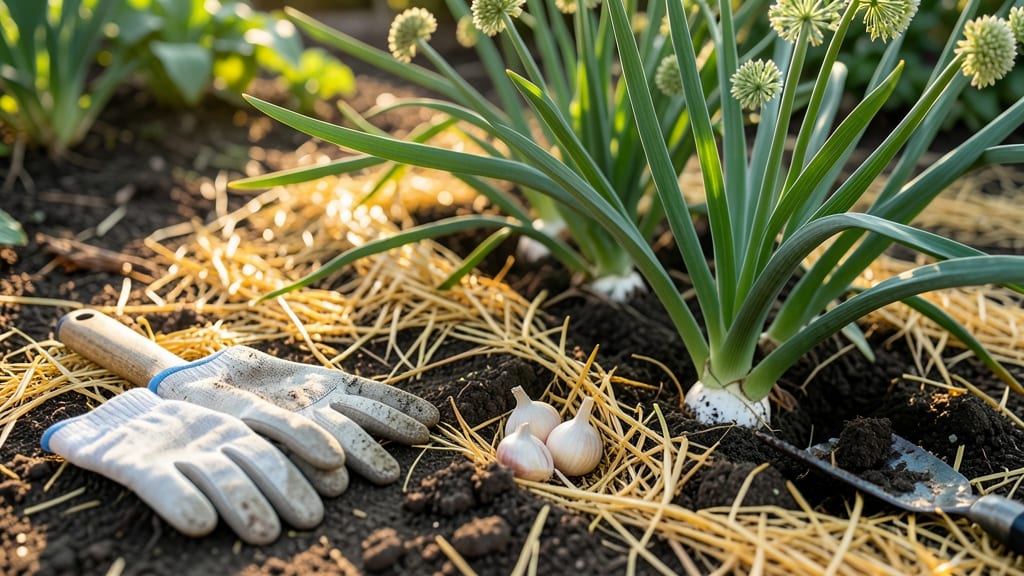
Don’t forget to mulch heavily after planting—use straw or leaves (4-6 inches thick) to insulate bulbs through winter. This protects against freeze-thaw cycles and soil heaving, common in South Dakota’s USDA Zone 4-5 winters.
If you miss the fall window, spring planting is possible but not ideal. Plant in early April (before soil warms to 50°F) for a smaller harvest. Spring-planted garlic may not develop full-sized bulbs before summer’s end.
Monitor your garlic’s progress in early spring. Once green shoots emerge (usually April-May), remove mulch to allow sunlight to reach leaves. This encourages bulb development during the critical growing months of June and July.
Harvest time arrives when lower leaves yellow and dry—typically late June to early July in South Dakota. Cure bulbs in a dry, shady spot for 2-3 weeks before storing. Proper timing ensures plump, flavorful garlic ready for winter meals!
Remember: Patience pays off with garlic. The longer the growing season, the larger the bulbs. In South Dakota’s short but intense summers, precise fall planting sets the stage for a bountiful harvest.
Soil and climate factors affecting garlic planting success
South Dakota’s USDA Hardiness Zones 4a-5b create unique challenges for garlic growers. The key to success lies in understanding how soil conditions and climate patterns interact to protect your crop during winter dormancy. Unlike milder climates, SD’s freeze-thaw cycles and rocky soil demand special preparation.
First, focus on well-draining soil with a pH between 6.0-7.0. Garlic hates soggy roots, and SD’s heavy clay in many areas worsens drainage issues. Amend your soil with compost or sand before planting to create an ideal environment for bulb development over winter.
🌱 Critical timing tip: Plant garlic 4-6 weeks before ground freezes (typically mid-October to early November in most of SD). This gives roots time to establish before winter sets in, preventing frost heave that can damage bulbs.
| Factor | South Dakota Consideration | Solution |
|---|---|---|
| Soil Type | Heavy clay in eastern SD, rocky in western regions | Add 2-3 inches of compost + coarse sand |
| Frost Dates | First frost: mid-April, last frost: mid-October | Plant by October 15 for eastern SD, November 1 for western |
| Wind Exposure | Common in open prairie areas | Use windbreaks or plant near fences |
| Winter Protection | Sub-zero temps (-20°F common) | Apply 4-6 inches of straw mulch after planting |
Don’t overlook moon phases—planting during the waning moon (after full moon) encourages root development, which is crucial for surviving SD’s winters. For western SD’s drier climate, increase spacing to 6 inches apart to prevent competition.
🌡️ Pro tip: Test soil temperature before planting—ideal range is 40-50°F. Use a soil thermometer to avoid planting too early when soils are still warm, which can trigger premature sprouting before winter.
Finally, watch for vermin threats like voles and gophers, which are common in SD. Use hardware cloth barriers around planting areas to protect your garlic through winter dormancy and into spring growth.