
Plants
Best planting months for asparagus in Alabama’s climate zones
Alabama’s USDA zones 7b-8a create unique challenges for asparagus growers. Unlike northern states, our mild winters and hot summers demand precise timing to avoid heat stress or frost damage. Planting too early risks crown rot, while waiting too long means stunted growth before summer’s intensity.
The ideal window is February through early April, but your exact timing depends on whether you're in Northern Alabama (cooler) or Southern Alabama (warmer).
For Northern Alabama (zones 7b), aim to plant asparagus crowns between February 15 and March 15. Soil temperatures should reach 50-60°F—critical for root establishment before summer heat arrives.
In Southern Alabama (zones 8a), shift planting to late February through early April to avoid the brutal May-June heat that can stress young plants. Remember: Alabama’s last frost date averages March 15, but microclimates near rivers or mountains may extend this by 2-3 weeks.
⚠️ Critical Note: Never plant asparagus in summer or fall—the heat will kill crowns before they establish. Even seed sowing (less common) must occur in early spring under protective covers. Alabama’s humidity also increases fungal risks, so proper soil drainage is non-negotiable.
Here’s how Alabama’s two main regions differ in planting readiness:
| Region | USDA Zone | Best Planting Window | Soil Temp Threshold | Key Risk |
|---|---|---|---|---|
| Northern Alabama | 7b | Feb 15–Mar 15 | 50–60°F | Late frosts |
| Southern Alabama | 8a | Late Feb–Early Apr | 55–65°F | Summer heat stress |
| Mountain Regions (e.g., Huntsville) | 7a | Mar 1–Apr 1 | 45–55°F | Cold snaps |
Soil preparation is just as critical as timing. Alabama’s clay-heavy soils (common in the Black Belt) need amendments like compost or sand to improve drainage. Test your soil’s pH (ideal: 6.5–7.0)—Alabama’s acidic soils often need lime adjustments.
I recommend planting in raised beds if your native soil drains poorly, as waterlogged roots lead to crown rot. Add a 2-inch layer of mulch after planting to retain moisture and regulate soil temperature.
Pro tip: Mark your planting date and track 70 days of frost-free growth—asparagus needs this window to establish before summer dormancy. In Alabama, this means planting early enough to avoid the June-July heatwave, when soil temperatures can exceed 90°F.
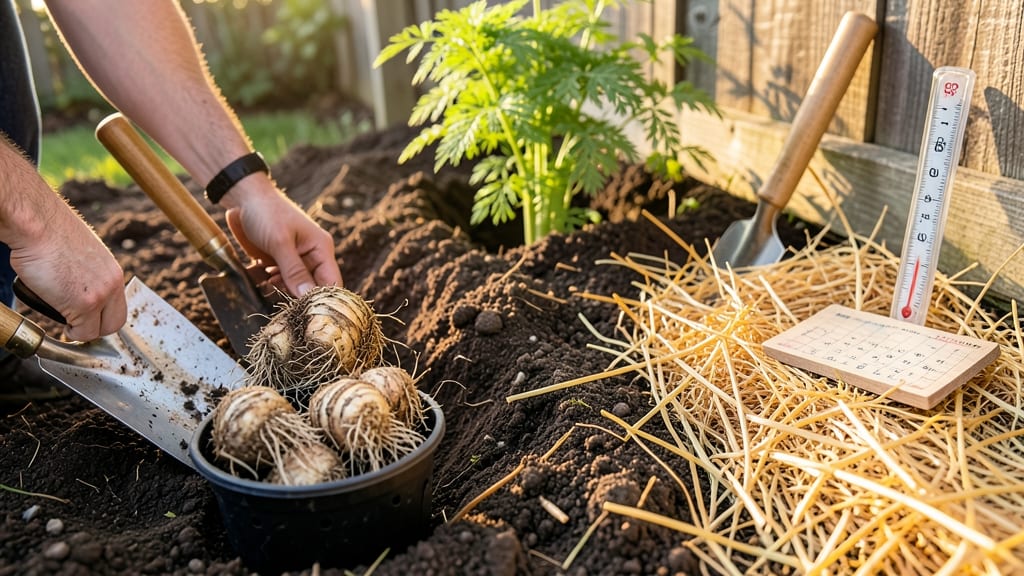
Use a soil thermometer to confirm readiness; planting when soil hits 55°F ensures strong root development.
For container growing (popular in urban Alabama), use large pots (18+ inches deep) with drainage holes and plant in late March to avoid root-bound stress. Containers warm up faster than ground soil, so monitor moisture closely—Alabama’s drought conditions in late spring can dry out potted asparagus quickly.
Water deeply 2–3 times per week until establishment.
Remember: Asparagus is a perennial crop—proper planting now means harvests for 10–15 years. Skimp on timing or soil prep, and you’ll struggle with poor yields or disease.
In my Alabama garden, I’ve found that Mary Washington and Jersey Knight varieties handle our heat best when planted in early March, avoiding the worst of summer’s intensity.
🌱 Start with crowns (not seeds) for faster results—seeds take 2–3 years to produce spears, while crowns yield in 2 years. Choose 1-year-old crowns with 8–10 healthy roots for the best Alabama adaptation.
Best planting months for asparagus in Alabama’s climate zones
Alabama’s USDA hardiness zones 7b–8a mean asparagus crowns need precise timing to survive hot summers and mild winters. Planting too early risks frost damage, while late planting exposes crowns to heat stress. The ideal window is late winter to early spring, but exact months vary by region.
Northern Alabama (zones 7b) has cooler springs and earlier frosts, while southern Alabama (zones 8a) stays warmer longer. For both, aim to plant when soil temps reach 50°F (10°C)—about 2–4 weeks before last frost. In Alabama, this typically lands in February to March.
🌱
| Region | USDA Zone | Best Planting Month | Soil Temp Threshold | Key Consideration |
|---|---|---|---|---|
| North Alabama (Huntsville, Decatur) | 7b | Late February–Early March | 50°F (10°C) | Frost risk until mid-March |
| Central Alabama (Birmingham, Montgomery) | 7b–8a | Early March–Mid-April | 50°F (10°C) | Warmer soil warms faster |
| South Alabama (Mobile, Dothan) | 8a | Mid-March–Early April | 55°F (13°C) | Longer growing season |
| All Regions (Fall Option) | 7b–8a | September–Early October | 60°F (16°C) | Less common; higher risk |
For seed-starting (less common for asparagus), begin indoors 8–10 weeks before last frost, typically January. However, asparagus crowns are the preferred method—they establish faster and yield sooner.
In Alabama’s heat, avoid planting in late spring or summer. Crowns planted after April 15 struggle to establish roots before 90°F+ temps arrive, leading to poor survival. If you miss the spring window, fall planting is possible but riskier due to fungal diseases in humid conditions.
Use a soil thermometer to confirm 50°F (10°C) soil temps before planting. In Alabama’s clay-heavy soils, amend with compost and sand to improve drainage—a critical factor for asparagus roots.
🌿