
Plants
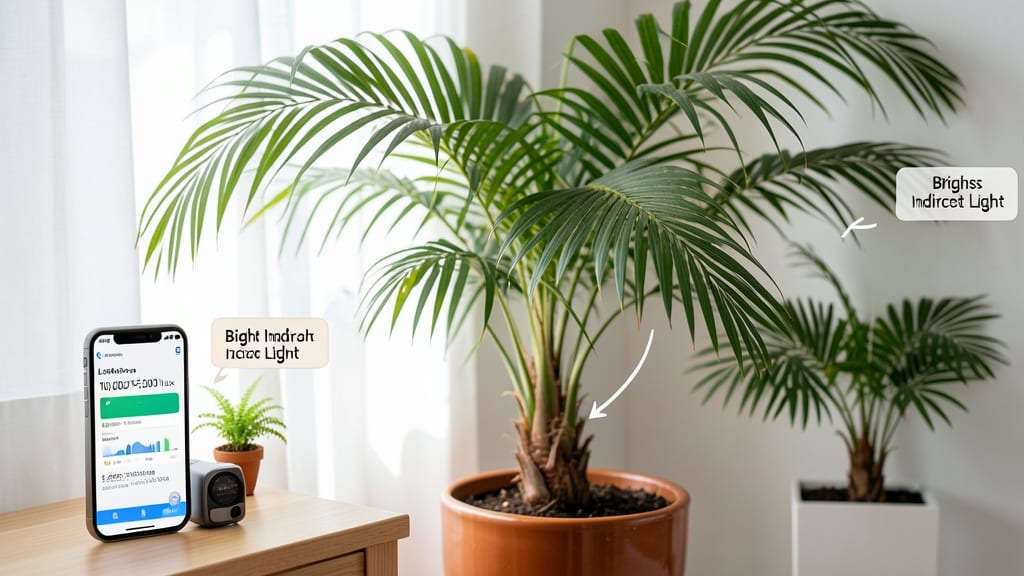
Optimal sunlight requirements for different palm plant types
Palm plants thrive under specific light conditions that vary by species and environment. While most palms love sunlight, some tropical varieties prefer bright indirect light, while others like the Canary Island Date Palm can handle full sun exposure for hours daily.
Understanding these differences is key to keeping your palm healthy and vibrant.
Indoor palms, like the Parlor Palm or Bamboo Palm, often struggle with too much direct sun, which can scorch their delicate fronds.
On the other hand, outdoor palms such as the Palm Beach Palm or Mexican Fan Palm crave 6 to 8 hours of direct sunlight to reach their full potential. Let’s break down the ideal light requirements for common palm types.
🌱
| Palm Type | Light Needs | Ideal Location | Notes |
|---|---|---|---|
| Tropical Palms (e.g., Parlor Palm, Areca Palm) | Bright indirect light (2,000-4,000 foot-candles) | East or west-facing windows, 10-20 ft from south window | Avoid direct midday sun; yellowing fronds indicate too much light. |
| Dwarf Palms (e.g., Pygmy Date Palm, Dwarf Palmetto) | Medium to bright indirect light (1,500-3,000 foot-candles) | Near windows but not in direct sun; indoor or shaded patio | Slow-growing; tolerate low light better than tropical palms. |
| Sun-Tolerant Palms (e.g., Canary Island Date Palm, Mediterranean Fan Palm) | Full sun (6+ hours direct sunlight, 10,000+ foot-candles) | Outdoor in full sun; south or west-facing exposure | Drought-resistant; brown frond tips may signal underwatering. |
| Cold-Hardy Palms (e.g., Needle Palm, Windmill Palm) | Partial shade to full sun (3,000-8,000 foot-candles) | Outdoor in USDA Zones 6-10; morning sun + afternoon shade | Tolerate cooler temps; prune dead fronds to encourage new growth. |
For indoor palms, position them near a south-facing window where they can receive bright, filtered light for most of the day. If your home lacks natural light, consider using grow lights to supplement, especially during winter months when daylight is limited.
A simple LED grow light placed 12-18 inches above the plant can mimic sunlight and encourage healthy growth.
Outdoor palms, especially those in hot climates, may need afternoon shade to prevent leaf burn. If you notice brown patches or crispy edges on fronds, it’s a clear sign of too much direct sunlight.
In such cases, provide dappled shade or move the plant to a slightly shadier spot for a few weeks to recover.
🌿
Pro tip: Rotate your palm plant quarter-turns every 2-4 weeks to ensure even light exposure. This prevents one side from leaning toward the light source, which can lead to uneven growth or a lopsided appearance. Consistency in light exposure helps maintain a symmetrical and healthy palm structure.
If you’re unsure whether your palm is getting enough light, observe its frond color and growth rate. Healthy palms have vibrant green fronds and produce new leaves regularly.
Slow growth or dull, yellowing fronds often indicate insufficient light, while bleached or crispy fronds signal too much sun. Adjusting the light conditions based on these visual cues will keep your palm thriving.
🪴
Signs your palm isn't getting the right light exposure
Your palm plant communicates its light needs through visual cues—if you know what to look for. Under-exposure and over-exposure both cause distinct symptoms, and recognizing them early can save your palm from decline.
The most common red flags include yellowing fronds, brown tips, or slow growth, but each issue requires a different solution.
🌱
When your palm isn’t getting enough light, you’ll notice pale or yellow fronds that appear weak and stretched. This is your palm’s way of reaching for more sunlight, often accompanied by slow or stunted growth.
In severe cases, the fronds may develop thin, leggy stems as the plant elongates toward any available light source. This condition is called etiolation, and it weakens the palm’s structure over time.
On the flip side, too much direct sunlight causes brown, crispy tips on fronds, often starting at the edges and working inward. The affected areas may feel dry to the touch, almost like paper.
In extreme cases, entire fronds can scorch and turn brown, leaving ugly patches that ruin the plant’s appearance. This is especially common in indoor palms placed near south-facing windows without proper filtering.
🌿
If your palm shows signs of light stress, take immediate action. For under-lit palms, move them closer to a bright window or supplement with a grow light for 12-14 hours daily.
Avoid placing them in direct midday sun immediately—gradually acclimate them by moving them to a slightly sunnier spot over 1-2 weeks to prevent shock. For over-exposed palms, provide afternoon shade using a sheer curtain or relocate them to a spot with dappled sunlight.
Another key indicator is the growth rate. Healthy palms produce 2-4 new fronds per year, depending on the species. If your palm hasn’t grown a single new frond in 6 months, it’s likely not getting enough light.
Conversely, if fronds are growing too quickly but look weak or deformed, it may be receiving too much intense light. Balance is everything—your goal is to mimic the consistent, moderate light conditions of a palm’s natural habitat.
🪴
Pay attention to the underside of fronds as well. If you see black or purple spots, this could indicate light burn combined with overwatering. In this case, reduce watering slightly while moving the plant to a shadier location.
For outdoor palms, watch for windburn, which can mimic light stress symptoms. If the damage is uneven or only on one side, wind may be the culprit—consider adding a windbreak or relocating the plant to a more sheltered spot.