
Watering
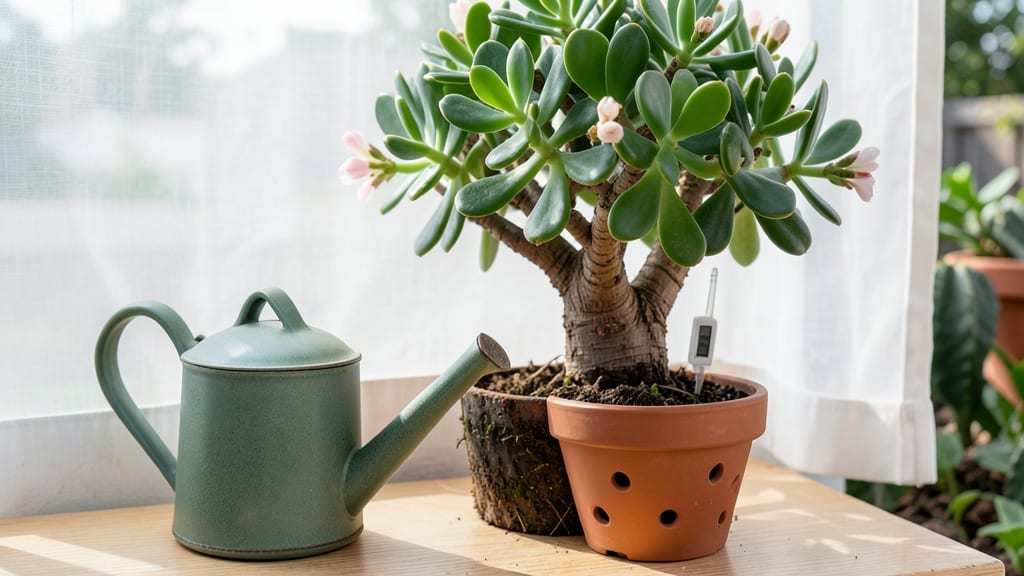
Jade plant watering schedule by season: when and how much to water
Jade plants (Crassula ovata) are famously drought-tolerant, but their watering needs shift dramatically with the seasons. Unlike thirsty houseplants, jades store water in their thick succulent leaves, making them prone to root rot when overwatered.
My 5-year-old jade thrives on a strict schedule—here's exactly how I water mine year-round.
The key to jade plant care is soaking deeply but infrequently. Most gardeners fail because they water lightly too often. I learned this the hard way when my first jade developed mushy stems from sitting in damp soil for weeks.
Now, I follow a seasonal watering calendar that accounts for temperature, humidity, and pot size.
Let's start with the most critical factor: soil moisture. Before watering, I always check 2 inches deep—if it's dry, it's time. In summer, this means watering every 3-4 weeks, while winter slows growth so I wait 4-6 weeks.
The pot size also matters: smaller pots dry faster than large containers.
🌱 Jade Plant Watering Schedule by Season
| Season | Frequency | Amount | Soil Check | Key Factor |
|---|---|---|---|---|
| Spring | Every 2-3 weeks | 250-300ml (deep soak) | Top 2" dry | New growth phase |
| Summer | Every 3-4 weeks | 300-500ml (full pot) | Top 3" dry | High humidity risk |
| Fall | Every 3-4 weeks | 200-300ml (moderate) | Top 2" dry | Growth slows |
| Winter | Every 4-6 weeks | 150-200ml (light) | Top 3" dry | Dormancy period |
⚠️ Pro Tip: Always water in the morning to prevent fungal growth from evening moisture.
Temperature plays a huge role in how often I water. During summer heatwaves (above 90°F/32°C), I reduce watering to every 4-5 weeks because the plant's natural water storage kicks in. Conversely, in cool spring months (50-60°F/10-15°C), I water every 2 weeks to support active growth.
Another game-changer is pot material. Terracotta pots dry out faster than ceramic, so my jades in terracotta get watered 1 week earlier than those in ceramic. I also use cactus/succulent mix with perlite to ensure proper drainage—this prevents the soggy soil that leads to root rot.
For outdoor jade plants (hardy in USDA zones 10-11), I adjust based on rainfall. If we get 1 inch of rain, I skip watering entirely for 2 weeks.
In containers, I always check for drainage holes—no exceptions! Without them, excess water pools at the roots, creating the perfect conditions for fungal infections.
One of my biggest mistakes was ignoring the leaf plumpness test. Healthy jade leaves feel firm and slightly thick. When they start looking wrinkled or shriveled, it's a cry for water—but only if the soil is completely dry.
If the soil is moist, wrinkled leaves signal overwatering. I now keep a small notebook to track my jade's watering dates and leaf condition.
In winter, I move my jades to a cool, bright spot (50-55°F/10-13°C) and reduce watering to once every 6 weeks. This mimics their natural
5 Signs your jade plant is dying from watering mistakes (and how to fix them)
Even with the perfect watering schedule, jade plants still send distress signals when something's off. I've lost count of how many jades I've nursed back from watering-related disasters—here's how to spot the early warning signs before it's too late.
The most common mistake? Ignoring subtle changes in leaf texture or color that reveal overwatering or dehydration.
First, check your jade's leaves for wrinkling. When leaves look shriveled or puckered, it's often a cry for water—but only if the soil is bone-dry. The real test is sticking your finger 2 inches deep. If the soil feels completely dry, water thoroughly.
However, if the soil is still damp, those wrinkled leaves mean overwatering is causing root stress. I once thought my jade was thirsty until I realized the pot was sitting in a saucer full of stagnant water.
Next, examine the stem base for softness. Healthy stems should feel firm and woody. If you notice mushy or blackened stems, this is a classic sign of root rot from sitting in soggy soil. The fix?
Remove the plant, trim away mushy roots with sterilized scissors, and repot in fresh cactus mix. Let the roots dry for 2-3 days before replanting. I've revived plants this way that were nearly beyond saving!
🌱 5 Critical Signs & Revival Steps
- 1. Wrinkled Leaves → Check soil moisture; water only if dry 2" deep
- 2. Yellowing Leaves → Stop watering; let soil dry completely for 1 week
- 3. Mushy Black Stems → Trim rotten roots; repot in dry, gritty mix
- 4. Drooping Growth → Move to brighter light; reduce watering frequency
- 5. White Fuzzy Spots → Treat with fungicide; improve airflow
⚠️ Warning: If you see white mold or black spots, your jade has fungal infection—act fast or lose the plant!
Yellowing leaves are another red flag. Unlike many plants that yellow from nutrient deficiency, jades turn yellow from excess moisture or poor drainage. Start by skipping watering for a full week and move the plant to a sunnier spot.
If the yellowing persists, the roots may be damaged—time to repot with fresh, dry soil. I once had a jade with half its leaves yellowing until I realized the pot had no drainage holes!
Drooping growth often signals underwatering, but it can also mean overwatering if the soil stays wet. The key difference? Leaf texture. Underwatered jades have crispy, dry leaves, while overwatered ones feel soft and squishy.
My solution? I place my jade in a bright, dry location and monitor for 3 days. If the drooping persists after watering, the roots are likely rotting.
Finally, watch for white powdery spots on leaves or stems. This is powdery mildew, a fungal disease that thrives in humid, damp conditions. The fix is simple: wipe leaves with a damp cloth, improve airflow by spacing plants apart, and avoid overhead watering.
I use a fungicide spray (like neem oil) as a preventative measure during humid summer months.
Remember, jade plants are resilient—they can bounce back from many watering mistakes if caught early. The key is observation. Keep a plant journal to track watering dates, leaf changes, and environmental conditions.
My jades now thrive because I learned to read their subtle signals before they become emergencies. With these fixes, your jade can go from wilting to vibrant in just weeks!