
Watering
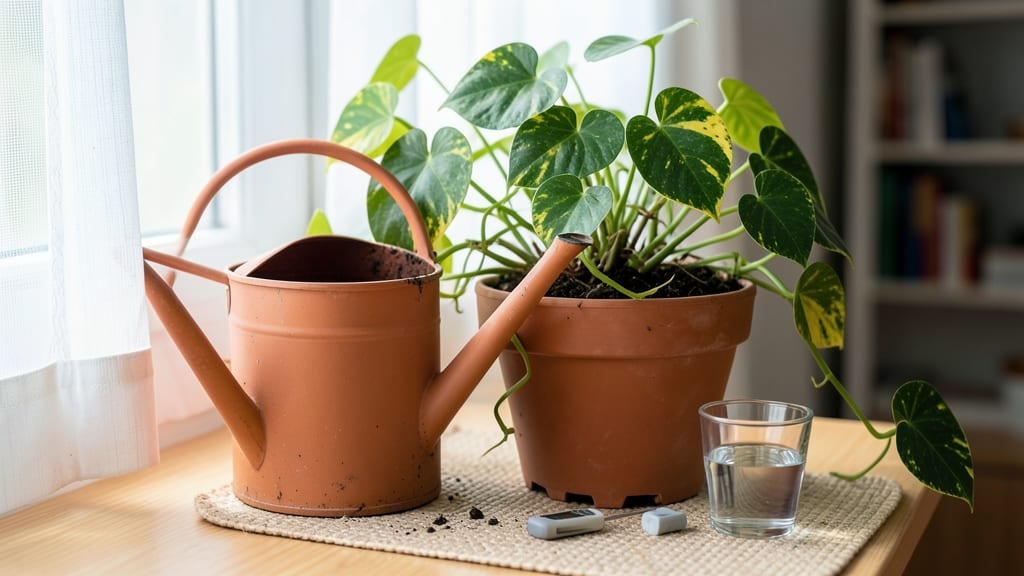
Figuring out how much water your pothos plant 🌿 needs can feel like solving a mystery—especially when you’ve seen it thrive one week and wilt the next. The truth? This resilient vine doesn’t follow rigid schedules; it’s all about the soil’s secret signals.
Skip the guesswork and master the finger-dip test, a foolproof way to tell when your pothos is thirsty (or drowning) without overcomplicating things.
Here’s the game-changer: most gardeners water on a calendar, but pothos plants rebel against routines. Whether you’re in USDA Zone 6a or a cozy indoor spot, the key lies in soil moisture—not days since last watering.
I’ll show you exactly how to read your plant’s silent cues, from the telltale weight of a pot to the crispy edges that scream “help me!” No more second-guessing.
Let’s tackle the three biggest watering mistakes that turn lush pothos into sad, droopy vines—because even “low-maintenance” plants have boundaries. You’ll learn how to adjust for seasonal shifts (fall’s cooler air changes everything!) and why your tap water might be sabotaging your plant’s roots.
Ready to give your pothos the perfect care it deserves?
By the end, you’ll confidently answer: How often should I water my pothos? Spoiler: It’s not the answer you’ve been told. Grab a finger, a pot, and let’s dive in—your plant’s survival depends on it.
How often to water a pothos plant: the finger-dip test explained
Mastering the pothos watering schedule starts with one simple trick: the finger-dip test. Unlike rigid watering calendars, this method lets your plant tell you exactly when it's thirsty. Stick your finger about 1-2 inches deep into the soil—if it feels dry at that depth, it's time to water.
If it's still damp, wait a few more days. This method prevents both overwatering and underwatering, the two biggest threats to your pothos' health.
Most pothos owners water every 7-14 days, but this varies wildly based on your home's humidity levels, pot size, and season. A pothos in a small ceramic pot dries out faster than one in a large fabric grow bag.
The key is to adjust based on your plant's specific needs—not a one-size-fits-all rule. Think of your pothos like a low-maintenance succulent: it prefers to be on the drier side rather than soggy.
Here's where many gardeners go wrong: they water on a strict schedule instead of checking the soil. A pothos in low humidity (like 30-40%) may need water every 5-7 days, while one in a humid bathroom (60%+) might only need water every 2-3 weeks.
The finger-dip test accounts for these differences automatically. Pro tip: Morning watering is best—it gives excess moisture time to evaporate before nightfall, reducing fungal risks.
Step-by-Step Finger-Dip Test
- 👆 Step 1: Choose a clean finger (no dirt or oils) and insert it 1-2 inches deep into the soil.
- 👆 Step 2: Feel for moisture consistency. Dry soil will feel like a dry sponge; damp soil feels like a wrung-out washcloth.
- 👆 Step 3: If dry, water until water drains freely from the pot's holes. Discard excess from the saucer.
- 👆 Step 4: Wait until the top 1-2 inches feel dry again before repeating. Track your plant's rhythm over 2-3 weeks to find its ideal cycle.
- 👆 Step 5: Adjust for seasonal changes. In winter, your pothos may only need water every 3-4 weeks.
Your pothos will give you visual cues about its water needs. Drooping leaves often signal thirst, but they can also mean overwatering if the soil stays soggy for days. The difference? Wilted leaves from thirst perk up quickly after watering, while yellowing leaves from rot stay limp and mushy.
Another clue: check the soil color. Dark, wet soil means wait; pale, dry soil means hydrate.
Pot size plays a huge role in watering frequency. A 6-inch pot dries out faster than a 12-inch pot because the soil has less volume to hold moisture.
If you repot your pothos into a larger container, you'll likely need to water less often—sometimes as little as every 3-4 weeks. Just remember: bigger pots don't mean you can skip the finger-dip test.
Always check the soil's moisture level at the root zone, not just the surface.
New pothos owners often make the mistake of watering too frequently because they're afraid of killing their plant. But pothos are drought-tolerant and can handle a few missed waterings without permanent damage. The real enemy is consistent soggy soil, which leads to root rot and fungal diseases.
If your pothos' leaves start turning yellow and mushy, it's a cry for help—cut back on water immediately and check for proper drainage.
Humidity levels dramatically affect your pothos' water needs. In dry climates or air-conditioned rooms, the soil dries out faster, so you'll need to water more often.
Conversely, in humid environments like bathrooms or kitchens, the moisture in the air slows evaporation, so your pothos may only need water every 2-3 weeks.
To boost humidity around your plant, place the pot on a pebble tray with water, or mist the leaves lightly every few days (though pothos don't need this as much as ferns).
Seasonal changes also demand adjustments. During spring and summer, your pothos grows actively and may need water every 5-7 days. In fall and winter, growth slows, and the plant can go 3-4 weeks without water.
Pay attention to your plant's growth rate: faster growth = more frequent watering; slower growth = less. Even in winter, though, never let your pothos sit in completely dry soil for more than a month.
One final tip: Rotate your pothos occasionally so all sides get even light. Uneven light exposure can cause one side of the plant to dry out faster, making watering inconsistent.
A happy pothos is a balanced pothos—give it the right light, the right water, and a little love, and it'll thrive for years. Now go test that soil with your finger—your pothos is waiting to tell you what it needs!
Pothos watering schedule by season: adjusting for growth cycles
Seasonal changes dramatically affect your pothos plant’s water needs—what works in summer can drown roots in winter. The key? Adjusting your watering frequency based on growth cycles, not a rigid schedule.
In spring and summer, your pothos enters active growth, demanding more frequent watering, while fall and winter trigger dormancy, where you’ll water sparingly. Even the humidity levels in your home shift with seasons, impacting how quickly soil dries.
Let’s break it down by season so you can keep your pothos thriving year-round without guesswork. One common mistake? Ignoring the pot size—a 6-inch pot dries faster than a 12-inch one.
Always check soil moisture first, no matter the season. This simple habit prevents both root rot and dehydration, the two biggest threats to your plant’s health.
🌱 Seasonal Pothos Watering Guide
- 🌸 Spring (March-May): Water every 10-14 days as growth ramps up. Soil dries faster in warmer rooms.
- ☀️ Summer (June-August): Water every 7-10 days. Monitor leaves—drooping signals thirst.
- 🍂 Fall (September-November): Reduce to every 10-14 days as growth slows.
- ❄️ Winter (December-February): Water every 14-21 days. Overwatering is riskier when humidity drops.
Your pothos’s location also matters—plants near windows dry out faster than those in dim corners. If your home has low humidity (common in winter with heaters running), water slightly less frequently.
Conversely, high humidity (like a bathroom) may mean you’ll water every 12-14 days year-round. Always pair watering with the finger-dip test to avoid mistakes.
Another pro tip: Hanging baskets dry out quicker than pots because water drains faster. If your pothos hangs, check soil moisture 2-3 days earlier than you would for a potted plant. Pro tip: Use a moisture meter for accuracy—it’s a game-changer for beginners.
These tools remove the guesswork and help you spot overwatering signs like yellowing leaves or mushy stems before they worsen.
Watch for seasonal color changes in your pothos too! In spring and summer, vibrant green leaves signal healthy growth, while dull, yellowing foliage in winter often means you’re watering too much. Adjust your routine based on these visual cues—your plant will thank you with lush, trailing vines year-round.
Remember, consistency is key: stick to the schedule, but always trust your plant’s signals over a calendar.
For extra peace of mind, keep a simple journal tracking watering dates and leaf conditions. After a month, you’ll spot patterns unique to your home’s environment. For example, my pothos thrives on a 12-day cycle in winter but needs watering every 7 days when summer hits.
Your plant’s needs will become second nature with time—and soon, you’ll water like a pro, not a beginner.