
Plants
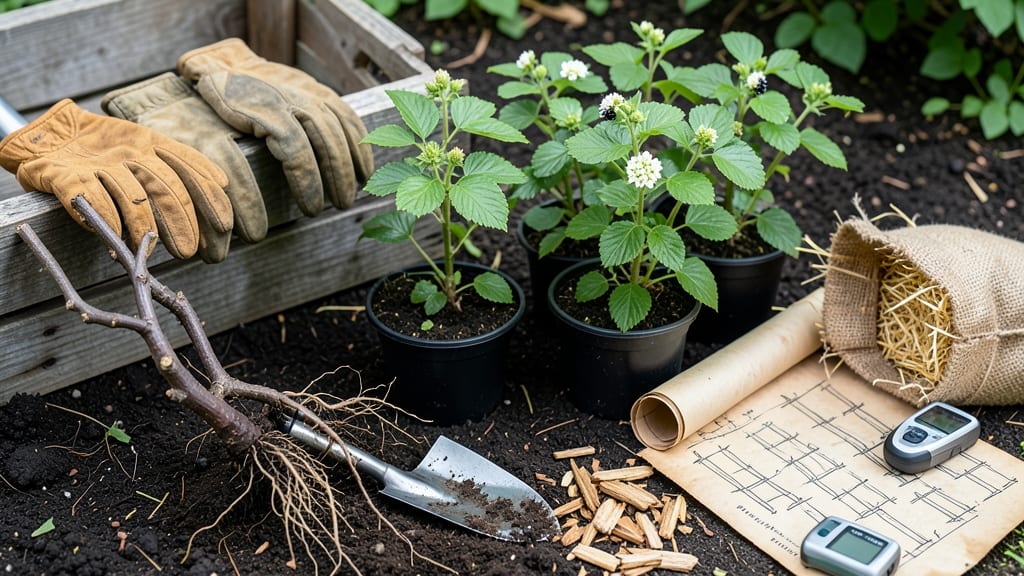
Timing your blackberry planting in Tennessee isn't just about the calendar—it's about matching your variety to the state's unique chill-hour zones, where a single misstep can mean the difference between thriving bushes and years of frustration.
With Tennessee's 6a-7b climate, you've got a narrow window to plant 🫐 blackberries that thrive in both the cool mountain air of the Appalachians and the warmer valleys.
The key is understanding whether you're dealing with fall-planted varieties that need 900+ chill hours or spring-planted types that adapt to Tennessee's 500-700 hour range. Plant too early, and frost will nip your young canes before they take root.
Wait too long, and your bushes won't establish strong roots before winter hits.
What you're about to discover is how to pinpoint the perfect 30-day window for your specific Tennessee region—whether you're in the highlands where frosts linger later or the valleys where warm spells arrive early.
We'll break down exactly when to dig in, how to prep your soil for maximum root growth, and which varieties handle Tennessee's humidity and pest pressures best.
Let's cut through the guesswork so you can enjoy that first harvest of plump, sweet blackberries from June through August—without the trial-and-error that leaves so many gardeners disappointed. Your path to a thriving blackberry patch starts right here.
Best planting times in Tennessee by chill-hour requirements
Tennessee’s USDA Zones 6a-7b create unique challenges for blackberry growers, where chill-hour requirements (500-1,000+ hours below 45°F) dictate the best planting windows. Traditional blackberries thrive with 800+ chill hours, while thornless varieties often need 500-700 hours.
Planting at the wrong time—like too early in February—risks frost damage, while waiting until April may delay root establishment.
Most Tennessee gardeners succeed with two ideal planting windows: late winter (after last frost) and early fall (before first frost). For Zone 6a (eastern Tennessee), aim for March 15-April 15 or September 1-October 15.
In Zone 7b (western Tennessee), extend fall planting to November 1 to take advantage of milder winters.
Fall planting is often preferred because it gives roots time to establish before summer heat stress. However, bare-root canes planted in fall need mulch protection to survive winter freezes. Spring planting, on the other hand, allows for earlier fruit production but requires soil warming above 50°F before planting.
Microclimates in Tennessee add complexity—highland regions (like the Cumberland Plateau) experience earlier frosts, while valley areas (like Memphis) have longer growing seasons. Always check your local frost dates and adjust planting by 2-4 weeks if needed.
Here’s how Tennessee’s chill-hour zones break down for blackberry planting success:
| Zone & Chill Hours | Best Planting Window | Variety Recommendation | Key Consideration |
|---|---|---|---|
| Zone 6a (500-700 chill hours) | March 15-April 15 or September 1-October 15 | Thornless 'Natchez' or 'Arapaho' | Early frost risk; use row covers |
| Zone 6b (700-900 chill hours) | March 1-April 30 or September 15-October 30 | Traditional 'Ouachita' or 'Cheyenne' | Balanced chill hours; ideal for both seasons |
| Zone 7a (800-1,000 chill hours) | February 15-March 30 or October 1-November 1 | 'Apache' or 'Chester' | Extended fall window; watch for late frosts |
| Zone 7b (900-1,100+ chill hours) | February 1-April 15 or October 15-November 15 | 'Navajo' or 'Black Satin' | Longer growing season; prioritize soil prep |
For Zone 6a gardeners in eastern Tennessee, fall planting is critical—it avoids the late spring frosts that can devastate new canes. In Zone 7b, where winters are milder, you can push fall planting later, but always aim to finish by November 1 to allow root establishment before dormancy.
Soil temperature is just as critical as air temperature. Use a soil thermometer to confirm 50°F+ soil temps before spring planting. Cold soil slows root growth and increases disease risk. In fall, plant when daytime temps are 60-70°F—hotter soil can stress young roots.
One common mistake Tennessee growers make is planting thornless varieties (which need fewer chill hours) in Zone 6a without adjusting for microclimates. If you live in a valley or urban heat island, you may experience 100+ fewer chill hours than official zone maps suggest.
Use a chill-hour calculator or local extension office data to refine your timing.
Pro tip: If you miss the ideal window, container growing extends your options. Potted blackberries can be planted in late spring (May) and moved to a protected location in winter. Just ensure containers have drainage holes and use a lightweight potting mix.
How to choose blackberry varieties for Tennessee’s Zones 6-8
Selecting the right blackberry variety for Tennessee’s USDA Zones 6-8 isn’t just about chill hours—it’s about matching your local microclimate and growing goals. Tennessee’s climate ranges from cool mountain valleys (Zone 6a) to warmer river bottoms (Zone 7b), and each variety handles these conditions differently.
Thornless varieties like 'Natchez' are ideal for Zone 6a, while traditional types like 'Ouachita' thrive in Zone 7b.
For eastern Tennessee gardeners (Zones 6a-6b), prioritize varieties that tolerate late spring frosts and high humidity. The 'Arapaho' variety, for example, produces large, sweet berries with minimal thorns and handles Tennessee’s 500-700 chill hours perfectly.
In western Tennessee (Zone 7b), where winters are milder, 'Navajo' or 'Black Satin' deliver high yields and disease resistance.
Here’s a quick guide to Tennessee’s top blackberry varieties, including their chill-hour needs, planting windows, and key traits:
| Variety | Chill Hours | Best Planting Month | Key Traits | Tennessee Fit |
|---|---|---|---|---|
| Natchez | 500-700 | March-April or Sept-Oct | Thornless, high yield, sweet | Zone 6a-6b (east TN) |
| Ouachita | 700-900 | Feb-April or Sept-Nov | Traditional, disease-resistant | Zone 6b-7a (central TN) |
| Apache | 800-1,000 | Feb-Mar or Oct-Nov | Early ripening, cold-hardy | Zone 7a-7b (west TN) |
| Chester | 900-1,100 | Feb-April or Oct-Nov | Large berries, vigorous | Zone 7b (southern TN) |
| Black Satin | 1,000+ | Feb-Mar or Oct-Nov | Glossy berries, heat-tolerant | Zone 7b-8a (warmer valleys) |
If you’re in Zone 6a and love thornless varieties, 'Natchez' is your best bet—it ripens 2 weeks earlier than traditional types and handles Tennessee’s humid summers better.
For Zone 7b gardeners, 'Black Satin' shines with its heat tolerance and disease resistance, making it perfect for Memphis or Nashville’s warmer microclimates.
One variety often overlooked in Tennessee is 'Prime-Ark Freedom', a primocane-bearing type that produces fruit on both first-year and second-year canes. This doubles your harvest but requires extra pruning to manage vigorous growth.
Plant it in late winter (February) for a summer and fall harvest—ideal for gardeners who want year-round production.
For container growing in Tennessee, choose compact varieties like 'Arapaho' or 'Chester', which stay under 6 feet tall when pruned. Use a 5-gallon pot with drainage holes and plant in May to avoid early frost. Move containers to a protected location in winter if temperatures drop below 20°F.
Remember: Tennessee’s humidity and pest pressures mean disease resistance matters. Always buy certified disease-free canes from reputable nurseries, and avoid varieties like 'Triple Crown' unless you’re in Zone 7b+—it struggles with Tennessee’s late spring frosts.