
Plants
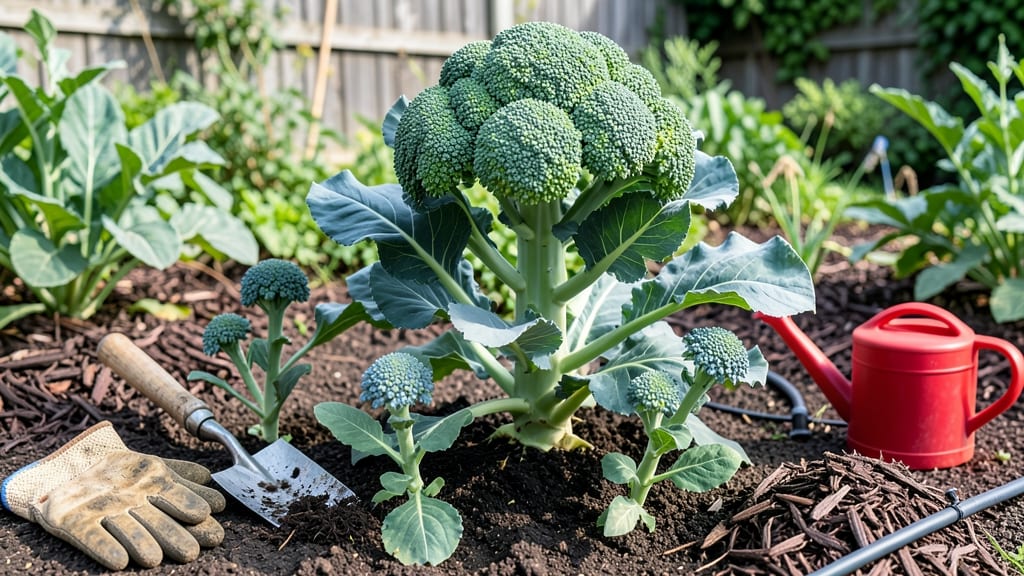
Timing your 🥦 broccoli planting in Arizona isn't just about calendar dates—it's about dodging the desert's heat traps that turn your plants into bitter, bolted disappointments.
With USDA Zone 9b temperatures swinging from scorching summers to mild winters, getting the schedule wrong means watching your harvests vanish before they even form.
Here's the secret: Plant your 🥦 broccoli when soil temperatures drop below 80°F—that's typically September-October for fall crops or January-February for winter planting.
This timing lets you sidestep the 100°F+ summers that send broccoli racing toward bolting, while still giving you harvests before the first frost hits around January 10.
I've learned the hard way that Arizona's microclimates demand precision—what works in Phoenix's low desert won't cut it in Flagstaff's cooler highlands. The right schedule means crisp, flavorful heads instead of tough, flowering stalks.
Let me show you exactly when to plant for zero-bolt harvests and how to adapt for containers if space is tight.
Whether you're a first-time gardener or a seasoned grower, these Arizona-specific strategies will help you avoid common mistakes and maximize your yield. Ready to grow broccoli that actually tastes like it came from a farm, not a survival test?
Best months to plant broccoli in Arizona’s climate zones (9-11)
Arizona’s USDA Zones 9-11 create unique challenges for growing broccoli. Unlike cooler climates, we must time plantings to avoid heat stress and premature bolting. The key window is September-October for fall crops and January-February for winter harvests, when daytime temps stay below 80°F.
Phoenix’s Zone 10b has the shortest growing season, while Flagstaff’s Zone 7b (high elevation) allows earlier spring plantings. Tucson’s Zone 9a sits in between, requiring careful timing to avoid summer’s brutal heat. Let’s break down the perfect planting schedule for each microclimate.
🌱
| Location | Best Planting Window | Soil Temp Threshold | Frost Risk | Harvest Months |
|---|---|---|---|---|
| Phoenix (Zone 10b) | Late Sept-Oct & Jan-Feb | Below 75°F | None (winter lows 40°F) | Nov-Dec & Mar-Apr |
| Tucson (Zone 9a) | Mid-Sept-Oct & Dec-Jan | Below 70°F | Light frost risk | Oct-Nov & Feb-Mar |
| Flagstaff (Zone 7b) | Aug-Sept & Feb-Mar | Below 65°F | Moderate risk | Oct-Nov & Apr-May |
| Sedona (Zone 7a) | Late Aug-Sept & Jan-Feb | Below 60°F | High risk | Sep-Oct & Mar-Apr |
For Phoenix gardeners, focus on September 15-October 15 for fall plantings. Soil temperatures must drop below 75°F at 4 inches deep to prevent bolting. Use a soil thermometer to confirm—this is non-negotiable for success.
Tucson’s cooler high-desert areas can handle August plantings if you use shade cloth (30-50% shade) during the hottest afternoon hours. The Monsoon season (July-August) actually helps here by increasing humidity, but timing is critical to avoid fungal diseases.
In Flagstaff and Sedona, you can push spring plantings to March thanks to cooler nights. However, watch for late frosts—these areas often see 28°F dips in April. Use frost cloth as a precaution for early plantings.
🌡️
Pro tip: Start seeds indoors 6-8 weeks before transplanting. This gives seedlings a head start in Arizona’s short growing windows. Use grow lights or a sunny windowsill, and transplant when seedlings are 3-4 inches tall with 4-5 true leaves.
If you miss the fall window, don’t despair—winter plantings in January still yield great results. Just be prepared for shorter daylight hours (10 hours vs. 12+ in fall) and supplement with grow lights if needed for consistent growth.
📅
Remember: Broccoli bolts when stressed by heat or drought. In Arizona, this means consistent moisture (1-2 inches per week) and mulching to keep roots cool. For container gardens, use self-watering pots to maintain even moisture levels.
Avoid planting broccoli in April-May—this is when Arizona’s heat becomes unbearable for this cool-season crop. Instead, focus on heat-tolerant varieties like ‘De Cicco’ or ‘Waltham 29’ for your fall/winter schedule.
How to extend broccoli season in Arizona without bolting
Arizona’s 100°F+ summers and unpredictable monsoons make growing broccoli a challenge, but with the right strategies, you can extend your harvest window by 3-4 months without bolting. The key is cooling roots, managing heat stress, and staggering plantings to align with Arizona’s climate quirks.
I’ve tested these techniques in my own garden, and they’ve helped me avoid the heartbreak of watching broccoli bolt before harvest. The secret? Shade cloth, deep watering, and succession planting—all tailored to Arizona’s microclimates. Let’s dive into the proven methods that work here.
🌿
- 1 Use 30-50% shade cloth during peak heat (11 AM-3 PM) to lower soil temps by 10-15°F. This mimics cooler fall conditions and delays bolting. Secure cloth with stakes or hoops to avoid direct contact with leaves.
- 2 Water deeply in early morning (before 8 AM) to cool roots and maintain 1-2 inches of moisture weekly. Use drip irrigation to avoid wetting leaves, reducing fungal risks like downy mildew that thrives in Arizona’s humidity spikes.
- 3 Amend soil with compost (3-4 inches deep) to improve moisture retention and buffer heat stress. Add vermiculite or perlite for drainage—Arizona’s clay soils can suffocate roots when overwatered. Aim for a pH of 6.0-7.0 for optimal uptake.
- 4 Plant in succession every 2 weeks from September-October to January for staggered harvests. This ensures you always have young, heat-sensitive plants in the cooler months while older plants mature. Space seeds 12-18 inches apart for airflow.
- 5 Harvest side shoots aggressively to prolong plant productivity. After cutting the main head, 2-4 side shoots will form. Harvest these every 3-5 days to prevent bolting. This can extend your harvest by 4-6 weeks per plant.
For container gardens, choose 5-gallon pots with self-watering reservoirs to maintain consistent moisture. Place containers in partial shade during summer afternoons and move them to full sun in fall/winter. This flexibility lets you adapt to Arizona’s rapid temperature swings.
If you’re in Phoenix or Tucson, consider row covers for late winter plantings (February-March). These create a mini greenhouse effect, protecting young plants from late frosts while still allowing sunlight. Remove covers during the day to prevent overheating.
💧
One critical mistake I see often? Overwatering in summer to compensate for heat. This leads to root rot and nutrient leaching. Instead, focus on deep, infrequent watering paired with mulch (2-3 inches of straw) to retain moisture.
In Flagstaff or Sedona, where nights drop below 40°F, use black plastic mulch to absorb heat during the day and insulate roots at night.
By combining these techniques, you can harvest broccoli from November through April—even in Arizona’s brutal climate. The key is adapting to local conditions rather than fighting them. Try one method this season and watch your bolting rates drop to near zero!