
Plants
Michigan’s last spring frost dates: the critical timeline for planting dahlia tubers
Michigan’s USDA Zones 4b–6a mean frost dates vary dramatically—from mid-April in southern Michigan to late May in the Upper Peninsula. For dahlias, which cannot tolerate frost, timing is everything.
The average last frost date in most of Michigan’s gardening regions falls between May 10–25, but your local microclimate could shift that window by weeks.
Dahlia tubers need consistent soil temperatures above 60°F to sprout reliably. In Zone 5b (most of Lower Michigan), this typically aligns with late May.
Gardeners in Zone 6a (southern Michigan) might plant as early as mid-May, while those in Zone 4b (north) should wait until early June to avoid frost damage.
Use Michigan State University Extension’s frost date maps as your guide. For example, Detroit’s last frost average is May 15, but Traverse City’s is June 1. Planting too soon risks frost-killed tubers, while waiting too long may shorten your bloom season.
To refine your local window, check the National Oceanic and Atmospheric Administration (NOAA) frost probability maps. For example, if your area has a 10% chance of frost on May 20, it’s safer to wait until May 25.
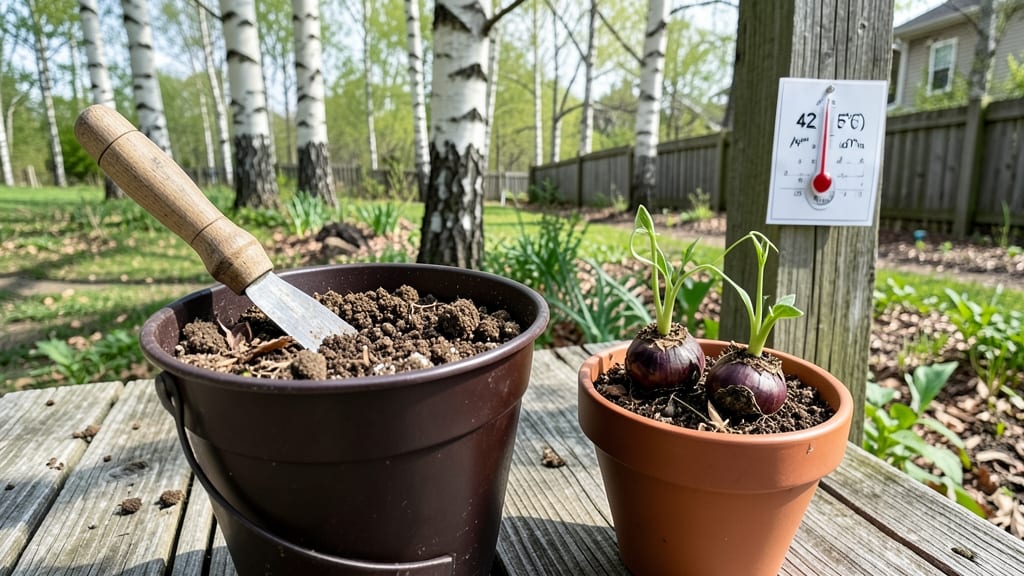
Pro tip: Use a soil thermometer—dahlias won’t sprout until soil hits 60°F for 3+ days.
Planting too early? Frost will blacken tubers and stunt growth. Too late? Smaller blooms and a shorter season await. Balance is key—aim for 2–3 weeks after your area’s last frost date for optimal results.
For extra safety, cover tubers with row fabric if a late frost is forecast. This buys you 1–2 weeks of flexibility without risking damage. Just remove covers when daytime temps stay above 70°F to avoid overheating.
Remember: Michigan’s growing season is short—dahlias need 90–120 days to bloom. Planting in late May or early June ensures you’ll enjoy summer and early fall blooms before frost returns in October.
Pro gardeners swear by planting after lilacs bloom (a natural frost indicator). If your lilacs are in full flower, it’s likely safe to plant—just verify soil temps first.
🌼
Michigan’s last spring frost dates: the critical timeline for planting dahlia tubers
Michigan’s USDA hardiness zones 5b-6b create a 10-14 day window between the Upper and Lower Peninsulas for planting dahlia tubers. The Lower Peninsula typically sees its last spring frost between May 10-20, while the Upper Peninsula can wait until May 25-June 5.
These dates mark your risk-free planting window—before then, tubers risk frost damage.
For precise timing, check Michigan State University Extension’s frost date maps. Most regions aim for soil temperatures above 60°F, which usually aligns with late May. Planting too early means frost-killed tubers; too late risks shorter bloom seasons before Michigan’s first fall frost (mid-October).
| Region | Last Frost Date | Ideal Planting Window | Soil Temp Goal |
|---|---|---|---|
| Lower Peninsula (Detroit, Lansing) | May 10-20 | May 20-30 | 60°F+ |
| Upper Peninsula (Marquette, Traverse City) | May 25-June 5 | June 5-15 | 60°F+ |
| Northern Border (Sault Ste. Marie) | June 1-10 | June 15-25 | 60°F+ |
Use a soil thermometer to confirm readiness—dahlias won’t sprout until soil hits 60°F. In Zone 5b (northern Michigan), wait until June 1 to avoid frost risk.
For Zone 6b (southern Michigan), May 25 is your target. Pro tip: Plant large tubers first (they sprout faster) and small tubers last.
Michigan’s 160-180 frost-free days mean dahlias need to establish roots quickly. If you plant after June 1, opt for dwarf varieties (1-2 ft tall) that bloom faster. Always harden off tubers for 24 hours before planting to reduce transplant shock.
Track your local frost dates using the National Oceanic and Atmospheric Administration (NOAA) or your local cooperative extension office. These resources provide historical averages and real-time updates—critical for Michigan’s variable climate. For example, Traverse City’s last frost averages May 15, while Detroit’s is May 10.
Remember: Dahlias planted after June 1 may still bloom, but expect smaller, later flowers. Prioritize soil warmth over calendar dates—your tubers will thank you with vibrant, long-lasting blooms all summer. 🌼