
Trees
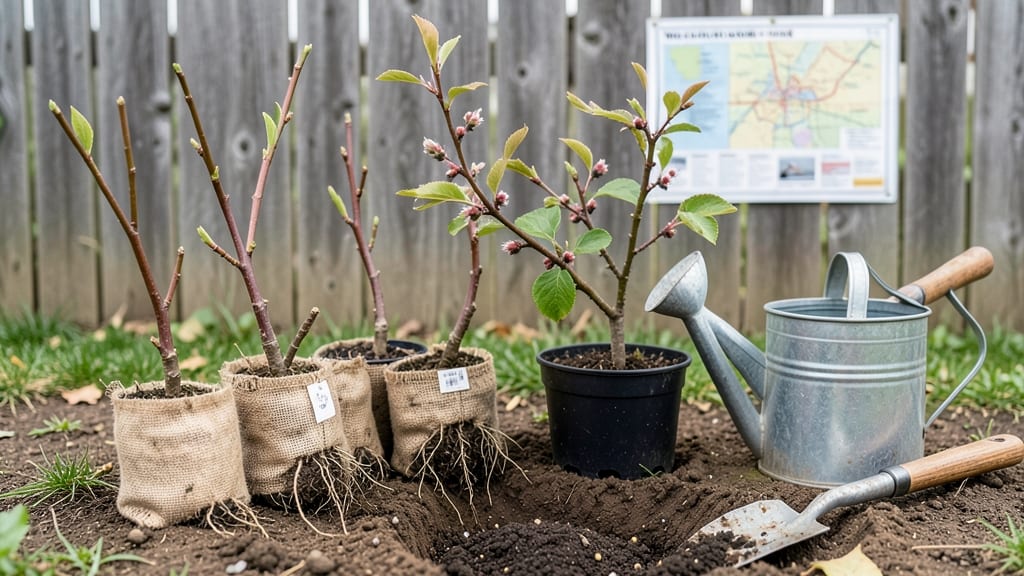
Timing your fruit tree planting in Washington isn't just about the calendar—it's about matching varieties to chill-hour needs and avoiding those cruel late frosts that can wipe out young trees before they even bear fruit.
With USDA zones 5b through 8b creating wildly different microclimates, one wrong move could mean waiting years for that first harvest of crisp apples or juicy peaches.
You might think spring is the only answer, but Washington's diverse regions demand precision. Plant too early in the High Desert, and your tree could face winter stress; too late in Western Washington, and summer heat will shock delicate roots.
The secret lies in understanding when dormancy breaks and how many cold hours each variety needs to fruit properly.
I'll walk you through the exact planting windows for your specific zone, plus which varieties thrive where—because that Honeycrisp apple you love might not be the best choice for your backyard in Spokane.
We'll also cover pro tips for bare-root vs. container planting that could mean the difference between a thriving orchard and a sad pile of dead saplings.
Whether you're dreaming of cherry orchards or just want a few peach trees for your family, getting this right means less waiting and more harvesting. Let's get your fruit trees off to the best possible start.
Best planting months for Washington fruit trees by climate zone
Washington’s climate varies dramatically from the mild coastal regions to the harsh inland winters and High Desert extremes. Timing your fruit tree planting to match these zones is critical for survival and productivity.
The last frost dates shift from mid-March in Zone 8b (Western WA) to early May in Zone 5b (Eastern WA), creating a 6-week planting window across the state.
For Western Washington (Zones 7b-8b), where winters are mild and summers are dry, the ideal planting window stretches from late February to early April. This aligns with dormancy break and avoids the summer heat stress that can shock young roots.
In contrast, Eastern Washington (Zones 5b-7a) demands earlier action—late March to mid-April—to ensure roots establish before deep freezes arrive.
The High Desert (Zones 6b-7a), with its cold nights and hot days, requires a narrower window: late March to early April. Here, bare-root trees planted too late may struggle to harden off before winter, while container-grown trees offer flexibility for slightly later installation.
Soil preparation is just as critical as timing. In all regions, amend heavy clay soils with compost or sand, and ensure well-draining conditions to prevent root rot. A pH test (6.0-7.0) will confirm your soil’s readiness for nutrient uptake.
🌱
| Zone & Region | Best Planting Window | Soil Prep Tip | Last Frost Date |
|---|---|---|---|
| Western WA (Zones 7b-8b) | Late February - Early April | Add compost to sandy soils | Mid-March to early April |
| Eastern WA (Zones 5b-7a) | Late March - Mid-April | Test pH (aim for 6.0-7.0) | Early April to mid-May |
| High Desert (Zones 6b-7a) | Late March - Early April | Improve drainage with gravel | Early April to early May |
| Puget Sound (Zone 8b) | February - March | Mulch heavily to retain moisture | Early March |
| Palouse (Zone 6a) | Mid-April | Avoid planting in low spots | Late May |
🌡️ Pro Tip: Use Washington State University’s Frost Free Date Map to pinpoint your exact zone.
Bare-root trees are the best choice for Washington due to their hardiness and lower cost. Plant them as soon as they arrive (usually November-March) and keep roots moist with damp burlap.
If storing, heel them in (bury roots in a trench) until planting. Container-grown trees offer flexibility for late plantings but require extra watering during establishment.
In high-elevation areas (above 3,000 ft), like the Cascade foothills, opt for early-season varieties with low chill-hour needs (300-500 hours). These include ‘Honeycrisp’ apples and ‘Lapins’ cherries, which thrive despite shorter winters. Always mulch heavily (4-6 inches) to insulate roots from freeze-thaw cycles.
After planting, water deeply (15-20 gallons) and stake young trees if needed to prevent wind rock. In Zone 5b, consider winter protection like tree wraps or burlap wraps for the first two winters. This simple step can double survival rates in harsh winters.
🪴
Chill-hour requirements for top Washington fruit tree varieties
Washington’s diverse microclimates mean not all fruit trees thrive equally. The chill-hour requirement—hours below 45°F—determines which varieties will fruit successfully. For example, apples and cherries need 800–1,200 chill hours, while peaches and plums often require 500–900 chill hours.
Choosing the wrong variety for your zone could leave you with blooms but no fruit.
In Western Washington (milder winters), focus on low-chill varieties like Honeycrisp apples (600–800 chill hours) or Lapins cherries (500–700 chill hours). Meanwhile, Eastern Washington (harsh winters) can support high-chill Gala apples (1,000+ chill hours) or Montmorency tart cherries (1,200+ chill hours).
The High Desert falls somewhere in between, favoring medium-chill varieties like Elberta peaches (700–900 chill hours).
🍎 Chill-Hour Guide for Washington Fruit Trees
| Variety | Chill Hours | Best Washington Zone | Notes |
|---|---|---|---|
| Honeycrisp Apple | 600–800 | Western WA (5b–7b) | Sweet, crisp; needs well-drained soil |
| Gala Apple | 1,000–1,200 | Eastern WA (5b–6a) | Classic flavor; needs cross-pollination |
| Lapins Cherry | 500–700 | Western WA (6b–8b) | Sweet, self-pollinating; avoid wet soil |
| Montmorency Tart Cherry | 1,200+ | Eastern WA (5a–6a) | High acid; great for pies |
| Elberta Peach | td style="padding: 8px; border: 1px solid #C4D6A5;">700–900High Desert (6a–7a) | Freestone; needs staking | |
| Stanley Plum | 400–600 | Western WA (7b–8b) | Dwarf variety; early ripening |
💡 Pro Tip: Check your local chill-hour count via WSU Extension for precise variety matching.
If you’re unsure about your chill-hour total, track winter temperatures for a year or consult the Washington State University Extension chill-hour maps. For instance, Spokane averages 1,200+ chill hours, while Seattle often sits at 600–800 chill hours.
Mismatching varieties can lead to poor fruit set or even no harvest at all.
For container-grown trees, chill-hour needs remain the same, but root restriction can stress the tree. Opt for dwarf rootstocks like M.9 for apples or Lovell for peaches to ensure they meet their chill requirements without overpowering your space.
Always plant containers in full sun and use well-draining soil to prevent root rot.
One common mistake is assuming all peaches thrive in Washington. While Elberta and Redhaven work well in the High Desert, Frost peaches (like Redtop) need even more chill hours (1